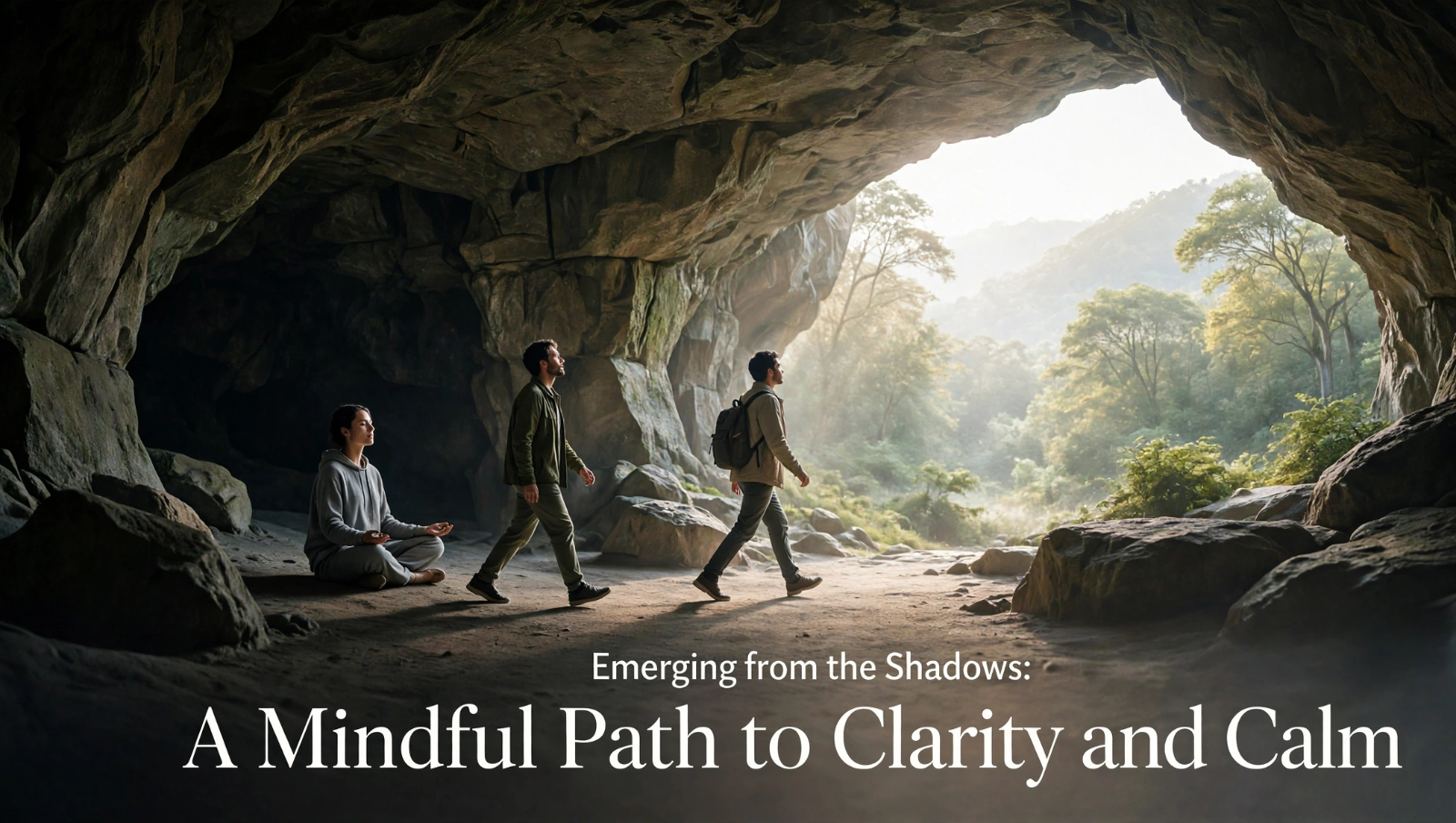
Plato's Allegory of the Cave reminds us how easily our perceptions can be limited by unseen influences, much like prisoners mistaking shadows for reality. In everyday life, these "shadows" often show up as negative thoughts, self-doubt, or stress.
Mindfulness offers a gentle way to notice these mental patterns without getting stuck in them. It invites us to watch our thoughts with curiosity instead of judgment. This simple shift can help clear the mental shadows that cloud our experience and open space for more clarity and calm.
A Personal Journey Beyond the Cave
Growing up in a restrictive environment, I often felt trapped by circumstances and internal doubts. Like the cave prisoner, my early dreams seemed far away. Through meditation, imagination, and focused intention, I slowly expanded my sense of what was possible.
Moving to new places and facing different challenges taught me resilience and the practical power of mindful awareness. Mindfulness and meditation became tools to navigate life’s ups and downs, helping me stay grounded and open to growth. Emerging from mental shadows is a gradual process, not an instant change.
Embracing the Light with Practical Mindfulness
Stepping into greater awareness can feel strange or uncomfortable at first, like adjusting to bright sunlight after darkness. This is normal. With patience and kindness toward ourselves, we can quiet the inner critic and accept what is happening right now.
One simple exercise I recommend is the 4-7-8 Breathing Technique, a breath practice to help calm your mind and bring you into the present moment:
- Sit comfortably with your back straight.
- Place the tip of your tongue just behind your upper front teeth.
- Exhale fully through your mouth with a soft "whoosh" sound.
- Inhale quietly through your nose for a count of 4.
- Hold your breath gently for a count of 7.
- Exhale completely through your mouth for a count of 8 with a "whoosh" sound.
- Repeat this cycle 4 times, increasing as you feel comfortable.
Doing this twice daily, such as morning and evening, can help ease stress and invite a peaceful shift in awareness.
Sharing Light and Building Community
Emerging from the shadows is not just a personal journey but also an opportunity to support others. Like the freed prisoner in Plato’s story who wants to help those still inside, sharing mindful practices can build connection and hope.
At StefanMotz.com, you’ll find a welcoming space to explore meditation, mindfulness, and the Silva Method in practical, grounded ways. Whether you’re new or deepening your path, the community offers resources and support.
Reflection Exercise: Observing Your Shadows
Take a moment to write or think about the recurring thoughts or beliefs that feel limiting or stressful. Without judging, notice what these "shadows" look like for you. How might simply observing them with mindful curiosity change how you relate to these thoughts?
This awareness is the first step toward gentle change. The goal isn’t to get rid of thoughts but to create space between you and them, opening up to a clearer, more balanced view.
FAQ
What is mindfulness?
Mindfulness means paying attention to the present moment with openness and curiosity, without judging what you notice.
How can meditation help with stress?
Meditation helps calm the mind and body, making it easier to notice stressful thoughts without getting overwhelmed.
Is the 4-7-8 breathing technique difficult?
It’s simple to learn and can be done anywhere. Start slowly and increase repetitions as you feel comfortable.
Can I practice mindfulness if I’m new to meditation?
Yes! Mindfulness is for everyone. You can start with small moments of paying attention to your breath or surroundings.
Try This Today
Try the 4-7-8 breathing exercise right now. Find a quiet spot, sit comfortably, and follow the steps. Notice how your body and mind respond. This small practice can help you take one steadier step toward calm and clarity.
Why This Matters
A More Grounded Way to Practice
One Small Step Forward
What I Kept From the Silva Method
When I first learned the Silva Method, I was enthusiastic. I wanted better memory, stronger intuition, more success, and many of the other possibilities described in the training. I believed a great deal of it very literally.
My view became more measured with time. I cannot point to miracles, and I do not think I need to. What stayed useful was the habit of becoming quiet, directing my attention, imagining a desired outcome, and then returning to ordinary life with a clearer mind.
The Practice Became Less Perfect and More Useful
At first I thought meditation required the right conditions. Silence helped. Comfort helped. Then there was always an itch, a sound, a thought, or something else trying to convince me that the session was ruined.
Eventually I understood that distraction was not proof that I was doing it wrong. Returning was the practice. That lesson carried beyond meditation. Difficult periods in life do not wait until we are perfectly calm. We learn to notice what is happening, regain enough steadiness to think, and take the next reasonable action.
Clarity Is Often Quiet
When people talk about emerging from darkness, the language can sound dramatic. My experience is usually less theatrical. Clarity may be realizing that I have been repeating the same argument. It may be admitting that a plan is not working. It may be recognizing that I need help or that I need to stop waiting.
A quiet practice does not make those decisions for me. It can, however, reduce enough mental noise that I can see the decision more clearly. That is already valuable.