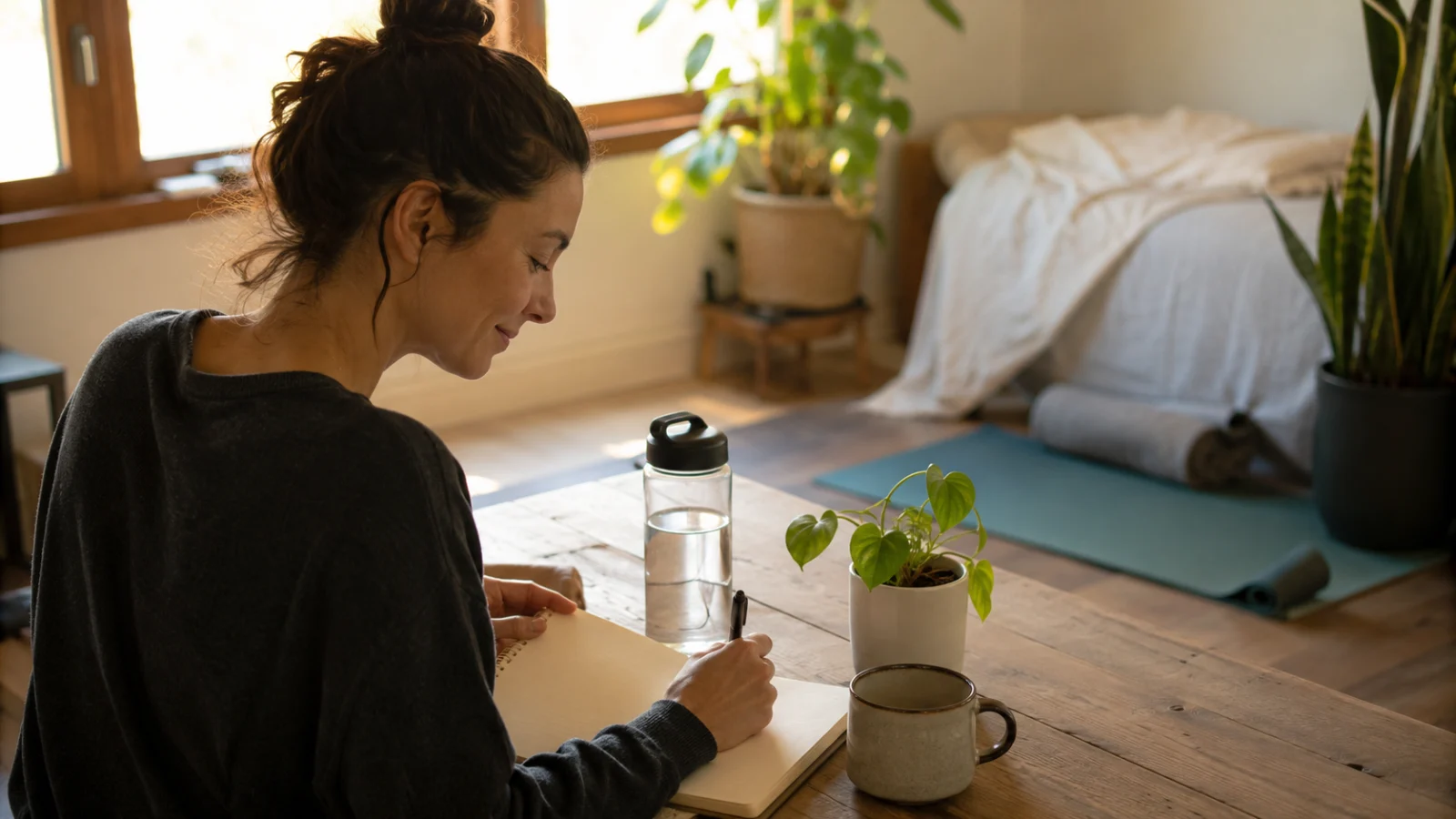
Sometimes I catch myself trying to overhaul my whole routine overnight, only to feel overwhelmed and give up. Over time, I’ve noticed that small habits, built gently and patiently, fit better with how my mind and life actually work. Habits quietly shape much of our daily experience—from how we manage stress to the quality of our relationships. Thanks to neuroplasticity, the brain’s ability to rewire itself, I’ve learned it’s possible to create new, positive patterns with kindness and consistency rather than pressure or dogma.
If you’re curious about starting with small habits, you might find my approach helpful. I’m still learning, but here’s what helped me.
How I Use My Environment as a Gentle Reminder
One simple thing I tried was letting my surroundings nudge me without force. For example, placing a yoga mat beside my bed or a water bottle on my desk became quiet invitations rather than reminders I had to push myself to obey. I even left my dumbbells where I’d literally stumble over them each day. It was awkward but effective—this gentle nudge made exercise part of my routine without feeling like a chore. You might try placing a small object related to your new habit somewhere you’ll naturally notice it.
How I Build New Habits by Linking Them to What I Already Do
Pairing a new habit with an existing one helped me avoid starting from scratch. For instance, I began doing push-ups while my morning coffee brewed. The smell became a signal to move, which made the habit easier to remember. You might try taking a few slow, mindful breaths after brushing your teeth or stretching while waiting for your lunch to heat. These small, consistent pairings slowly build momentum.
How I Create a Supportive Space for Mindfulness
Designing a little corner with a soft pillow, candle, or journal invites me to pause and reflect. I’ve found that keeping distractions like phones out of reach during these moments helps me stay grounded. Intentional spaces don’t have to be fancy—just a spot that feels welcoming and calm. If it feels right, you might try setting up a similar space to encourage your mindful habits.
How I Celebrate Progress Without Pressure
Recognizing small wins has made a big difference. Whether it’s a few minutes of meditation or journaling for a week, I try to acknowledge these moments with kindness rather than expecting perfection. Sometimes a quiet smile or a favorite cup of tea feels like enough reward to keep going. You might try noticing your own small successes and giving yourself a gentle nod of approval.
How I Stay Flexible and Kind to Myself
Life rarely follows a perfect plan. When I miss a day or my routine changes, I remind myself, "I’m learning," and return when I can. This flexibility has helped me avoid getting stuck in guilt or frustration. You might find it helpful to treat slip-ups as part of the process rather than failures.
How Connecting with Others Supports My Habits
Sharing my goals with friends or family adds a layer of encouragement. My sister’s simple check-ins about my swimming habit, for example, keep me motivated and connected. If it feels right, you might tell someone you trust about your new habit or join a community that supports mindful growth. Sometimes collective energy makes the journey more enjoyable.
A Simple Practice You Might Try Today
Pick one small, tangible object in your environment—a notebook, candle, or water bottle—and let it act as a trigger for a mindful habit. Place it somewhere you’ll notice it naturally. When you see it, pause for a moment and take three slow, intentional breaths or jot down a positive thought. I’ve noticed that these gentle reminders can slowly weave mindfulness into daily life in a way that feels natural and uplifting.
FAQ: What I’ve Learned About Small Habits
- Why start with small habits? They’re easier to maintain and less overwhelming. Small steps build confidence and momentum over time.
- How does environment influence habit formation? Visual cues remind you naturally without relying solely on willpower.
- What if I miss a day? It’s normal. Being kind and simply returning to your habit helps keep it sustainable.
- How long does it take to form a mindful habit? There’s no fixed timeline. Some habits feel natural after a few weeks; others take longer. Consistency matters more than speed.
- Can mindful habits help with stress? Yes. They create moments of calm and clarity that support managing stress.
How I Keep Building My Practice Over Time
Mindful habits grow stronger when they fit naturally into life. I’ve found exploring meditation for real life helpful to weave mindfulness into everyday moments. You might also enjoy learning about creating a daily spiritual practice to deepen your connection with these habits.
If you’re curious about starting or deepening your mindful habit journey, you might visit our Start Here page for practical guidance tailored to where you are right now. For more on mindful living, see the Learning Library, and consider exploring emotional healing or confidence pages to support your growth.
Next: Read how I used this during a challenging time in Mindfulness in Daily Life.
Try This Today
Environment matters as much as intention. Put the useful action where it is easy to see and the distracting action where it requires an extra step. A habit that depends on daily heroics will eventually lose to fatigue. A habit supported by its surroundings has a much better chance of becoming ordinary.
FAQ
How do I begin if I feel overwhelmed?
Small habits survive because they ask less from motivation. A five-minute action can still happen on a mediocre day, which gives repetition a chance to do its work. The useful question is not whether a habit looks ambitious. It is whether it is easy enough to repeat when enthusiasm disappears.
What if this does not work right away?
How often should I practice?
Short and steady is better than long and rare. A few minutes most days can become a quiet support you trust.