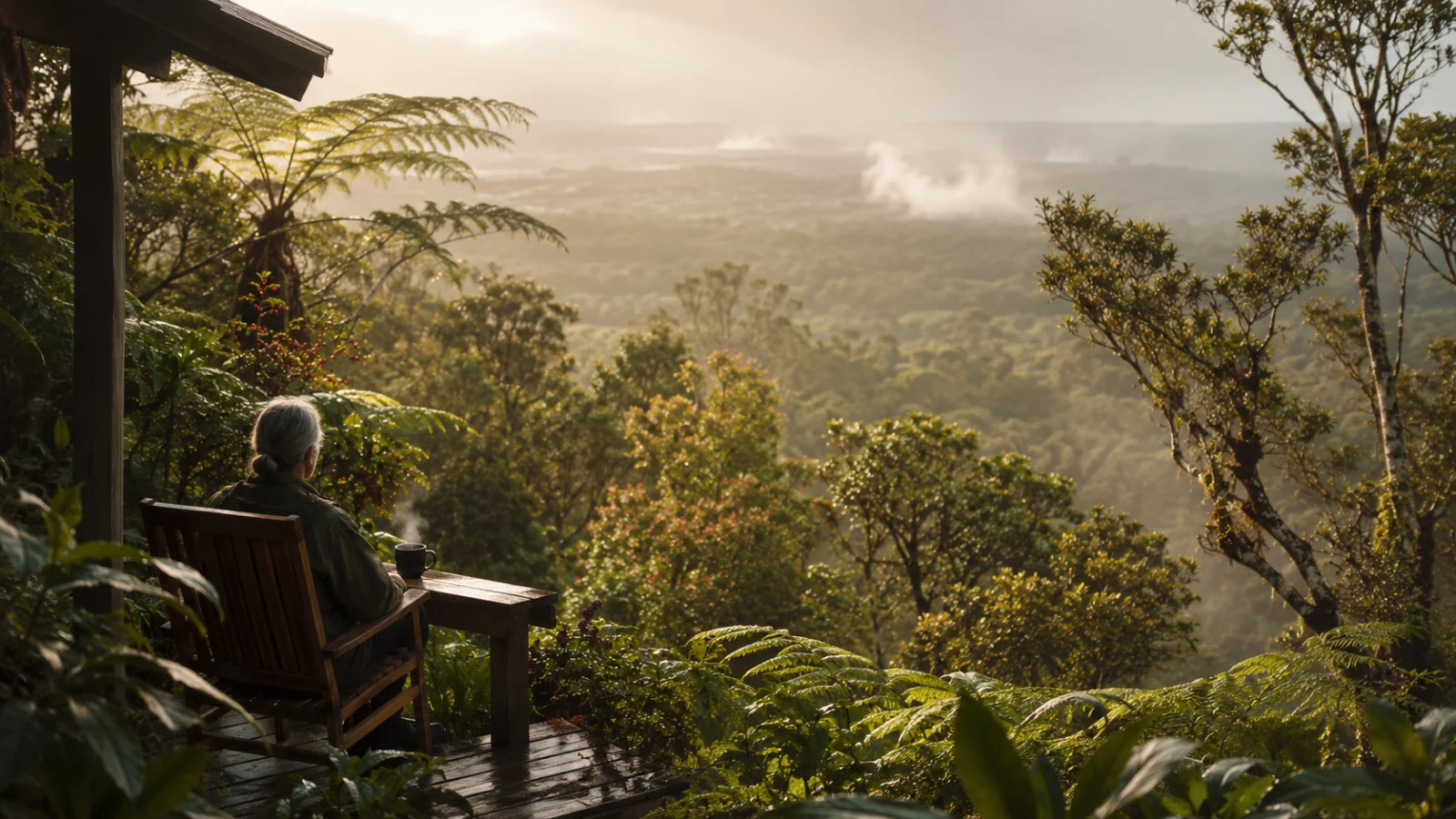
Sometimes, I only realize how tangled my mind has become when I step away from the usual noise and distractions. A few weeks ago, my wife and I spent time in a tiny off-grid cabin nestled in the rainforest near Kīlauea Volcano. Without cell signal or deadlines, I found myself slowing down in a way I hadn’t in years. The quiet wasn’t empty—it was full of subtle sounds and moments that gently pulled me into presence.
How I Felt Life Shift Under the Rainforest Canopy
The cabin ran on solar power and filtered rainwater, and we composted what we used. At first, it felt like roughing it. But after a day, it felt sane—like a reset for my senses. I noticed the birdsong of ‘Apapane in the morning, the coqui frogs at night, and the rain tapping softly on the metal roof. My brain stopped bracing for notifications and just settled into the rhythm around me.
Making coffee took longer because I boiled catchment water, so I watched mist drift through ʻōhiʻa trees instead of scrolling on my phone. I even noticed small things like the scent of lilikoi before it ripened and how ʻōhelo berries stained my fingers purple. These details grounded me in the present in a way I hadn’t expected.
What I Learned From Meeting András, a Fellow Traveler
András owns the cabin, and meeting a fellow Hungarian so far from home was a surprise. We ended up talking late into the evening about Buddhism, meditation, and how we both try to bring more presence into daily life. It wasn’t dogmatic—just two people sharing what actually helps.
He left Hungary years ago searching for peace and ended up building it here, board by board. That stuck with me as a reminder that peace isn’t found in a moment but created step by step.
How the Rainforest Changed My View of Practice
I practice the Silva Method and meditate most days, but being there made me realize nature is the best teacher I’ve never paid. Picking fruit became a practice itself—you can’t grab a lilikoi mindlessly. You check its color, feel its weight, breathe in its scent. For those few seconds, there’s nowhere else to be. That’s what mindfulness means to me: not chasing bliss or miracles, but simply spending fewer moments missing my own life.
What I’m Trying to Bring Back Home
The hardest part of any retreat is coming back to everyday life. I’ve been testing what actually sticks when I’m back in traffic and email. Three small habits have helped me stay connected to that calm:
- Doorway pauses: Before I walk into the house or office, I take one breath. That’s it. It feels like a reset button. I noticed this small pause helps me shift gears more gently than I expected.
- 5-minute nature checks: Even looking at the tree outside my window counts if I really look. I found that focusing on simple natural details helps me step out of my usual mental clutter.
- Asking “What’s here now?”: When I catch myself spinning in worry or distraction, I ask this question. Usually the answer is simple—chair, breath, light. Boring, but calming.
How I Practice 5-Minute Mindful Nature Observation
This is what I did on the lanai each morning. You don’t need training or a rainforest to try it. You might try:
- Pick a spot: Outside is great, but a plant on your desk works too.
- Look like a kid: For five minutes, notice colors, shapes, movement, shadows, sounds. No need to label everything.
- Let thoughts pass: If “I’m doing this wrong” shows up, notice it and gently return to seeing, hearing, or feeling.
- Check in after: Did your shoulders drop? Did time slow down? That’s the data that matters.
For me, this isn’t about mastering anything. It’s about remembering I have senses, and they’re usually available if I pause long enough.
What I’m Still Wondering and Learning
I don’t always manage to carry the calm from retreat back into daily life. Sometimes I forget the doorway pause or skip the nature check. But I’m learning to be patient with myself and to try again. Mindfulness isn’t a perfect state—it’s a practice that grows with small steps and gentle reminders.
People Also Ask: A Few Questions I’ve Heard
Do I need to go somewhere special to practice mindfulness?
I found that even a small plant or a view from a window can be enough if you really pay attention.
Is mindfulness about emptying the mind?
For me, it’s more about noticing what’s happening without getting caught up in it.
How long should I practice?
Even five minutes can make a difference, especially if you do it regularly.
If you’re curious about meditation or want to explore different approaches I’ve tried, you might visit the Learning Library or start with some simple steps on the Start Here page.
Thanks for reading. If you try the 5-minute practice, I’d love to hear where you did it—volcano, backyard, or office window all count.
Try This Today
Set aside five quiet minutes. Sit comfortably, let your shoulders drop, and ask yourself one simple question: what would help me feel a little more steady today? Do not look for a perfect answer. Write down the first honest answer that comes. Then choose one small action you can actually do before the day is over.
FAQ
How do I begin if I feel overwhelmed?
Start small. Even a few breaths or a brief nature check can help. There’s no need to do everything at once.
What if this does not work right away?
That’s normal. I had to try more than once before it felt natural. Patience helps.
How often should I practice?
Short and steady is better than long and rare. A few minutes most days can become a quiet support you trust.
Next: Read how I used mindfulness during a challenging travel delay in Mindful Travel Moments.