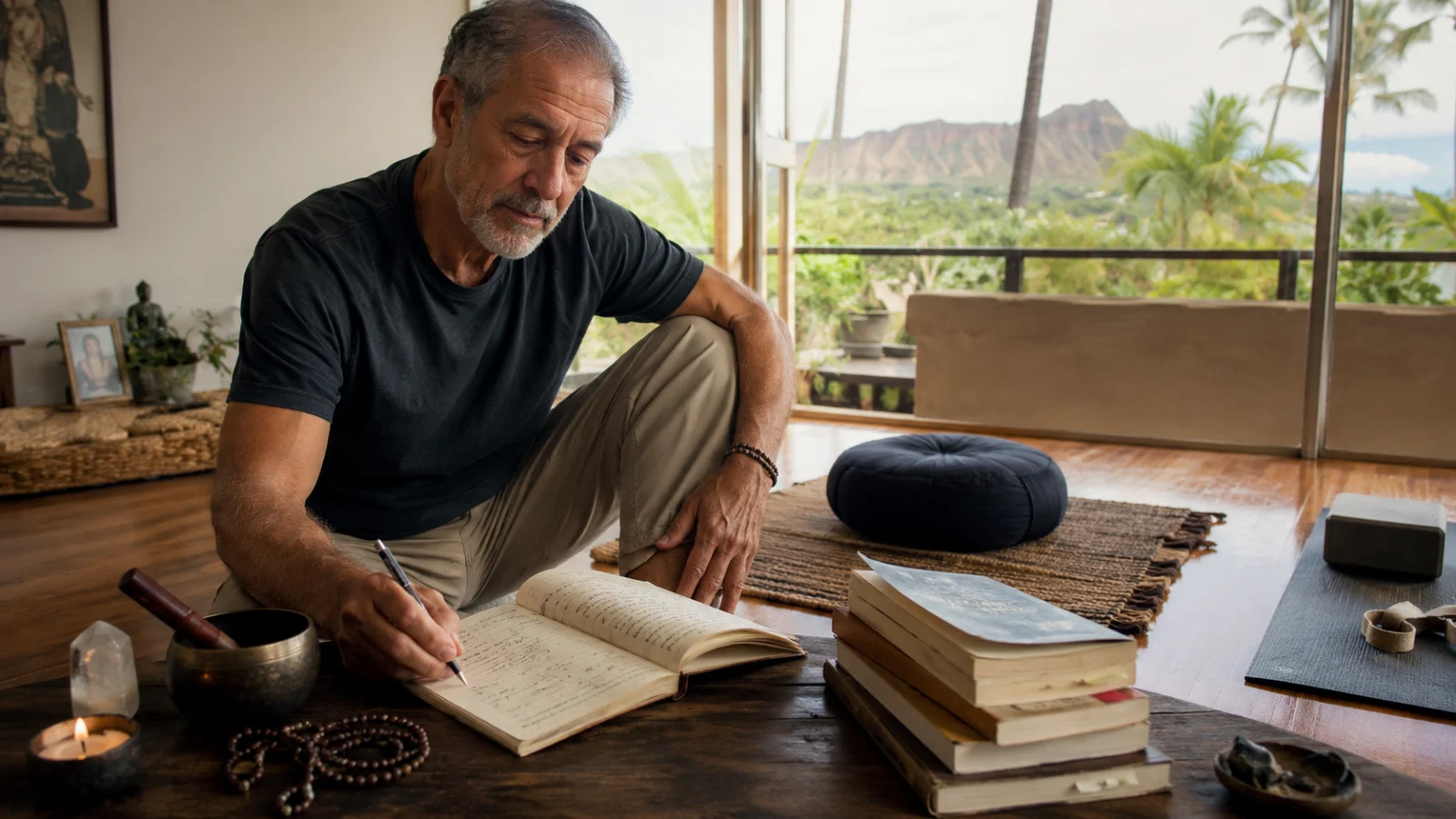
Mindful Tools I’ve Actually Used Over 40 Years of Practice
After 40+ years with the Silva Method, meditation, and mindfulness, I’ve learned one thing: tools don’t create presence — you do. But the right ones can remove friction, deepen focus, and make practice something you look forward to. Here’s what’s genuinely helped me from day one to decade four.
1. Books That Don’t Just Sit on the Shelf
Early on, I’d buy every spirituality book I could find. Most collected dust. The ones that changed me were grounded, practical, and BS-free. Look for authors who explain how neuroplasticity works, not just that it’s amazing. My dog-eared copies are the ones with notes in the margins and exercises I actually did.
What to try: Pick one book this month. Read it with a pen. If a chapter doesn’t give you something to practice within 48 hours, put it down. Growth comes from application, not accumulation.
2. Meditation Aids: Use Them, Don’t Depend on Them
Guided audios got me through the “my mind won’t shut up” phase in the 1980s. Calming sound machines and singing bowls can set the tone fast when your day’s been chaotic. Even a simple crystal in your palm can act as a physical anchor — something to return to when thoughts wander.
My rule: Use aids to build the habit. Then practice without them sometimes. Freedom is knowing you can drop into stillness with nothing but your breath.
3. Yoga Accessories: Your Body Is Part of the Practice
Mindfulness isn’t just neck-up. If your knees ache 10 minutes into sitting, you’re not meditating — you’re enduring. A firm mat, a block under your sit bones, or a strap for tight hamstrings isn’t “cheating.” It’s respecting your body so your mind can settle.
Start here: Before your next sit, do 3 minutes of gentle cat-cow or spinal twists. Notice how much easier presence becomes when your body isn’t screaming for attention.
4. Journals: Make the Invisible Visible
I’ve filled 60+ journals since 1982. Not because I’m disciplined, but because writing slows my thoughts down enough to see them. Guided prompts help on foggy days, but a blank page works too.
Try this tonight: “What felt heavy today, and what felt light?” No fixing, just noticing. That’s mindfulness on paper.
5. Your Environment Is Teaching You Something
You don’t need a Pinterest-perfect altar. But your space has a nervous system. Harsh light, clutter, and constant pings train your brain to stay alert. Aromatherapy, a candle, a soft blanket — these are cues that say “you’re safe to exhale now.”
2-minute shift: Clear one surface. Light something that smells calming. Sit there for one breath. Your environment just became your ally.
6. Learn in Community, Practice in Solitude
Books and apps are great. But my biggest leaps came from courses and workshops where I could ask, “Wait, is this normal?” and hear “Yes, me too.” A good teacher shortens your learning curve. A good community reminds you you’re not alone in it.
If you’re new: Start with one live online workshop. The accountability alone is worth it.
7. Practice: The 5-Breath Reset I Still Use Daily
Let’s do this together right now. No tools needed.
- Settle in. Feet on the floor, spine tall but not rigid.
- Close your eyes or soften your gaze.
- Inhale through your nose for 4 counts. Feel your ribs expand.
- Exhale for 6 counts. Let your shoulders drop.
- Do that 5 times. On the last exhale, ask: “Where in my day tomorrow could I use this?”
I’ve used this before board meetings, difficult conversations, and when I can’t sleep at 3 am. Five breaths is always enough to come home to yourself.
Final Thought From 40 Years In
Tools, books, courses — they’re all invitations. The real practice is showing up, especially on the days you don’t want to. Start small. Stay curious. Be kind to yourself when you forget. That’s the work.
If you’re just beginning, I put everything I wish I’d known in the Start Here guide. If you’re ready to deepen your sit, explore the Meditation section next.
What’s one tool that’s genuinely helped your practice? I read every reply — share yours in the comments.