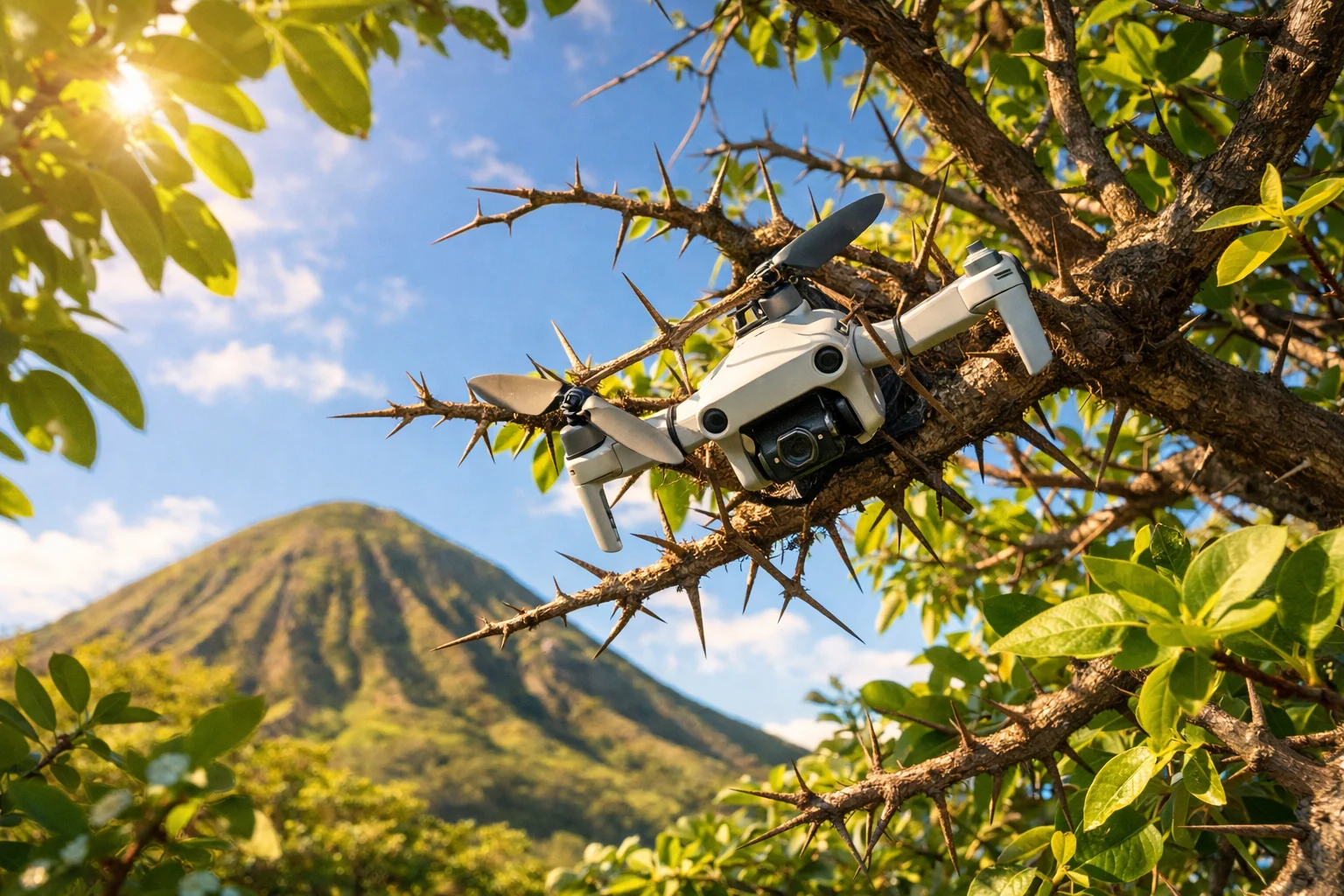
The other day, I set out for a peaceful walk near Koko Head in Hawaii, hoping to capture the crater landscape with my little drone. You know how it goes—screens off, nature on, a quiet moment in the sun. Well, nature had other plans.
Mid-flight, the drone got snagged high up in a tree. Suddenly, my peaceful outing turned into a bit of a comedy. There I was, trying to shake the branches loose, pulling at runners and thorns, all while my slippers were slowly being pierced by sharp little points I hadn’t noticed before. By the end, my arms were scratched, my feet pricked, and my dignity slightly bruised.
What I Noticed in That Moment
First, I laughed at myself. I had shown up expecting serene drone footage and quiet contemplation. Instead, I found myself wrestling with the unpredictable, thorny side of nature. It was a reminder: nature isn’t just a pretty backdrop to capture or a place to check off your to-do list. It’s messy, alive, and sometimes downright funny.
It also made me realize how easy it is to get caught up in trying to control the perfect shot, the perfect moment, the perfect plan. But when the drone got stuck, all that tech-focused capturing came to a halt. I had no choice but to come back to the ground, literally and metaphorically. There I stood—under the heat of the Hawaiian sun, surrounded by branches and thorns—reminded that the present moment is never neat or staged.
That kind of moment is exactly why I believe mindfulness belongs in real life, not only in quiet rooms or perfect conditions. If this speaks to you, you may enjoy my guide to meditation for real life.
A Gentler Way to Look at It
Rather than seeing the drone mishap as a frustration or setback, it became a little story about how nature invites us to slow down and simply notice. Control is limited, and sometimes what we think is a simple excursion turns into a laughing moment, a way back to ourselves.
Throughout my years trying different meditation and mindfulness practices, I’ve found that these unexpected moments—when plans don't unfold as expected—offer some of the clearest reminders to be present. Whether it’s a slipping drone or an unexpected snail on the path, nature taps us on the shoulder and invites us back to awareness.
For me, this also connects with gratitude practice for real life: not gratitude as a forced positive thought, but as a willingness to notice the small gifts hidden inside ordinary, imperfect days.
Something Simple You Can Try Today
Next time you’re out in nature, try to leave your phone tucked away for a while. Let your senses take the lead. Notice the textures of tree bark, the sounds of birds or the wind, the feel of uneven ground beneath your feet. If things don’t go perfectly, or a small mishap happens, see if you can find the humor or a small moment of gratitude in it. Maybe it’s a wobbly branch, a misplaced step, or yes—a lost drone.
Common Gentle Reminders
- Nature often has its own rhythm and timing—quite different from ours.
- It’s okay to not have everything go as planned—sometimes that’s where the best stories come from.
- Being present is about noticing what is, not what you hoped would be.
- Technology can enhance our experience, but sometimes it’s good to simply step away and just be.
A Personal Note
After that day, I took my scratched arms as a quiet badge of honor. Walking home with perforated slippers and a grounded appreciation for unexpected moments felt more real than any drone footage could. For me, that little adventure was a reminder to find joy in nature’s unpredictability, to smile at the little rough patches, and to come back again and again—not just to capture but to connect.
This is also a form of mindfulness for difficult moments. Not because the situation was dramatic, but because even small frustrations can show us how quickly the mind wants control—and how freeing it can be to smile instead.
Why This Matters
Here in Hawaii, surrounded by such vivid and diverse landscapes, it’s easy to get caught up in wanting to document beauty instead of simply experiencing it. Moments like these push me to remember that grounded connection, attention to the present, and gentle acceptance are gifts nature offers freely. They help us slow down in a busy world and carry a bit of that calm, messy, beautiful feeling back into everyday life.
If you want a simple way to reconnect with the rhythms of Hawaii, nature, and your own inner pace, consider my 7-Day Hawaii Reset. It is a gentle invitation to slow down, breathe deeply, and return to steadiness.
FAQ
Did you manage to get the drone down eventually?
Yes, after some trial and error—and a bit of rest—I found a safer way to retrieve it without further damage. Though I admit, I was glad the drone went back into my hands more than my slippers!
Do you still use the drone after that experience?
Absolutely. But now with a little more humility and a lot more patience. It reminds me to enjoy the moment itself, not only the images it can create.
How does this relate to mindfulness and meditation?
This experience echoes the principles I’ve learned from decades of meditation and energy awareness—accepting what comes, staying grounded in the present, and finding humor and gratitude even in surprises.
Is it okay to use technology in nature?
Yes, as long as it does not replace the experience itself. A drone or phone can help us capture beauty, but it is still worth taking moments to simply stand there, breathe, and be part of the place.
Conclusion
So, what did a drone stuck in a tree teach me? Slow down, expect the unexpected, and don’t be afraid to laugh at yourself. Nature’s rhythms are rich and real, often beyond our control—and that’s part of its charm.
May your next time outside invite you to show up fully, enjoy even the prickliest moments, and return with a story that makes you smile.
Why Nature’s Imperfections Matter
It’s easy to think of nature as a perfect postcard image—calm lakes, clear skies, and gentle breezes. But the real beauty often lies in the rough edges: the tangled branches, the unexpected weather shifts, the critters crossing your path. These imperfections remind us that life itself isn’t always neat or predictable.
When my drone got stuck, it was nature’s way of saying, “Slow down, notice what’s really here.” It’s a gentle nudge to embrace the moment as it is, not as we wish it to be.
How to Stay Present When Plans Go Awry
We all have moments when things don’t go as planned—maybe a hike gets rained out, or a meditation feels restless. Instead of frustration, those moments can be invitations to pause and observe.
- Take a deep breath and ground yourself in your senses.
- Notice the sounds, smells, and textures around you.
- Allow yourself to feel whatever comes up without judgment.
This approach helps turn unexpected moments into opportunities for connection and calm.
Try This Today: A Mindful Nature Pause
Next time you’re outside, whether on a walk or just sitting in your yard, try this simple practice:
- Find a spot where you can sit comfortably.
- Close your eyes for a moment and take three slow, deep breaths.
- Open your eyes and look around slowly, noticing five things you might usually overlook—a leaf’s texture, a bird’s call, the way light filters through branches.
- Spend a few minutes simply observing without needing to do anything else.
This small exercise can help you reconnect with the present and appreciate the imperfect beauty of nature.
Common Mistakes When Connecting with Nature
- Trying to control the experience: Nature isn’t a photo shoot or a checklist. Let go of expectations and be open to surprises.
- Rushing through the moment: Slow down. Even a few mindful breaths can deepen your connection.
- Ignoring discomfort: Scratches, bugs, or weather can be part of the experience. Acknowledge them without resistance.
Frequently Asked Questions
How can I practice mindfulness outdoors without feeling self-conscious?
Start small and find quiet moments that feel comfortable to you, like sitting on a bench or walking slowly. Remember, mindfulness is about your experience, not what others think.
What if I don’t have access to wild nature?
Even a small patch of green, a potted plant, or a view from a window can be a place to practice noticing and being present.
How does this relate to meditation or other mindfulness practices?
Mindfulness in nature is simply another way to bring awareness to the present moment. It complements meditation by grounding awareness in your surroundings.
Explore More
If moments like these resonate with you, you might enjoy Reiki self-healing without the hype for gentle energy awareness, or learn about finding inner peace when life feels uncertain. For ongoing inspiration, check out the Happy Life guides to nurture your well-being every day.
Ready to Begin Your Journey?
If you’re curious about how to bring more presence and ease into your daily life, start here with simple, approachable steps on our Start Here page. It’s a welcoming place to explore at your own pace.
Why Nature’s Imperfections Matter
Nature isn’t a polished photo or a perfectly curated moment. It’s full of surprises, textures, and unpredictability. When my drone got stuck, it was a vivid reminder that life—and nature—don’t always go as planned. And that’s okay. Those imperfections are where the real connection happens.
Embracing the Unexpected
It’s tempting to want to control every detail, especially when technology is involved. But sometimes, the best moments come when we let go of control and simply observe. That snagged drone forced me to pause, breathe, and appreciate the moment exactly as it was.
Try This Today: A Simple Nature Pause
Next time you’re outside, try this: Find a spot to sit quietly for five minutes. Notice the sounds, smells, and textures around you. If something unexpected happens—a bird call, a gust of wind, a bug landing nearby—welcome it without judgment. Let it be part of your experience, not a distraction.
This kind of mindful noticing can deepen your connection to nature and yourself. If you’re curious about building more consistent moments like this, check out creating a daily spiritual practice for gentle ways to bring mindfulness into everyday life.
Common Mistakes When Connecting with Nature
- Trying to control the experience: Expecting nature to fit into your schedule or plans can lead to frustration. Instead, try to flow with what’s happening.
- Over-relying on technology: While drones and cameras can capture beauty, don’t let them replace direct, sensory experiences. Sometimes, just being present without a screen is the richest way to connect.
- Forgetting to be gentle with yourself: It’s easy to get discouraged when things don’t go perfectly. Remember, nature’s lessons often come through imperfection.
FAQ
How can I stay present during outdoor activities?
Focus on your senses—what you see, hear, smell, and feel. Let go of expectations and allow yourself to experience whatever arises without judgment.
Is technology helpful or a hindrance in nature connection?
Technology can enhance your experience but can also distract you. Balance is key. Use devices mindfully and don’t let them replace direct engagement with your surroundings.
What if I don’t feel connected to nature?
Start small. Even a few minutes noticing a plant, a breeze, or the sky can build your awareness. Over time, these moments can deepen your sense of connection.
If you want to explore more about mindful techniques, practical visualization can be a helpful tool to gently guide your awareness.
Ready to Begin?
Nature has a way of teaching us, often when we least expect it. If you’re interested in exploring more ways to bring mindfulness and presence into your life, consider starting with this simple guide. It’s a welcoming place to begin or deepen your journey without pressure or perfection.
What Nature Teaches Us About Presence
When my drone got stuck in that tree, it was a vivid reminder that nature doesn’t operate on our schedules or expectations. It invites us to slow down, to be patient, and to engage with what’s happening right now—even if it’s not what we planned.
That moment of frustration turned into a gentle lesson about acceptance. Instead of fighting the situation, I found myself observing, breathing, and eventually laughing at the absurdity of it all. It was a small but meaningful reminder that presence isn’t about perfection—it’s about openness to whatever unfolds.
Why Imperfection Matters
We often seek flawless experiences, especially when technology is involved. But nature’s beauty includes its unpredictability and messiness. Embracing imperfections can deepen our connection to the world around us and to ourselves.
Try This Today: A Simple Nature Mindfulness Exercise
Next time you’re outside, whether on a hike or just sitting in a park, try this:
- Put away your phone or camera for a few minutes.
- Take a few deep breaths and notice the sounds around you—birds, wind, rustling leaves.
- Look closely at something small—a leaf, a rock, a flower—and observe its details without judgment.
- If your mind wanders, gently bring it back to your senses.
This simple practice can help you connect with the present moment, no matter where you are.
Common Mistakes When Trying to Connect with Nature
- Expecting perfection: Nature is not a staged photo shoot. Accepting its unpredictability opens up more authentic experiences.
- Over-relying on technology: Sometimes stepping away from devices helps deepen your awareness. I’ve found this especially true when trying to be mindful outdoors.
- Rushing the experience: Connection takes time. Slow down and allow yourself to simply be, without an agenda.
FAQ
How can I stay present when nature doesn’t cooperate?
It helps to shift your mindset from controlling the experience to observing it. When things don’t go as planned, try to notice your feelings without judgment and see what the moment offers instead.
Is technology a barrier to connecting with nature?
Technology can both help and hinder. While tools like drones or cameras can capture beauty, they can also distract from direct experience. Balancing use with mindful presence is key.
How does this relate to mindfulness practices?
Mindfulness is about being with what is, without trying to change it. Nature’s unpredictability provides a perfect opportunity to practice this openness and acceptance.
Learn More
If you’re curious about approaching mindfulness and manifestation without the hype or magical thinking, you might find these resources helpful:
Ready to Begin?
If you’d like a gentle introduction to mindfulness and nature connection, start here to explore simple, practical ways to bring more presence and ease into your everyday life.