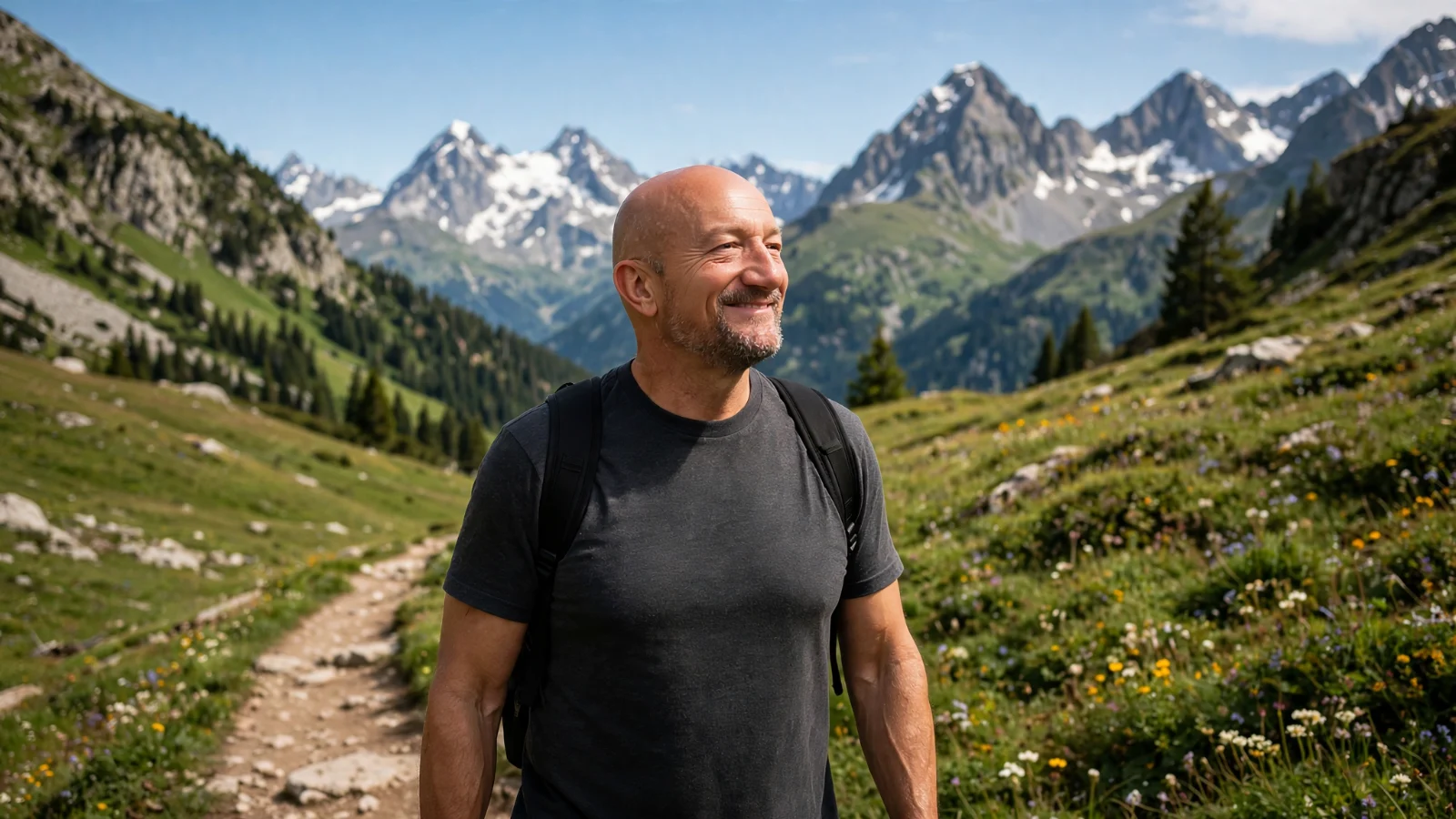
I have known many people who postpone enjoyment until life finally becomes more cooperative.
They will travel when they have more money.
They will relax when the work is finished.
They will enjoy themselves after retirement.
They will start living when the mortgage is lower, the children are older, the house is fixed, the schedule is calmer, or the bank account looks more respectable.
I understand the logic.
I just never learned to live that way.
Scarcity in communist Romania taught me something that has stayed with me: if I waited for abundance before enjoying life, I might be waiting a very long time.
A Loaf of Bread, Bacon, Green Onions, and a Good Weekend
When I was younger, weekend trips into nature did not require much.
I might take a loaf of bread, some bacon, and green onions.
That was enough.
I could fry the bacon over a campfire, walk twenty kilometers through the mountains, breathe fresh air, laugh with friends, and come home tired in the best possible way.
I did not spend the entire weekend thinking about what I could not afford.
I was too busy enjoying what was actually there.
America Did Not Make Me Rich Overnight
When I later moved to the United States and started working for Continental Airlines, my salary was barely enough for food and rent.
But the job came with flight benefits.
To me, that felt like treasure.
I could travel.
So I did.
I went around the country whenever I could.
Sometimes I rented a car and slept in it because a hotel was beyond my budget.
Sometimes I filled my pockets with leftover food from an airline meal and took a day trip to another city.
Financially, this was not luxury travel.
Emotionally, it felt rich.
I Was Walking Through Places I Had Dreamed About as a Child
That mattered more to me than the hotel room I could not afford.
I had grown up dreaming about places in America.
Now I could walk through them.
I could see the streets, hear the noise, look at the buildings, sit in the parks, and absorb the fact that I was actually there.
The experience was not diminished because I had little money in my pocket.
In some ways, maybe I noticed more.
Central Park Was Free
I remember going to New York and rollerblading in Central Park all day.
I could not afford to casually buy drinks or spend money everywhere I went.
But I could skate.
I could look around.
I could feel the energy of the city.
I could enjoy being somewhere that had once existed only in my imagination.
That was enough to make me happy.
Enjoyment and Consumption Are Not the Same Thing
This is one of the ideas I wish more people learned earlier.
We often treat enjoyment as if it must be purchased.
A better meal.
A nicer hotel.
A more expensive trip.
A bigger house.
A newer car.
Those things can absolutely be enjoyable.
I am not pretending otherwise.
But enjoyment itself is not a luxury product.
A walk can be enjoyable.
A swim can be enjoyable.
A long conversation can be enjoyable.
A cheap meal eaten somewhere beautiful can be enjoyable.
Curiosity is free.
Attention is free.
Wonder is still mostly untaxed.
This Is Not an Argument for Romanticizing Poverty
Money matters.
Anyone who has worried about rent, food, medical bills, debt, or retirement knows that.
Financial insecurity can create real stress and real limits.
I would never tell someone struggling financially that money does not matter.
It does.
The lesson is narrower and more practical:
Do not assume that every form of happiness has to wait until your finances improve.
There Is Almost Always a Cheaper Version of the Experience
This became almost a game for me.
If I could not afford the expensive version, I looked for the version I could afford.
No hotel? Sleep in the car.
No restaurant budget? Bring food.
No expensive entertainment? Walk the city.
No fancy weekend? Go to the mountains.
No luxury vacation? Use the flight benefit and explore for a day.
I was not pretending these versions were identical.
They were not.
But “not identical” is very different from “not worth doing.”
Waiting Can Become a Habit
The danger of constantly postponing fun is that the condition for happiness keeps moving.
When I earn more.
When I save enough.
When I retire.
When the children grow up.
When I lose weight.
When I have more free time.
When the house is finally done.
Then the condition is met, and another one appears.
There is always another reason to wait.
If we are not careful, “later” becomes the most expensive word in our life.
Retirement Did Not Change the Principle
Today I am retired.
I do not have large savings, and my pension mostly covers basic needs.
But I do not experience my life mainly through the things I lack.
I think about where I live.
I can swim in the ocean.
I can go on beautiful walks.
I can work on websites, which is genuinely fun for me.
I can stay mentally engaged with projects I care about.
And because of the lifetime flight benefits I earned from working in the airline industry, I can still fly to different countries, experience other cultures, and try different cuisines.
I do not feel trapped on an island.
I feel lucky to have both a place I enjoy returning to and a way to keep exploring.
Enough Can Look Different From Rich
One of the most useful distinctions in self-development is the difference between wealth and enough.
Wealth is usually measured against other people.
Enough is personal.
What do I actually need to have a good day?
What gives me energy?
What makes me curious?
What do I enjoy that costs little or nothing?
Those questions have served me better than constantly comparing my lifestyle with someone else's.
Small Pleasures Are Not Consolation Prizes
Sometimes we talk about simple pleasures as if they are what remains after we fail to afford the real pleasures.
I do not see them that way.
Swimming in the ocean is not a consolation prize.
Walking through a city is not a consolation prize.
Reading a good book is not a consolation prize.
Laughing with someone is not a consolation prize.
Watching a sunset is not the budget version of happiness.
These are actual pieces of life.
You Can Want More Without Rejecting What You Have
Contentment is sometimes misunderstood as giving up ambition.
I do not think that follows.
You can want a better job and still enjoy today's walk.
You can save for a bigger trip and still explore your own neighborhood.
You can want more money and still appreciate a free afternoon.
Gratitude does not require pretending every circumstance is ideal.
It only asks us to notice what is already available.
Try This Today
Think of one enjoyable thing you have been postponing because the ideal version feels too expensive, complicated, or inconvenient.
Then ask:
What is the simplest version of this that I could do now?
If you cannot afford a weekend away, take a long walk somewhere new.
If you cannot afford dinner out, make something simple and eat it somewhere beautiful.
If you cannot travel far, explore a place nearby you have never bothered to visit.
If you cannot buy the equipment, look for a free version of the activity.
If you cannot take a week off, protect one afternoon.
The goal is not to pretend limits do not exist.
It is to stop letting the ideal version of life cancel the available version.
I have had periods when my pockets were nearly empty and my life still felt full.
That lesson has followed me from the mountains of Romania to American cities and into retirement.
Life does not become wonderful only after we become rich.
Sometimes it becomes wonderful when we stop overlooking the parts of it that were already free.