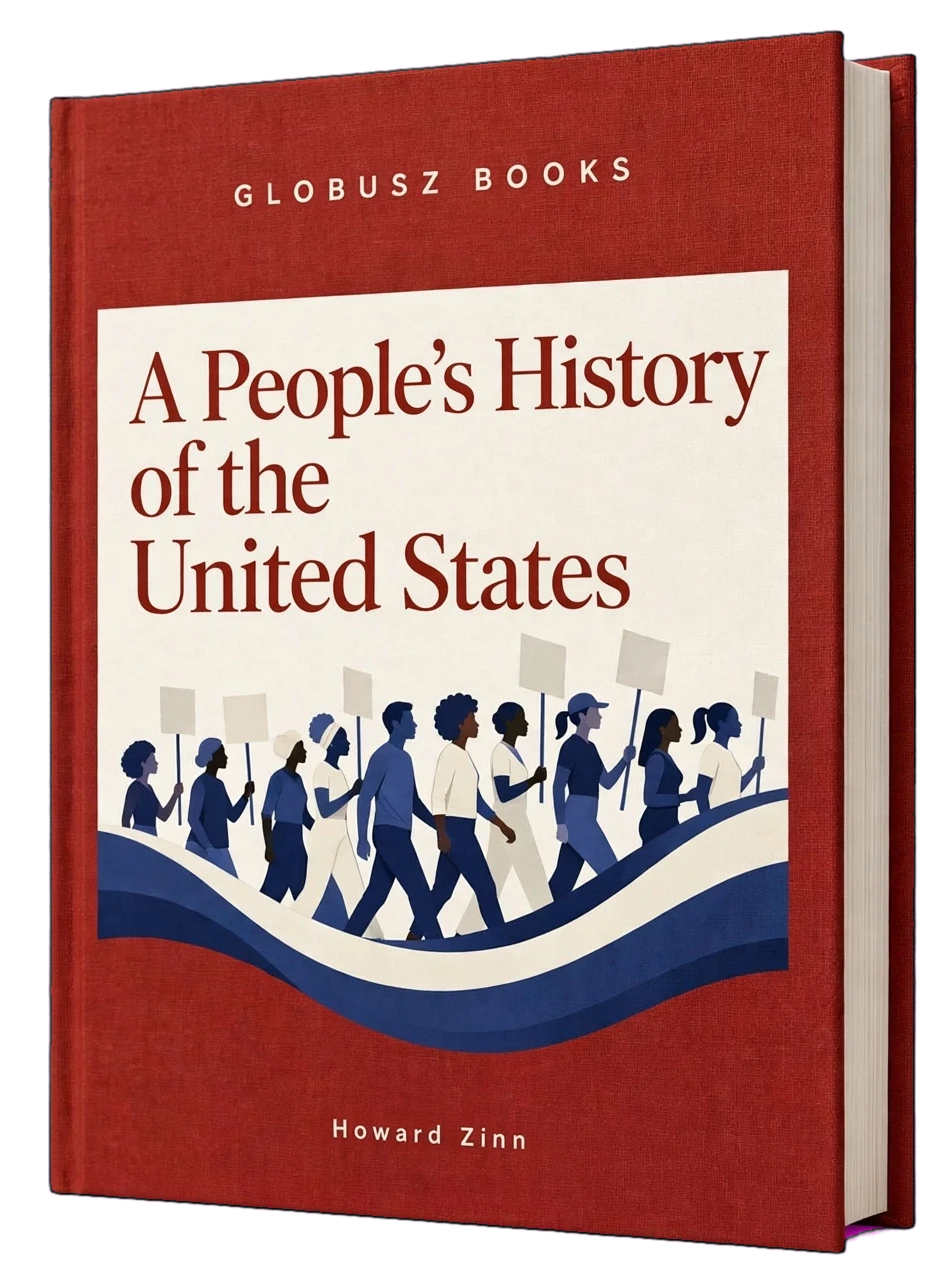
Human-reviewed summary and review
A People's History of the United States by Howard Zinn — Summary & Review
Howard Zinn · English
Howard Zinn’s "A People’s History of the United States" turns history upside down by giving voice to those usually left out—Indigenous peoples, enslaved Africans, workers, and immigrants. Instead of glorifying presidents and generals, it exposes the harsh realities behind America’s founding myths. Ready to see the other side of the story?
Worth reading
The short version: History isn’t just a parade of presidents and battles; it’s a messy, often ugly story told by the winners. Zinn’s book forces us to listen to the people who usually get talked over—the ones who lived through exploitation, fought back, and shaped the country in ways official histories often ignore. It’s not perfect, but it’s a damn necessary corrective that broadens our understanding of America’s past and challenges us to think critically about the stories we accept.
Stefan's verdict: Worth considering for Readers frustrated with traditional, elite-focused history books.; less useful if Readers wanting a neutral, purely fact-based historical account without interpretation..
3 min review526 wordsOriginal book: Introductory
CriticalThinkingSocialJusticeHistoricalAwarenessEmpowermentActivismEducationPerspectiveShift
Globusz Books summary
What the book is about
Howard Zinn’s "A People’s History of the United States," first published in 1980 and updated in 2003, offers a sweeping, revisionist retelling of American history that centers the experiences and struggles of marginalized groups rather than the traditional focus on presidents, generals, and elites. Zinn’s approach challenges the sanitized, celebratory narratives that dominate textbooks and popular understanding, arguing that history is often written by and for those in power, while the stories of Indigenous peoples, enslaved Africans, working-class laborers, women, and immigrants are overlooked or minimized.
The book begins with a stark reassessment of the arrival of Christopher Columbus and European colonization. Rather than portraying it as a heroic discovery, Zinn exposes the catastrophic consequences for Native American populations: widespread violence, enslavement, and diseases introduced by Europeans decimated Indigenous communities, amounting to near-genocide. This foundational critique sets the tone for the rest of the book, which consistently reveals the dark undercurrents of American history.
Zinn then delves into the institution of slavery, emphasizing its central role in building the nation’s wealth at the expense of millions of enslaved Africans. He refuses to treat slavery as a mere backdrop to progress and instead highlights the brutal realities faced by enslaved people, as well as their persistent resistance through rebellions, escapes, and everyday acts of defiance. This focus on agency challenges narratives that depict enslaved individuals as passive victims.
Labor struggles are a major theme throughout the book. Zinn chronicles the rise of industrial capitalism and the harsh exploitation of workers, spotlighting figures like Mary Harris “Mother” Jones and organizations such as the Industrial Workers of the World (IWW). These stories reveal the fierce battles fought by workers for better conditions, fair wages, and dignity, often met with violent repression by elites determined to maintain control.
Beyond domestic issues, Zinn offers a critical perspective on U.S. foreign policy and military interventions. He portrays wars like the Spanish-American War and the Vietnam War not as noble endeavors but as imperialistic ventures designed to expand elite interests and economic power. This critique exposes the gap between patriotic rhetoric and the realities of power, prompting readers to reconsider the motives behind American military actions.
What makes "A People’s History" especially impactful is its accessible prose and comprehensive scope, making complex historical debates approachable for a wide audience. It has become a staple in classrooms and activist circles, encouraging readers to question official histories and recognize the voices of those often silenced. However, the book is not without controversy. Critics argue that Zinn’s Marxist-influenced lens sometimes oversimplifies complex events into class struggles and that his selective use of sources may introduce bias. Nonetheless, these critiques underscore the book’s role in sparking important debates about historiography and representation.
Ultimately, Zinn’s work is a call to recognize that history is messy, conflicted, and often shaped by power dynamics that favor elites. By listening to the stories of marginalized groups—those who lived through exploitation and fought back—readers gain a richer, more inclusive understanding of America’s past. "A People’s History" invites us to rethink what we know about the nation’s origins, its struggles, and its ongoing challenges, making it a vital corrective to traditional historical narratives.
Beyond the summary
What might this book awaken in you?
History isn’t just a parade of presidents and battles; it’s a messy, often ugly story told by the winners. Zinn’s book forces us to listen to the people who usually get talked over—the ones who lived through exploitation, fought back, and shaped the country in ways official histories often ignore. It’s not perfect, but it’s a damn necessary corrective that broadens our understanding of America’s past and challenges us to think critically about the stories we accept.
Before you commit
Why you might read this
Howard Zinn’s "A People’s History of the United States" turns history upside down by giving voice to those usually left out—Indigenous peoples, enslaved Africans, workers, and immigrants. Instead of glorifying presidents and generals, it exposes the harsh realities behind America’s founding myths. Ready to see the other side of the story?
Spoiler sensitivity: lowThis is a nonfiction summary.
Themes worth noticing
Marginalization and Voice
Explores how history often sidelines certain groups and the importance of bringing their stories forward.
Resistance and Agency
Highlights the ongoing fight against oppression by ordinary people throughout American history.
Power and Exploitation
Examines how economic and political elites have shaped history to serve their interests.
Imperialism and War
Critiques the motives behind U.S. military actions and foreign policy.
Historical Narrative and Truth
Questions who gets to tell history and challenges dominant, often sanitized, versions.
Class Struggle and Economic Inequality
Analyzes the role of class conflicts and economic disparities in shaping social and political developments.
Education and Historical Consciousness
Addresses how history is taught and the impact of inclusive narratives on collective understanding and social justice.
Key ideas, explained
History from the Bottom Up
Zinn flips the usual script by focusing on the experiences of marginalized groups rather than elites. Instead of presidents and generals, the spotlight is on Indigenous peoples, enslaved Africans, workers, women, and immigrants who shaped history through struggle and resistance.
Colonialism as Catastrophe
The arrival of Europeans wasn’t just a discovery; it was a disaster for Native Americans. Zinn details how violence, enslavement, and disease decimated Indigenous populations, challenging the sanitized tales of early American history.
Slavery and Resistance
Slavery is shown not only as an economic engine for elites but as a brutal system met with constant resistance. Zinn highlights uprisings and acts of defiance, reminding us that enslaved people were not passive victims but active agents.
Labor’s Forgotten Battles
The struggles of workers against exploitation are central to the narrative. Figures like Mother Jones and movements like the IWW illustrate the ongoing fight for fair treatment and the harsh realities of capitalist expansion.
Imperialism and War Critiqued
Zinn doesn’t buy the patriotic spin on U.S. military actions. Wars like Vietnam and the Spanish-American War are portrayed as serving elite interests, exposing the darker motives behind American foreign policy.
How to Use This Book in Real Life
Question the Official Story
Don’t take history at face value. Look for whose voices are missing and consider the perspectives of those usually sidelined.
Recognize Resistance Everywhere
History isn’t just about rulers and battles; it’s also about people pushing back. Notice the acts of defiance that challenge injustice.
Understand Complexity, Not Just Heroes and Villains
Avoid oversimplified narratives. Real history is messy, with conflicting interests and no clear-cut good guys.
Connect Past Struggles to Present Issues
Many struggles from history—racial injustice, workers’ rights, imperialism—still echo today. Use historical awareness to inform your view of current events.
Be Skeptical but Open-Minded
Zinn’s perspective isn’t the only one, but it’s a valuable corrective. Balance skepticism with curiosity to build a richer understanding.
What the book does especially well
- Boldly centers marginalized voices often ignored in mainstream histories.
- Accessible, engaging prose that invites readers from all backgrounds.
- Comprehensive scope covering centuries of American history.
- Provokes critical thinking and challenges accepted narratives.
- Useful in educational settings to foster inclusive historical awareness.
- Encourages readers to critically examine power structures and their impact on history.
- Integrates social, economic, and political history to provide a multidimensional view.
Where the book gets shaky
- Sometimes leans heavily on a Marxist class struggle framework, which can oversimplify complex events.
- Selective use of sources may introduce bias and omit contradictory evidence.
- Critics argue it can portray history too one-sidedly, potentially alienating some readers.
- Less focus on nuance in elite perspectives or positive reforms.
- Published decades ago, some interpretations may feel dated or less relevant to current historiographical debates.
- The narrative’s strong ideological stance may not satisfy readers seeking strictly neutral accounts.
Questions to carry with you
- Whose stories are missing from the history I know?
- How does power shape the stories we’re told about the past?
- What acts of resistance have shaped the society I live in?
- How can understanding marginalized perspectives change my view of current events?
- Am I ready to question comfortable myths about my country’s history?
- In what ways do historical narratives influence present-day social and political dynamics?
The bottom line
History isn’t just a parade of presidents and battles; it’s a messy, often ugly story told by the winners. Zinn’s book forces us to listen to the people who usually get talked over—the ones who lived through exploitation, fought back, and shaped the country in ways official histories often ignore. It’s not perfect, but it’s a damn necessary corrective that broadens our understanding of America’s past and challenges us to think critically about the stories we accept.
Reader feedback
Was this summary useful?
Rate the Globusz summary of A People's History of the United States, not the book itself.
Loading reader ratings…
Explore the theme
More books about perspective
Continue the journey
Read the original when you are ready.
This summary scratches the surface of Zinn’s sweeping narrative, but the full book delivers the stories, details, and voices that bring this alternative history to life. Reading it in full means encountering firsthand accounts, vivid examples, and the layered complexity of American history from those who lived it. The book’s power lies in its ability to unsettle comfortable myths and provoke thoughtful reflection, something a summary can only hint at. If you want to challenge your understanding of the U.S. and appreciate the depth of its people’s struggles, the full text is worth your time.
Read the original if: you want the evidence, stories, examples, nuance, and full argument in the author's own voice.
The summary may be enough if: you only need the central framework or want to decide whether this book suits you.
Is this worth your time if you…?
Readers frustrated with traditional, elite-focused history books.
Found an error or outdated detail? Contact Stefan with a correction.