Human-reviewed summary and review
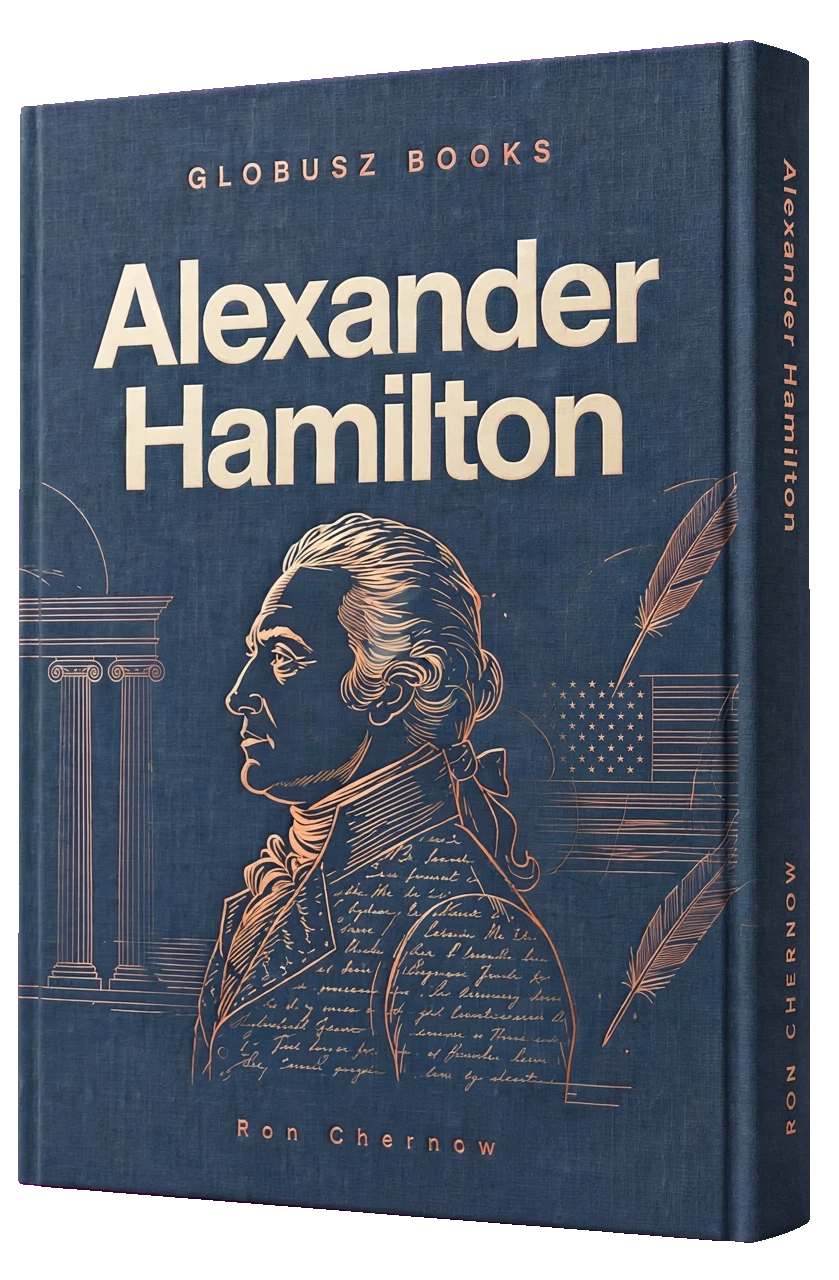
Alexander Hamilton by Ron Chernow — Summary & Review
Ron Chernow · English
Alexander Hamilton didn’t just help found America; he practically wrote its financial playbook while juggling scandal, war, and a messy personal life. If you think you know the guy from the musical, think again—there’s a lot more grit, grit, and downright human messiness behind the legend.
Read the summary first
The short version: Hamilton was no saint, no flawless genius, and certainly no simple hero. He was a complicated, driven man who helped build America’s framework while wrestling with his own demons and contradictions. Chernow’s biography doesn’t sugarcoat that. It’s a reminder that history is made by messy humans, not mythic figures—and that understanding that messiness is where the real insight lies.
Stefan's verdict: Worth considering for Anyone curious about the real Alexander Hamilton beyond the Broadway musical hype.; less useful if Casual readers looking for a quick overview or light history book..
3 min review581 wordsOriginal book: Introductory
HistoricalUnderstandingPoliticalInsightLeadershipLessonsPersonalAmbitionLegacyReflection
Globusz Books summary
What the book is about
Ron Chernow’s biography of Alexander Hamilton is a comprehensive and richly detailed exploration of one of America’s most complex and influential Founding Fathers. Far from the polished hero often portrayed in popular culture, Chernow presents Hamilton as a man forged by adversity and contradiction. Born out of wedlock in the Caribbean and orphaned in his youth, Hamilton’s early life was marked by hardship and uncertainty. Yet, these challenges fueled an extraordinary ambition and a relentless drive to rise above his circumstances. Chernow’s narrative traces Hamilton’s journey from these humble beginnings to becoming a central figure in the founding of the United States.
Hamilton’s military service during the Revolutionary War, particularly as George Washington’s trusted aide-de-camp, showcased his strategic mind and unwavering dedication to the revolutionary cause. However, it is his post-war vision that truly defines his legacy. As the nation’s first Secretary of the Treasury, Hamilton laid the foundation for the United States’ financial system. His advocacy for a strong central government and a robust national economy was revolutionary at the time and remains influential today. He championed the creation of a national bank, the federal assumption of state debts, and policies promoting industrial growth and fiscal stability. These initiatives not only helped stabilize the fledgling economy but also sparked intense political debates that shaped the early republic.
Chernow does not limit the biography to Hamilton’s public achievements; he delves deeply into his personal life, revealing a man whose private affairs were as tumultuous as his political career. Hamilton’s marriage to Eliza Schuyler was a partnership marked by devotion but also by tragedy and scandal. His friendships and rivalries, particularly with figures like Aaron Burr, added layers of drama that culminated in the infamous duel that ended Hamilton’s life. Chernow highlights Hamilton’s flaws—his arrogance, his sometimes ruthless ambition, and his complicated stance on slavery and race—painting a portrait of a man who was as human and fallible as he was brilliant.
What sets this biography apart is Chernow’s refusal to simplify Hamilton into a mythic hero or a villain. Instead, he presents a nuanced character study situated within the turbulent birth of a nation. Hamilton’s immigrant background and outsider status are shown as both sources of his drive and reasons for the fierce opposition he faced. The book captures the political infighting, ideological battles, and cultural tensions of the era, making Hamilton’s story resonate with contemporary readers.
Chernow’s writing style is engaging and accessible, blending scholarly rigor with narrative flair. The biography reads like a compelling story, bringing to life the personalities, conflicts, and events that shaped early America. While the book’s length and detail may challenge some readers, those who persist are rewarded with a vivid and textured understanding of Hamilton’s life and legacy.
Critics have noted that Chernow’s sympathetic portrayal sometimes softens Hamilton’s more controversial traits, and the dense political and financial content can be daunting. Nevertheless, the biography remains a definitive work that illuminates the complexities of its subject and the era. It invites readers to grapple with the contradictions inherent in Hamilton’s character and the founding of the United States itself.
Ultimately, Chernow’s "Alexander Hamilton" is not just a biography but a lens through which to view the origins of American political and economic systems, the nature of leadership, and the enduring impact of personal ambition and ideological conflict. It challenges readers to reconsider what they think they know about Hamilton and offers a richer, more human understanding of a man who helped shape the nation’s destiny.
Beyond the summary
What might this book awaken in you?
Hamilton was no saint, no flawless genius, and certainly no simple hero. He was a complicated, driven man who helped build America’s framework while wrestling with his own demons and contradictions. Chernow’s biography doesn’t sugarcoat that. It’s a reminder that history is made by messy humans, not mythic figures—and that understanding that messiness is where the real insight lies.
Before you commit
Why you might read this
Alexander Hamilton didn’t just help found America; he practically wrote its financial playbook while juggling scandal, war, and a messy personal life. If you think you know the guy from the musical, think again—there’s a lot more grit, grit, and downright human messiness behind the legend.
Spoiler sensitivity: lowThis is a nonfiction summary.
Themes worth noticing
Ambition and Outsider Identity
How Hamilton’s background as an immigrant and orphan fueled his relentless drive and shaped his vision for America.
Power and Political Conflict
The fierce battles over federal authority, economic policy, and national identity that defined the early US and Hamilton’s role in them.
Human Complexity Behind Historical Figures
Exploring the contradictions, flaws, and personal dramas that made Hamilton a deeply human—and often controversial—figure.
Legacy and Memory
How Hamilton’s life and ideas have been remembered, mythologized, and contested over time, including in modern culture.
Key ideas, explained
Hamilton’s outsider status fueled his ambition
Born in the Caribbean and orphaned early, Hamilton was never part of the colonial elite. This outsider perspective drove his relentless push for a strong central government and a national identity that could hold its own against old-world powers.
Financial genius meets political firestorm
Hamilton’s economic policies—like creating a national bank and assuming state debts—were bold and foundational but also sparked fierce opposition. His vision for America’s financial system laid the groundwork for the country’s future but also deepened political divides.
The man behind the myth is messy and human
Hamilton was brilliant but arrogant, principled but sometimes ruthless, a patriot who also courted scandal. Chernow’s biography doesn’t sanitize him but shows the contradictions that made Hamilton both a hero and a lightning rod.
Personal relationships shape political destiny
Hamilton’s marriage, friendships, and rivalries (especially with Aaron Burr) were deeply intertwined with his political life. Understanding these personal dynamics is key to grasping his rise and fall.
The legacy of early American political battles still matters
Hamilton’s fights over federal power, economic policy, and national identity set patterns that echo in today’s political landscape. His story helps explain why America’s founding was as contentious as it was transformative.
How to Use This Book in Real Life
Don’t underestimate the power of an outsider’s perspective
Hamilton’s immigrant background shaped his drive and ideas. Sometimes being on the outside looking in gives you the clarity and urgency to push for big changes.
Complex people make complex history
Avoid simplistic heroes or villains. Real historical figures are messy, contradictory, and human. Embracing that complexity helps us understand their impact more honestly.
Big ideas come with big resistance
Hamilton’s vision for a strong federal government was revolutionary but unpopular with many. If you want to change things, expect pushback—and sometimes fierce opposition.
Personal relationships influence public outcomes
Hamilton’s feuds and friendships weren’t just gossip; they shaped politics and history. Keep in mind how personal dynamics can affect professional or political decisions.
History’s messy contradictions still resonate today
Understanding the founding debates helps make sense of current political tensions. History isn’t just about the past; it’s a lens for the present.
What the book does especially well
- Meticulously researched with a wealth of detail that brings the era and Hamilton’s character to life.
- Balanced portrayal that humanizes Hamilton without turning him into a flawless hero or a caricature.
- Engaging narrative style that makes complex political and financial topics accessible to general readers.
- Interweaves personal and political stories to show how they influenced each other.
- Provides historical context that connects Hamilton’s time to ongoing American political themes.
Where the book gets shaky
- The sheer length and density of detail may overwhelm casual readers or those new to early American history.
- Chernow’s generally sympathetic tone occasionally downplays some of Hamilton’s more controversial or problematic traits.
- Some readers might find the focus on political and financial details dry or too intricate.
- Does not deeply explore perspectives of marginalized groups affected by Hamilton’s policies.
- The biography’s historical context can feel dated when viewed through a 21st-century lens on race and inequality.
Questions to carry with you
- How does being an outsider shape your ambitions and worldview?
- What do we lose when we simplify historical figures into heroes or villains?
- How do personal relationships influence political or professional outcomes today?
- What can early American political conflicts teach us about current divisions?
- How do we reconcile the achievements and flaws of influential figures in history?
The bottom line
Hamilton was no saint, no flawless genius, and certainly no simple hero. He was a complicated, driven man who helped build America’s framework while wrestling with his own demons and contradictions. Chernow’s biography doesn’t sugarcoat that. It’s a reminder that history is made by messy humans, not mythic figures—and that understanding that messiness is where the real insight lies.
Reader feedback
Was this summary useful?
Rate the Globusz summary of Alexander Hamilton, not the book itself.
Loading reader ratings…
Explore the theme
More books about perspective
Continue the journey
Read the original when you are ready.
This biography isn’t just about Hamilton’s life; it’s about the birth of a nation and the fierce debates that shaped it. The full book offers a rich, textured experience that goes beyond the headlines and soundbites. Chernow’s storytelling pulls you into the 18th century with vivid detail and sharp analysis, making you feel the stakes and struggles of the era. If you want to truly understand how Hamilton’s ideas and personality influenced America’s foundation—and why those influences still matter—this is the deep dive you need.
Read the original if: you want the evidence, stories, examples, nuance, and full argument in the author's own voice.
The summary may be enough if: you only need the central framework or want to decide whether this book suits you.
Is this worth your time if you…?
Anyone curious about the real Alexander Hamilton beyond the Broadway musical hype.
Found an error or outdated detail? Contact Stefan with a correction.