Human-reviewed summary and review
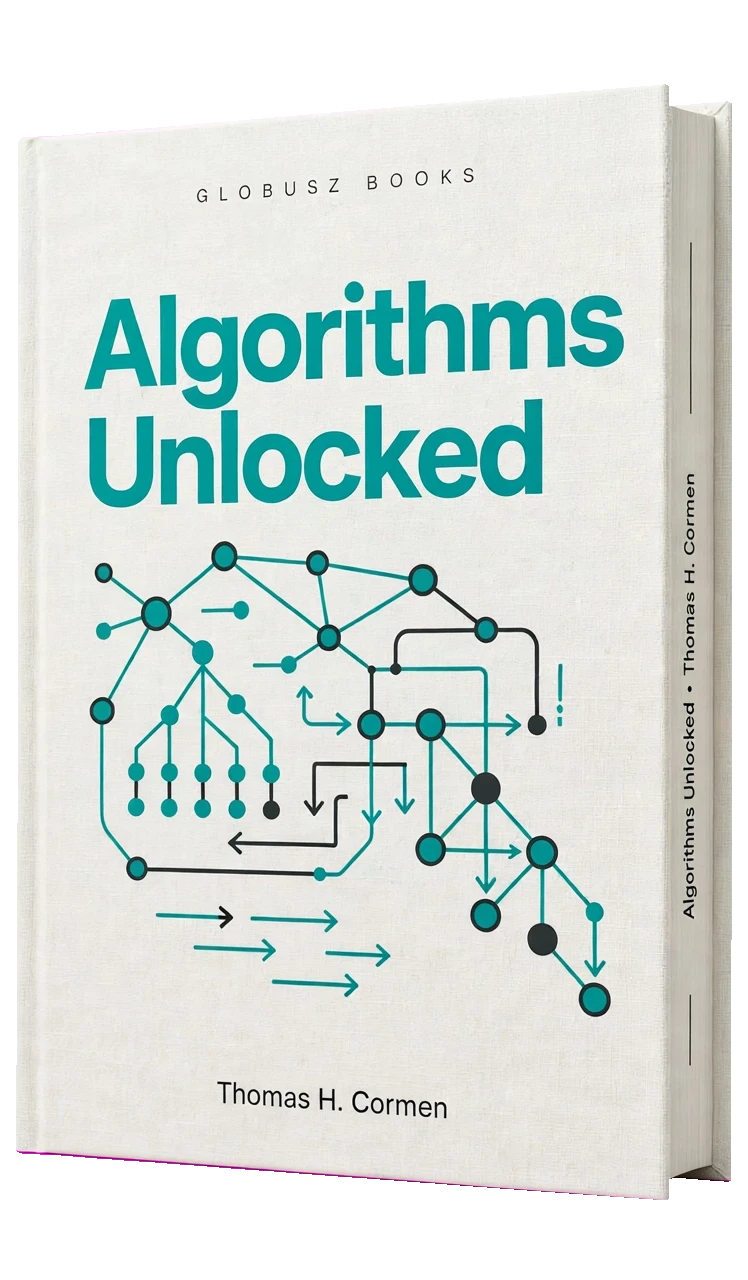
Algorithms Unlocked by Thomas H. Cormen — Summary & Review
Thomas H. Cormen · English
Algorithms are the unseen engines running everything from your GPS to your online bank. But if the word makes you glaze over, Thomas Cormen’s 'Algorithms Unlocked' is your chance to get the basics without drowning in jargon. It’s like having a patient friend explain what’s under the hood of your smartphone — minus the tech-speak and with just enough grit to keep it real.
Read the summary first
The short version: If algorithms feel like a dark art, 'Algorithms Unlocked' shines a practical flashlight without turning it into a math lecture. It respects your smarts, connects theory to the tech you use every day, and keeps things clear enough to follow without a CS degree. It’s not perfect — some parts might still make you scratch your head — but it’s a solid intro that won’t waste your time or talk down to you.
Stefan's verdict: Worth considering for Curious readers wanting to understand the basics of algorithms without a heavy math or coding background.; less useful if Experienced programmers or computer scientists looking for deep, rigorous algorithm analysis..
3 min review554 wordsOriginal book: Introductory
Tech literacyCritical thinkingProblem-solvingDigital awareness
Globusz Books summary
What the book is about
Thomas H. Cormen, one of the brains behind the classic 'Introduction to Algorithms,' decided to write a gentler, more approachable book for the algorithm-curious. 'Algorithms Unlocked' is that book — a roughly 240-page guided tour through the core concepts of algorithms, minus the intimidation factor of heavy math or dense theory.
What’s refreshing here is how Cormen treats algorithms as everyday magic, not just academic puzzles. He starts with the basics: what an algorithm actually is, and why it matters beyond the computer science classroom. Algorithms aren’t just lines of code; they’re step-by-step recipes that power everything from finding your lost keys (well, almost) to securing your online messages.
The book then rolls through the essentials: searching and sorting — the bread and butter of organizing data — but explained in a way that feels more like storytelling than a lecture. You get the gist of how your phone quickly finds a contact or how streaming services sort recommendations, without drowning in formulas.
Graphs get a spotlight next, which might sound dry, but these structures underpin everything from social networks to GPS navigation. Cormen shows how algorithms navigate these webs to find the shortest path or detect connections, making the abstract tangible.
String processing might seem niche, but it’s the backbone of text searches, DNA sequencing, and more. The book breaks down how computers handle these sequences efficiently, which is surprisingly relevant if you’ve ever Googled something or used spell check.
Security gets a nod too, with cryptography explained not as an arcane art but as practical algorithms that keep your data safe. It’s a neat reminder that behind every encrypted message is a clever piece of algorithmic thinking.
Data compression and the theory of computation round out the journey, giving readers a peek into how data gets squeezed to save space and what computers can and can’t solve, respectively. These chapters are less about hands-on skills and more about appreciating the limits and cleverness of computing.
Cormen’s style is straightforward and clear, with minimal math but no hand-holding through every detail. That means it’s accessible but expects readers to bring some curiosity and patience. It’s not a quick fix for complete novices but a solid primer for those willing to engage.
The real charm is how the book connects algorithms to real-world tech — from GPS route planning to online security — making it clear these aren’t just academic exercises but tools that shape daily life. If you’ve ever wondered how your phone decides the fastest route home or how your messages stay private, this book gives you the behind-the-scenes look without turning into a textbook.
The trade-off? It’s not the deep dive that hardcore programmers might want, nor is it a math-free magic wand. Some readers might find parts a bit technical or wish for more hands-on examples. But for its intended audience — curious learners, students, and professionals dipping toes into computer science — it strikes a good balance between clarity and substance.
In short, 'Algorithms Unlocked' is like a friendly guide walking you through the basics of algorithmic thinking. It’s neither a manual nor a manifesto, but a solid introduction that respects your intelligence without expecting a coding degree. If you want to understand the logic behind the tech shaping your world, this book is a practical place to start.
Beyond the summary
What might this book awaken in you?
If algorithms feel like a dark art, 'Algorithms Unlocked' shines a practical flashlight without turning it into a math lecture. It respects your smarts, connects theory to the tech you use every day, and keeps things clear enough to follow without a CS degree. It’s not perfect — some parts might still make you scratch your head — but it’s a solid intro that won’t waste your time or talk down to you.
Before you commit
Why you might read this
Algorithms are the unseen engines running everything from your GPS to your online bank. But if the word makes you glaze over, Thomas Cormen’s 'Algorithms Unlocked' is your chance to get the basics without drowning in jargon. It’s like having a patient friend explain what’s under the hood of your smartphone — minus the tech-speak and with just enough grit to keep it real.
Spoiler sensitivity: lowThis is a nonfiction summary.
Themes worth noticing
Demystifying Technology
The book breaks down complex computational ideas into digestible parts, showing that algorithms aren’t magic but logical tools anyone can grasp.
Balancing Theory and Practice
Cormen walks the line between abstract concepts and their practical applications, emphasizing why understanding both matters.
Limits of Computation
Acknowledges that not all problems have efficient algorithmic solutions, encouraging a realistic view of computing power.
Key ideas, explained
Algorithms Are Everywhere, Not Just in Code
Cormen emphasizes that algorithms aren’t just computer programs; they’re step-by-step procedures that solve problems in any context. Whether it’s sorting a playlist or securing a bank transaction, algorithms are the invisible instructions making tech tick.
Simplicity and Efficiency Matter
The book highlights how different algorithms can perform the same task but vary wildly in speed and resource use. Understanding these differences is crucial because the ‘best’ algorithm depends on context — like how fast you need results or how much memory you have.
Real-World Applications Bring Algorithms to Life
Instead of abstract theory, Cormen connects algorithms to everyday tech — GPS routing, search engines, cryptography, and even data compression. This practical lens helps readers see why algorithms matter beyond the classroom.
Algorithmic Limits Shape What Computers Can Do
The book doesn’t shy away from the fact that some problems are inherently hard or impossible to solve efficiently. Introducing the theory of computation gives readers a realistic sense of the boundaries of computer science.
Minimal Math, Maximum Clarity
While not math-free, the book keeps formulas and proofs light, focusing instead on intuition and conceptual understanding. This approach makes complex ideas accessible without dumbing them down.
How to Use This Book in Real Life
Look for Algorithms in Everyday Tech
Next time your phone finds a route or your email filters spam, remember there’s an algorithm behind it. Understanding this can demystify technology and make you a savvier user.
Evaluate Solutions by Efficiency, Not Just Correctness
When you solve problems — in coding or life — think about how quickly and efficiently your method works, not just whether it works. Sometimes the difference between a quick fix and a slow slog is an algorithm.
Don’t Fear the Math, But Don’t Get Lost in It
You don’t need to be a math whiz to grasp algorithms. Focus on the logic and purpose behind them first; the math is a tool, not a barrier.
Recognize the Limits of Automation
Some problems can’t be solved efficiently by any algorithm. Knowing this helps set realistic expectations for what technology can do.
Use This as a Launchpad, Not a Final Destination
Consider 'Algorithms Unlocked' a stepping stone to deeper study or practical application. It opens doors without pretending to be the whole house.
What the book does especially well
- Clear, approachable writing that demystifies a complex subject without oversimplifying.
- Strong focus on real-world applications that make abstract concepts tangible.
- Concise coverage that balances breadth and depth without overwhelming the reader.
- Minimal but sufficient use of math to aid understanding without alienating non-experts.
Where the book gets shaky
- Some sections may still be too technical for absolute beginners with no computing background.
- Lacks hands-on exercises or coding examples that could help reinforce learning.
- Does not provide the exhaustive detail or rigor found in more advanced algorithm textbooks.
- Certain topics, especially theory of computation, might feel rushed or abstract.
Questions to carry with you
- What algorithms shape the technology I use daily without me noticing?
- How do efficiency and resource constraints influence algorithm design?
- Where do the limits of computation affect what problems we can solve?
- How can understanding algorithms improve my interaction with technology?
The bottom line
If algorithms feel like a dark art, 'Algorithms Unlocked' shines a practical flashlight without turning it into a math lecture. It respects your smarts, connects theory to the tech you use every day, and keeps things clear enough to follow without a CS degree. It’s not perfect — some parts might still make you scratch your head — but it’s a solid intro that won’t waste your time or talk down to you.
If this idea interested you
Related books, with a reason to choose each one.
A different perspective on the same shelfEthical Machines: The Role of Ethics in AI and Machine LearningWendell Wallach
Machines are getting smarter, but do they know right from wrong? Wendell Wallach isn’t just asking if AI can make ethical decisions—he’s digging into how and whether we should even let them try. This isn’t sci-fi daydreaming; it’s a messy, urgent conversation about the moral code behind the algorithms shaping our lives.
Read the summary & review →A useful follow-up for exploring the subject furtherProgramming PearlsJon BentleyProgramming isn’t just banging out lines of code until something works. Jon Bentley’s "Programming Pearls" throws you right into the gritty reality that good programming is about crafting clever, efficient solutions—pearls, if you will—out of messy problems. This book doesn’t hand you magic spells or trendy frameworks; it forces you to think like a problem solver, not a code monkey.
Read the summary & review →Another entry point into this categoryAI EthicsMark CoeckelberghAI isn’t just some fancy tool you switch on and off. It’s a force quietly rewriting how we relate to each other, how society functions, and how we even think about what’s right and wrong. Mark Coeckelbergh’s AI Ethics cuts through the techno-babble to ask: what happens when machines start challenging our very idea of what it means to be human?
Read the summary & review →Explore the theme
More books about perspective
Technology relevance
Still relevant in 2026: Yes
Helps developers understand algorithms without deep theoretical math.
Topics: algorithms · programming · software development
Continue the journey
Read the original when you are ready.
The full book offers a balanced introduction that’s hard to find: technical enough to be meaningful, yet accessible enough to keep non-experts engaged. Cormen’s explanations provide context and clarity that quick summaries can’t capture. If you want to understand why algorithms matter and how they work in the devices and services you rely on, this book lays a solid foundation. It also primes you for deeper study if you decide to take the plunge into computer science later on. Plus, the real-world examples throughout give you concrete anchors, making abstract ideas stick in a way dry textbooks often fail to do.
Read the original if: you want the evidence, stories, examples, nuance, and full argument in the author's own voice.
The summary may be enough if: you only need the central framework or want to decide whether this book suits you.
Is this worth your time if you…?
Curious readers wanting to understand the basics of algorithms without a heavy math or coding background.
Found an error or outdated detail? Contact Stefan with a correction.