Human-reviewed summary and review
Black Sun by Rebecca Roanhorse — Summary & Review
Rebecca Roanhorse · English
Black Sun flips the fantasy script by diving into a vibrant world inspired by ancient American cultures, not medieval Europe. It’s a story where solar eclipses and gods collide with pirates and political games. Think less dragons, more celestial drama and complex power plays.
Read the summary first
The short version: “Black Sun” isn’t your run-of-the-mill fantasy. It’s a world that demands attention and patience, rewarding you with a story that’s messy, human, and unapologetically different. If you’re ready to step off the beaten path and explore a richer, more complicated kind of fantasy, this one’s worth the trip.
Stefan's verdict: Worth considering for Fans of fantasy looking for stories beyond the usual medieval European template.; less useful if Readers who prefer fast-paced, action-heavy fantasy with clear-cut heroes and villains..
3 min review537 wordsOriginal book: Introductory
Cultural RepresentationComplex CharactersPolitical IntrigueMyth and ProphecyIdentity Exploration
Globusz Books summary
What the book is about
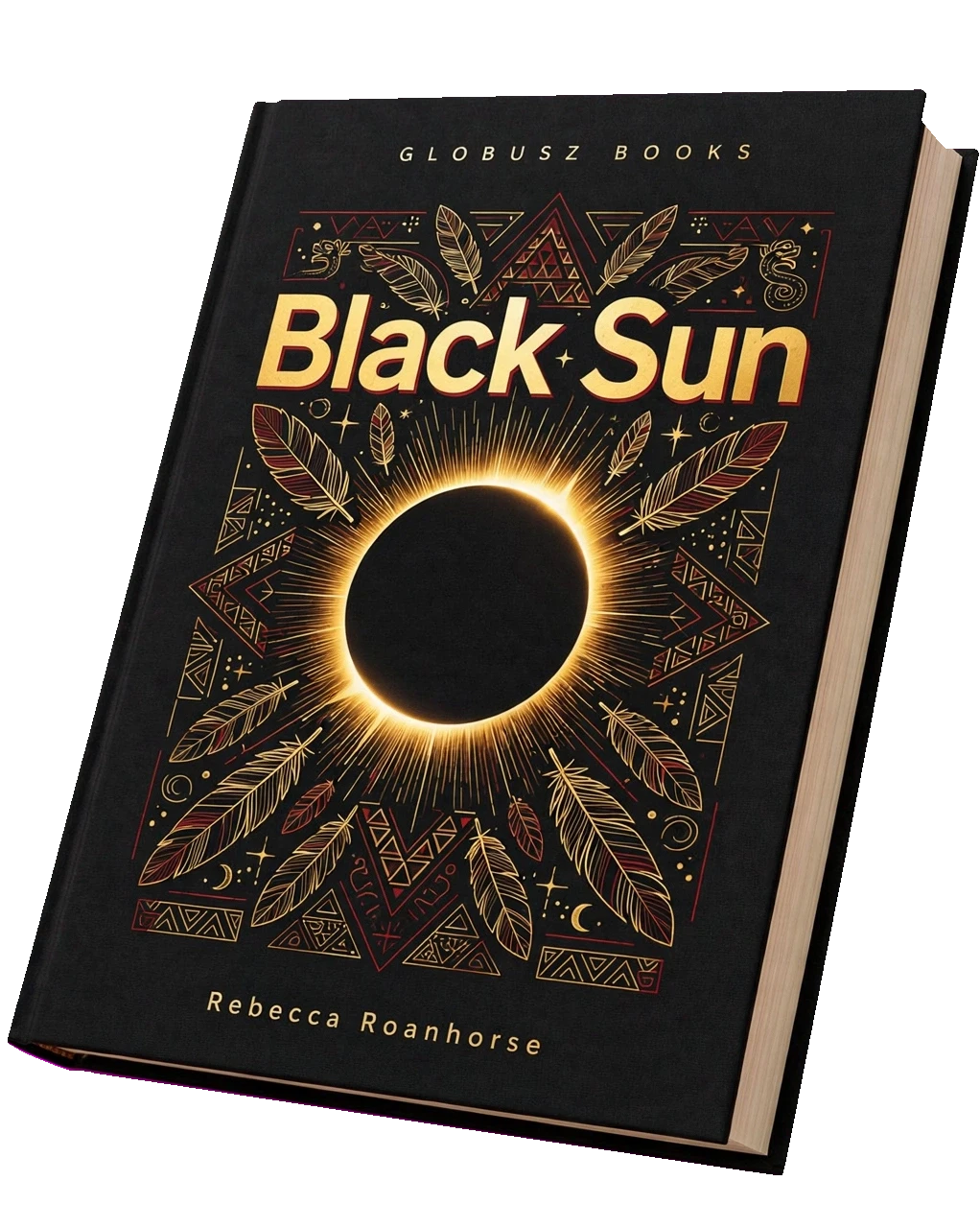
“Black Sun” by Rebecca Roanhorse is a fantasy novel that refuses to play it safe. Instead of dragging you to the usual Tolkien-esque landscapes, it plunges you into Tova, a bustling city inspired by pre-Columbian civilizations of the Americas. The setting alone is a breath of fresh air, with its rich cultural textures, vibrant clans, and a political landscape that feels raw and complicated rather than cartoonishly good versus evil.
The story orbits a rare solar eclipse coinciding with the winter solstice—a celestial event loaded with ominous prophecy. This isn’t just background fluff; it’s the heartbeat of the narrative, signaling the potential return of the Crow God, a figure wrapped in mystery and dread. The tension between prophecy and politics is palpable. You have Serapio, a young man marked by tragedy and destiny, groomed to be the vessel for this ancient god. He’s not your typical hero; blinded and scarred, his journey challenges the usual fantasy tropes of invincible protagonists and clear-cut fates.
Then there’s Xiala, a pirate captain with the uncanny ability to calm the seas with her voice. She’s tasked with escorting Serapio to Tova, navigating both treacherous waters and equally dangerous political currents. Xiala’s character adds a layer of grit and unpredictability, reminding you that power isn’t always about swords and spells—it’s sometimes about survival and cunning.
Naranpa, the Sun Priest, is another standout. Rising from humble beginnings to a position of religious authority, she embodies the complex interplay of power, faith, and gender. Her story is a sharp look at leadership under pressure, especially when the established order feels threatened by forces both seen and unseen. Okoa, a member of Tova’s ruling class, adds further political intrigue, his personal struggles intertwining with the city’s fate in ways that keep you guessing.
Roanhorse doesn’t just throw in diverse characters for show. Gender and sexuality are woven seamlessly into the fabric of this world, treated as natural facets of identity rather than plot devices. It’s refreshing to see a fantasy where queer identities exist without making the story about coming out or discrimination—it just is.
The prose is vivid and immersive, though the pacing occasionally slows to accommodate the dense world-building. If you’re the type who loves getting lost in detailed settings and complex societies, this is a plus. But if you’re itching for nonstop action, the narrative might test your patience at times. Still, the payoff is a story that feels lived-in and real, not just a stage for spectacle.
What sets “Black Sun” apart is its willingness to explore themes of destiny and identity without falling into fatalism. The characters wrestle with who they are versus who they’re expected to be, all while navigating a society on the brink of upheaval. The political intrigue is layered and messy, refusing to hand out easy answers or neat resolutions.
Overall, this is a novel that invites you to rethink what fantasy can be. It’s a tale of prophecy and power, but also of flawed humans trying to survive and find meaning in a world that’s anything but simple. If you’re tired of the same old fantasy tropes and want something that challenges your expectations while delivering a compelling story, “Black Sun” is worth your time.
Beyond the summary
What might this book awaken in you?
“Black Sun” isn’t your run-of-the-mill fantasy. It’s a world that demands attention and patience, rewarding you with a story that’s messy, human, and unapologetically different. If you’re ready to step off the beaten path and explore a richer, more complicated kind of fantasy, this one’s worth the trip.
Before you commit
Why you might read this
Black Sun flips the fantasy script by diving into a vibrant world inspired by ancient American cultures, not medieval Europe. It’s a story where solar eclipses and gods collide with pirates and political games. Think less dragons, more celestial drama and complex power plays.
Spoiler sensitivity: mediumPlot coverage is intentionally selective and avoids major late twists where possible.
Themes worth noticing
Destiny vs. Agency
The tension between what’s foretold and what characters choose to do underpins the narrative, questioning how much control we really have over our lives.
Power and Politics
Explores how leadership, religion, and social hierarchy interact, often in messy, morally gray ways.
Identity and Belonging
Characters navigate their personal identities amid larger cultural and societal expectations, highlighting fluidity and complexity.
Cultural Legacy
Draws on Indigenous American mythologies to challenge dominant fantasy narratives and honor marginalized histories.
Key ideas, explained
A New Fantasy Playground
“Black Sun” breaks free from the medieval European mold and immerses readers in a world inspired by ancient American cultures. This fresh setting brings new myths, politics, and social dynamics that feel authentic rather than borrowed.
Destiny vs. Free Will
The characters grapple with prophecies that seem to dictate their fates, but the story carefully explores how they resist, reinterpret, or accept these destinies, highlighting the tension between predetermined roles and personal agency.
Complex Political Intrigue
Power in Tova isn’t black and white. The novel dives into messy alliances, betrayals, and leadership struggles that reflect real-world politics more than fantasy clichés.
Identity Beyond Labels
Gender and sexuality are part of the world’s fabric, not a side plot. This normalization offers a refreshing take on representation, where diverse identities coexist without becoming the story’s sole focus.
Rich World-Building Balanced with Story
Roanhorse invests heavily in crafting a vivid, culturally resonant world. While this sometimes slows pacing, it pays off by creating a setting that feels alive and immersive, not just a backdrop.
How to Use This Book in Real Life
Notice How Culture Shapes Storytelling
Pay attention to how drawing from Indigenous American cultures changes the narrative dynamics. It’s a reminder that fantasy doesn’t have to be Eurocentric to be compelling.
Question Prophecy and Power
Reflect on how characters respond to fate and authority. The novel encourages skepticism toward rigid systems and invites you to consider the cost of blind obedience.
Appreciate Nuance in Representation
Observe how diverse identities are integrated naturally. This can guide readers to seek out stories that present inclusivity without tokenism or forced focus.
Balance World-Building with Narrative Drive
Notice the pacing shifts caused by detailed exposition. It’s a useful lens for understanding the trade-offs authors make between immersive settings and story momentum.
Look for Flawed, Human Characters
The protagonists aren’t perfect heroes. Their complexity invites readers to embrace imperfection and moral ambiguity in characters, making the story more relatable.
What the book does especially well
- Fresh setting inspired by underrepresented cultures brings originality to the fantasy genre.
- Complex, morally ambiguous characters that defy typical heroic archetypes.
- Seamless integration of diverse gender and sexual identities without spotlighting them as issues.
- Layered political intrigue that feels realistic and unpredictable.
- Vivid, immersive world-building that enriches the reading experience.
Where the book gets shaky
- Pacing suffers at times due to heavy world-building, which may frustrate readers seeking nonstop action.
- Some readers might find the multiple perspectives and political details dense or overwhelming.
- The mythological and prophetic elements, while intriguing, can feel opaque or underexplained initially.
- Not a traditional hero’s journey—readers expecting clear-cut good vs. evil might feel unsettled.
- Certain plot developments hinge on cultural knowledge that may require extra effort or research for some readers.
Questions to carry with you
- How do prophecies shape or limit a person’s choices?
- What does power look like when it’s messy and ambiguous rather than absolute?
- How does culture influence the stories we tell about gods and heroes?
- In what ways can diverse identities be incorporated naturally into world-building?
- What happens when leadership is challenged from within and without?
The bottom line
“Black Sun” isn’t your run-of-the-mill fantasy. It’s a world that demands attention and patience, rewarding you with a story that’s messy, human, and unapologetically different. If you’re ready to step off the beaten path and explore a richer, more complicated kind of fantasy, this one’s worth the trip.
Reader feedback
Was this summary useful?
Rate the Globusz summary of Black Sun, not the book itself.
Loading reader ratings…
Explore the theme
More books about reinvention
Continue the journey
Read the original when you are ready.
The full novel offers a layered experience that a summary can’t capture—like the slow burn of political machinations, the texture of its characters’ inner lives, and the unfolding of prophecies that resist easy interpretation. Roanhorse’s prose brings the world of Tova to life in a way that’s immersive and tangible, making the stakes feel personal rather than abstract. Plus, the interplay of myth and reality deepens as the story progresses, rewarding readers who stick with it beyond the surface. It’s a book that grows on you, revealing new facets with each chapter, and that’s something summaries just can’t replicate.
Read the original if: you want the evidence, stories, examples, nuance, and full argument in the author's own voice.
The summary may be enough if: you only need the central framework or want to decide whether this book suits you.
Is this worth your time if you…?
Fans of fantasy looking for stories beyond the usual medieval European template.
Found an error or outdated detail? Contact Stefan with a correction.