Human-reviewed summary and review
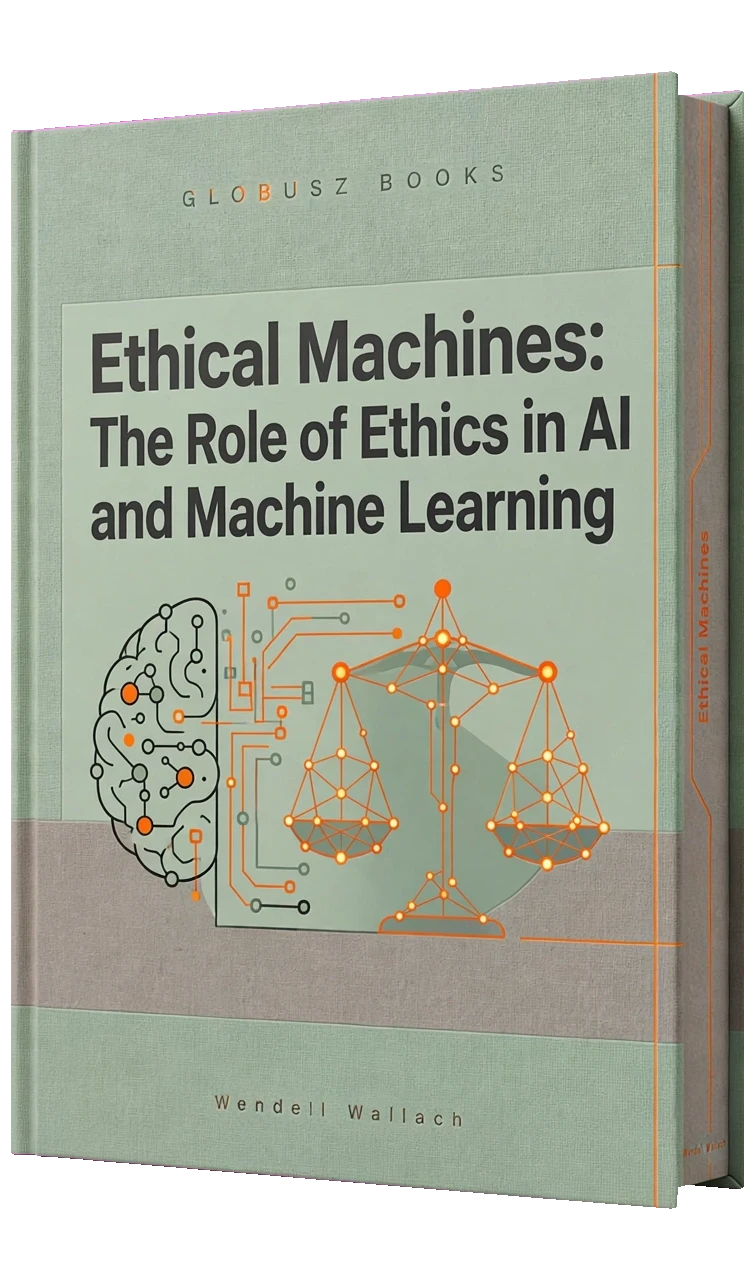
Ethical Machines: The Role of Ethics in AI and Machine Learning by Wendell Wallach — Summary & Review
Wendell Wallach · English
Machines are getting smarter, but do they know right from wrong? Wendell Wallach isn’t just asking if AI can make ethical decisions—he’s digging into how and whether we should even let them try. This isn’t sci-fi daydreaming; it’s a messy, urgent conversation about the moral code behind the algorithms shaping our lives.
Read the summary first
The short version: Wendell Wallach’s "Ethical Machines" refuses to let us pretend AI ethics is a footnote. It’s a messy, urgent, and deeply human conversation about what happens when machines start making choices that matter. If you want to understand why ethical AI isn’t just a luxury but a necessity, this book lays out the landscape without sugarcoating the hard questions. It won’t hand you neat answers, but it will sharpen your view of the challenges ahead.
Stefan's verdict: Worth considering for Ethicists and philosophers interested in applied ethics and AI.; less useful if Readers looking for technical AI programming manuals or coding guides..
3 min review539 wordsOriginal book: Introductory
AI EthicsTechnology ResponsibilityMoral PhilosophyAutonomous SystemsPolicy and Governance
Globusz Books summary
What the book is about
Wendell Wallach’s "Ethical Machines" dives headfirst into the thorny question that’s been lurking in the background of AI hype: can machines be ethical agents, and what does that even mean? Building on his earlier work, Wallach refuses to treat AI ethics as a side note or a futuristic fantasy. Instead, he tackles the messy reality of designing machines that don’t just follow orders but make decisions that matter in human terms.
At the core is the idea of Artificial Moral Agents (AMAs)—machines programmed to make ethical choices rather than blindly executing commands. Wallach argues this isn’t optional anymore. As AI systems gain autonomy, from self-driving cars to automated medical diagnostics, their actions have real-world consequences. If a car has to decide between two bad outcomes, or a diagnostic AI weighs risks and benefits, we need a framework that goes beyond code and data.
But here’s the catch: ethics isn’t a neat set of rules you can just plug in. Wallach’s exploration of ethical frameworks—utilitarianism, Kantian duty ethics, virtue ethics—shows just how complicated it is to translate centuries-old philosophical ideas into lines of code. Utilitarianism might push a self-driving car to minimize total harm, but whose harm counts more? Kantian ethics demands universal principles, but can a machine grasp that? Wallach suggests that no single approach fits perfectly, and hybrid or entirely new frameworks might be necessary.
Value alignment is another beast. Ensuring machines act in ways consistent with human values sounds straightforward until you realize humans themselves don’t agree on what those values are. Wallach doesn’t sugarcoat this dilemma. He points out the risk of embedding biases, cultural blind spots, or outright harmful priorities into supposedly ethical machines. This problem isn’t just technical—it’s deeply social and political.
Wallach also wrestles with autonomy and control. How much freedom should a machine have? Give it too little, and it’s just a fancy tool. Give it too much, and you risk losing oversight over decisions with moral weight. This tension plays out in debates about lethal autonomous weapons, AI judges, or even social media algorithms steering public opinion. Wallach’s take is clear-eyed: autonomy is a double-edged sword, and the ethical frameworks must include mechanisms for human accountability.
The book doesn’t pretend there are easy answers. Instead, Wallach lays out the landscape of challenges, from the theoretical to the practical. He’s skeptical of hype and wary of techno-utopian promises but also aware that ethical machines are not a luxury—they’re a necessity. The rapid advance of AI means we can’t afford to kick the ethics can down the road anymore.
Wallach’s style is accessible without dumbing down. He weaves philosophy, technology, and policy into a narrative that respects the reader’s intelligence but keeps things grounded. The book is a call to arms for ethicists, engineers, policymakers, and anyone concerned about the AI shaping our future. It’s not a manual or a blueprint but a thoughtful map of where we are and what’s at stake.
In short, "Ethical Machines" is a sober, detailed, and often compelling look at what it means to build machines that can—or at least should—make ethical choices. It’s a conversation starter and a warning shot wrapped into one, perfect for anyone ready to confront the moral complexities of our automated world.
Beyond the summary
What might this book awaken in you?
Wendell Wallach’s "Ethical Machines" refuses to let us pretend AI ethics is a footnote. It’s a messy, urgent, and deeply human conversation about what happens when machines start making choices that matter. If you want to understand why ethical AI isn’t just a luxury but a necessity, this book lays out the landscape without sugarcoating the hard questions. It won’t hand you neat answers, but it will sharpen your view of the challenges ahead.
Before you commit
Why you might read this
Machines are getting smarter, but do they know right from wrong? Wendell Wallach isn’t just asking if AI can make ethical decisions—he’s digging into how and whether we should even let them try. This isn’t sci-fi daydreaming; it’s a messy, urgent conversation about the moral code behind the algorithms shaping our lives.
Spoiler sensitivity: lowThis is a nonfiction summary.
Themes worth noticing
Machine Ethics
Exploring whether and how machines can make moral decisions rather than just follow instructions.
Value Alignment
The challenge of ensuring AI systems act in ways consistent with human values, which are often complex and contested.
Autonomy and Control
Balancing the freedom granted to AI systems with the need for human oversight and accountability.
Philosophy Meets Technology
Applying ethical theories to the practical realities of programming and deploying AI.
Ethics as Necessity
Arguing that ethical considerations must be integrated into AI development, not treated as optional.
Key ideas, explained
Artificial Moral Agents: Machines That Decide, Not Just Do
Wallach pushes the idea that as machines gain autonomy, they need to make ethical choices—not just follow programming blindly. This concept challenges the tech world to think beyond efficiency and functionality, demanding machines capable of moral reasoning or at least morally informed decision-making.
Ethical Frameworks Don’t Translate Easily to Code
Philosophical ethics—utilitarianism, deontology, virtue ethics—are messy human constructs. Wallach shows how trying to shoehorn these into algorithms reveals their limits and forces us to rethink or combine frameworks to suit machine logic and real-world complexity.
Value Alignment Is More Political Than Technical
Ensuring AI aligns with human values isn’t just a coding problem; it’s a social and political minefield. Wallach points out that values vary, conflict, and evolve, making it tricky to define what machines should prioritize ethically without embedding biases or injustices.
Autonomy vs. Human Control: The Ethical Balancing Act
The more autonomous machines become, the harder it is to maintain human oversight. Wallach explores this tension, emphasizing the need for ethical frameworks that include accountability and limits on autonomy to prevent machines from making unchecked moral decisions.
Ethics in AI Is Urgent and Unavoidable
Wallach argues that ethical considerations can no longer be an afterthought or a theoretical exercise. With AI systems already impacting health, safety, and justice, integrating ethics into machine design is a practical necessity, not just a philosophical luxury.
How to Use This Book in Real Life
Don’t Expect a Universal Ethical Algorithm
Recognize that no single ethical theory will fit all AI situations. Be prepared for hybrid or context-dependent approaches that combine different ethical principles to suit specific applications.
Engage Diverse Perspectives Early
Since value alignment involves social and political choices, involve ethicists, sociologists, and diverse communities in AI design to avoid embedding harmful biases or narrow worldviews.
Build in Accountability Mechanisms
Ensure autonomous systems have clear lines of human oversight and responsibility, so ethical decisions don’t become a black box without recourse.
Treat Ethics as a Design Constraint, Not an Afterthought
Incorporate ethical considerations from the ground up in AI development, rather than patching them on after deployment when harms may already be baked in.
Stay Skeptical of Techno-Utopian Claims
Be cautious about promises that AI will solve moral problems automatically. Ethical machines require hard choices, trade-offs, and ongoing scrutiny.
What the book does especially well
- Wallach’s interdisciplinary approach blends philosophy, technology, and policy without jargon or preachiness.
- The book balances skepticism with constructive insight, avoiding hype while stressing urgency.
- Accessible style makes complex ethical theories understandable without oversimplifying.
- Focus on practical tensions like autonomy vs. control grounds the discussion in real-world stakes.
- Raises awareness that ethics in AI is a collective challenge, not just a technical hurdle.
Where the book gets shaky
- Without access to the full text, the book’s depth on emerging AI challenges (like deep learning biases or large language models) is unclear.
- Some readers might find the philosophical discussions abstract or slow compared to fast-moving AI developments.
- Wallach’s cautious stance may frustrate those wanting clear-cut solutions or more optimistic visions.
- The emphasis on ethics frameworks might underplay the messiness of human-machine interaction in uncontrolled environments.
- Potential for the book to date quickly given rapid AI innovation and shifting societal norms.
Questions to carry with you
- Can machines truly understand or apply human ethics, or are they doomed to mimicry?
- Whose values should guide AI decisions when humans themselves disagree?
- How do we balance giving AI autonomy with maintaining meaningful human control?
- What happens when ethical frameworks embedded in AI clash with real-world complexities?
- Are we ready to accept machines making decisions that affect life, liberty, and justice?
The bottom line
Wendell Wallach’s "Ethical Machines" refuses to let us pretend AI ethics is a footnote. It’s a messy, urgent, and deeply human conversation about what happens when machines start making choices that matter. If you want to understand why ethical AI isn’t just a luxury but a necessity, this book lays out the landscape without sugarcoating the hard questions. It won’t hand you neat answers, but it will sharpen your view of the challenges ahead.
If this idea interested you
Related books, with a reason to choose each one.
A different perspective on the same shelfProgramming PearlsJon Bentley
Programming isn’t just banging out lines of code until something works. Jon Bentley’s "Programming Pearls" throws you right into the gritty reality that good programming is about crafting clever, efficient solutions—pearls, if you will—out of messy problems. This book doesn’t hand you magic spells or trendy frameworks; it forces you to think like a problem solver, not a code monkey.
Read the summary & review →A useful follow-up for exploring the subject furtherAlgorithms UnlockedThomas H. CormenAlgorithms are the unseen engines running everything from your GPS to your online bank. But if the word makes you glaze over, Thomas Cormen’s 'Algorithms Unlocked' is your chance to get the basics without drowning in jargon. It’s like having a patient friend explain what’s under the hood of your smartphone — minus the tech-speak and with just enough grit to keep it real.
Read the summary & review →Another entry point into this categoryAI EthicsMark CoeckelberghAI isn’t just some fancy tool you switch on and off. It’s a force quietly rewriting how we relate to each other, how society functions, and how we even think about what’s right and wrong. Mark Coeckelbergh’s AI Ethics cuts through the techno-babble to ask: what happens when machines start challenging our very idea of what it means to be human?
Read the summary & review →Explore the theme
More books about learning
Technology relevance
Still relevant in 2026: Yes
Guides responsible AI use and development with emerging ethical standards.
Topics: AI ethics · machine learning · technology policy · responsible AI
Continue the journey
Read the original when you are ready.
This summary captures the broad strokes, but Wallach’s full book promises a richer, more nuanced exploration of the ethical terrain AI is carving out. His expertise shines in how he connects abstract philosophy to practical dilemmas, helping readers grasp why simple rules won’t cut it. The full text likely offers detailed case studies, policy discussions, and examples that flesh out these ideas in ways a summary can’t. For anyone serious about the future of AI and ethics, it’s the kind of book that sticks with you and demands ongoing reflection.
Read the original if: you want the evidence, stories, examples, nuance, and full argument in the author's own voice.
The summary may be enough if: you only need the central framework or want to decide whether this book suits you.
Is this worth your time if you…?
Ethicists and philosophers interested in applied ethics and AI.
Found an error or outdated detail? Contact Stefan with a correction.