Best Children's Books books — what I learned after reviewing 239+ titles
I do not think a useful children's books shelf should be a parade of famous covers. Popularity tells us that a book sold well. It does not tell us whether the book is clear, honest, current, or right for the question you are trying to answer. I built this page to make that decision easier. Every summary is reviewed by a person before it appears here. I look for the central idea, the kind of reader the book may suit, and the places where the argument becomes less convincing.
The collection includes familiar titles and books that are easier to miss. I do not assume the longest, newest, or most celebrated book is automatically the best starting point. Sometimes a short introduction does more useful work than a dense classic. Sometimes an older book explains the foundation better than a fashionable new one. The point is not to collect titles for the sake of a large number. It is to give you enough context to choose without wasting an evening on promotional language.
Start with the four varied choices below if the subject is new to you. Use the themes when you know the direction but not the title. Search the complete shelf when you already have an author, question, mood, or practical problem in mind. The summaries are decision tools, not substitutes for the original books. When something looks genuinely useful, read or listen to the complete work. When it does not, move on without guilt.
My standard is simple: I try things, keep what works, and discard the nonsense. No gurus. That applies to books too. A strong book does not need hype. It should make its value clear, admit complexity, and leave you with a better question or a useful next step. Browse slowly. Compare a few summaries. Then decide which book, if any, deserves your time now.
A good way in
Start Here
Four approachable, varied places to begin if you want a strong introduction to the range of children's books on Globusz.
In Sudan, fetching water can mean walking for hours every day, and war can tear families apart without warning. This book pairs Salva’s real-life refugee journey with Nya’s daily struggle for water, weaving survival and quiet hope into a stark, unvarnished story. It’s about endurance without heroics, and how small acts can spark big change.
Themes: Survival and Resilience · Hope and Transformation
Mia Winchell sees letters and numbers as vivid colors and shapes every single day—her brain mixes senses in a way most of us can’t imagine. Thirteen and feeling out of place at school and home, she’s trying to figure out how to navigate a world that doesn’t quite get her. What happens when your reality is a constant, colorful confusion?
Themes: Identity and Self-Acceptance · Empathy and Understanding
Boetema is a teenager trapped in a relentless desert, but her mind roams freely through other lives and worlds. Balancing multiple realities while her family struggles to survive, she faces the messy chaos of growing up in a way few teens ever do. Can she find herself when her identity keeps shifting like sand?
Themes: Identity and Self-Discovery · Family and Responsibility
Twelve-year-old Moose Flanagan moves to Alcatraz Island, where the prisoners are notorious gangsters and everyday life is anything but normal. His biggest challenge isn’t the prison itself—it’s caring for his sister with special needs while trying to figure out where he fits in. Growing up here means learning that childhood isn’t always simple or fair.
Themes: Disability, Dignity, and Shared Humanity · Family Complexity and Sacrifice
Recurring ideas across the collection, paired with one book that offers a useful entry point.
16 summaries
Friendship and Loyalty
Aru Shah is a seventh grader juggling middle school and the impossible task of clearing her name after a stolen divine weapon triggers a zombie-like epidemic. Gods, monsters, and moral gray areas collide in this mythic adventure where friendship is complicated and identity is anything but simple. Can Aru save the day without losing herself?
Arthur Hobhouse is just six when he’s sent from Liverpool to a harsh orphanage in Australia, clutching a key from his sister as his only connection to home. Michael Morpurgo’s story traces Arthur’s struggle and his daughter Allie’s daring solo voyage decades later to uncover family secrets. It’s a raw, hopeful look at loss, resilience, and the ties that bind across oceans and generations.
A baby eagle raised by chickens learns what it really means to fly. Christopher Gregorowski’s retelling of an African folktale explores how identity can be shaped—and sometimes trapped—by our surroundings. What happens when you’ve been living someone else’s story all your life?
The Baudelaire orphans find themselves trapped with a guardian who’s more menace than protector right after a devastating loss. Their story isn’t about easy victories or happy endings—it’s a sharp, darkly funny journey through relentless misfortune. Can three clever kids outwit a villain who’s always one step ahead?
A Series of Unfortunate Events: The Bad BeginningLemony Snicket
Red is a 216-year-old oak tree who watches over a neighborhood where wishes are tied to its branches. Through Red’s eyes, we witness the quiet struggles of a young girl trying to find her place amid subtle prejudice. This isn’t just a story about a tree—it’s a look at how communities, with all their messiness, can grow toward acceptance.
Themes: Acceptance and Belonging · Prejudice and Fear of Difference
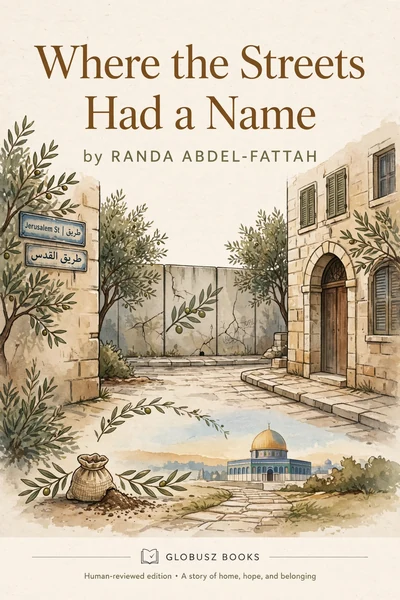
Thirteen-year-old Hayaat faces more than a simple road trip—she must cross walls, checkpoints, and curfews just to collect soil from her ancestral home. This journey reveals the harsh realities of life under occupation and the fierce ties of family and identity. Can a girl’s determination bridge the gap between divided lands and divided hearts?
Themes: Identity and Belonging · Resilience and Hope
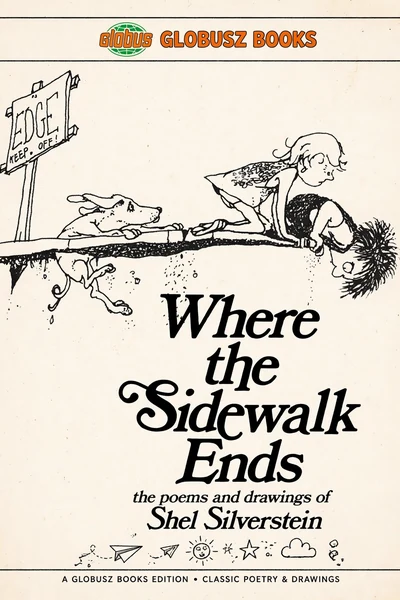
Shel Silverstein’s Where the Sidewalk Ends invites you to step beyond the stiff rules adults love and into a world where nonsense and whimsy rule. It’s a place where dirt is a badge of honor and being weird is cause for celebration. Ready to explore the edge where imagination breaks free?
Themes: Imagination vs. Adulthood · Individuality and Outsider Pride
In a world where bees have vanished, children like Shifa and Themba are forced to pollinate crops by hand. Their struggle reveals a harsh reality where freedom is just another form of control. This isn’t a far-off dystopia—it’s a sharp look at what happens when environmental collapse hits home.
Themes: Environmental Degradation · Freedom and Oppression