Human-reviewed summary and review
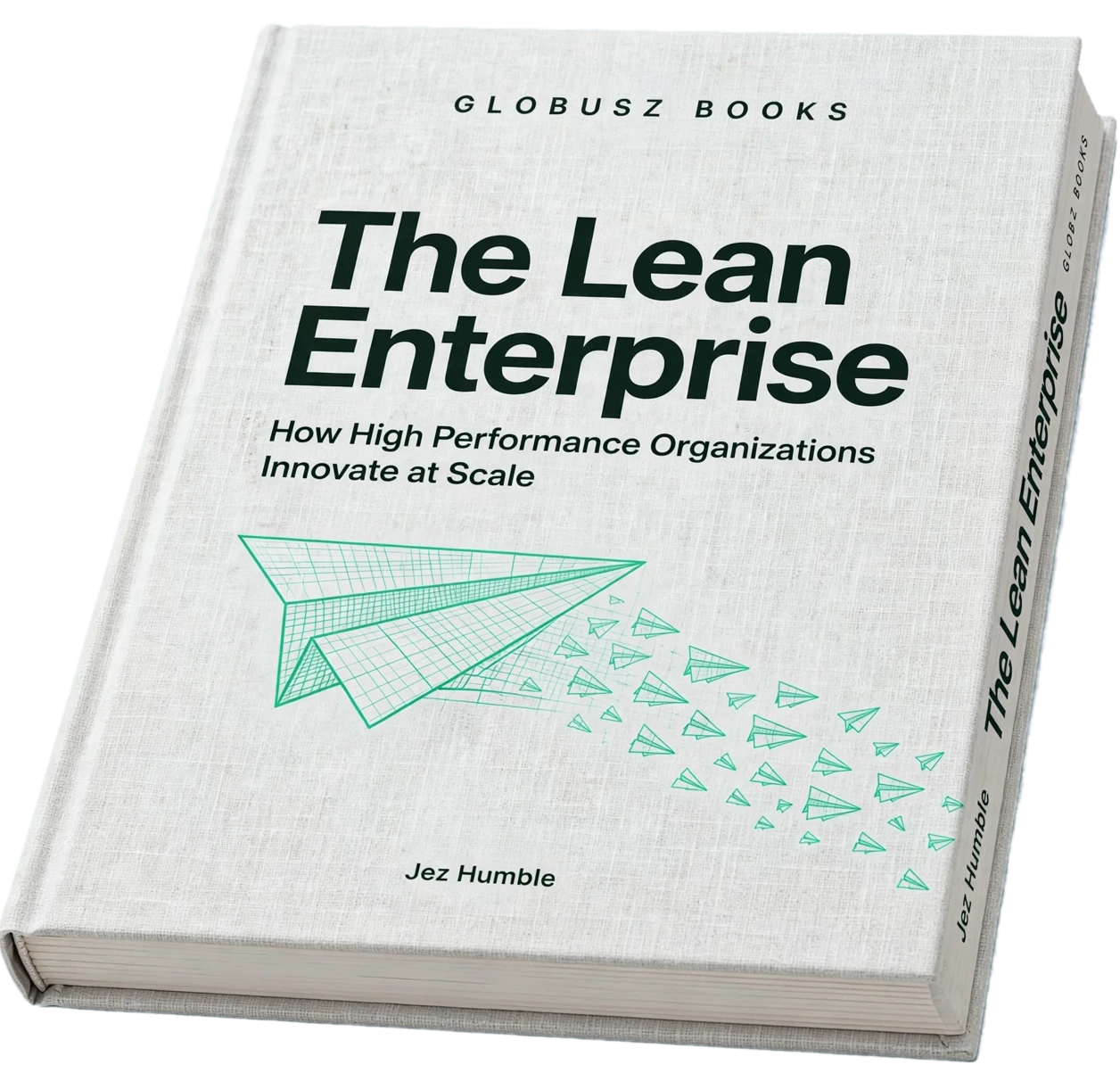
Lean Enterprise: How High Performance Organizations Innovate at Scale by Jez Humble, Joanne Molesky, Barry O'Reilly — Summary & Review
Jez Humble, Joanne Molesky, Barry O'Reilly · English
Big companies don’t innovate by magic. They get stuck in their own rules, hierarchies, and spreadsheets. “Lean Enterprise” cuts through the corporate fog to show how giant beasts can actually move fast, learn fast, and not crash into the wall while doing it.
Worth reading
The short version: “Lean Enterprise” doesn’t sugarcoat the challenge of innovating inside a big company. It’s a call to get real about people, culture, and managing risk — not just chasing the latest shiny methodology. If you’re in the mess of corporate complexity and want a practical way forward, this book offers a grounded, human-centered blueprint. Just don’t expect it to be easy or quick.
Stefan's verdict: Worth considering for Leaders and managers in large organizations struggling to innovate at scale.; less useful if Readers looking for simple, quick fixes or magic formulas for innovation..
3 min review559 wordsOriginal book: Introductory
Organizational ChangeLeadershipInnovation ManagementLean ThinkingAgile Transformation
Globusz Books summary
What the book is about
If you think Lean is just a startup’s playground or a buzzword for cutting waste, Jez Humble, Joanne Molesky, and Barry O’Reilly have a different story. “Lean Enterprise” is a no-nonsense guide for large organizations that want to innovate without breaking everything or turning into a bureaucratic nightmare. It’s about making big companies act like they have a startup’s agility — but with the muscle and scale to actually matter.
The authors start with a simple but often ignored truth: enterprises are made of people, not machines or processes. That means leadership isn’t just about setting targets or optimizing workflows. It’s about creating a shared mission that everyone buys into, from the C-suite down to the folks running the daily grind. Without that alignment, all the Lean tools in the world won’t save you from slow decision-making and internal politics.
Then comes the tricky part: balancing exploration and exploitation. Sounds fancy, but it’s just managing the tension between chasing new ideas and doubling down on proven products. Big companies often struggle here because their reward systems favor the safe bets. The book lays out how to manage your portfolio like an investor, putting some chips on wild experiments while keeping the cash cow happy. It’s not a magic formula, but a pragmatic approach to risk and innovation.
What sets this book apart is its insistence on the scientific method in product development. Forget gut feelings and PowerPoint pitches. The authors push for hypothesis-driven experimentation: build a test, measure results, learn fast, and pivot or persevere. This isn’t just about tech teams; it’s about embedding learning loops into the heart of the business. It’s the antidote to the usual corporate inertia where decisions get stuck in endless meetings and committees.
Continuous improvement isn’t just a slogan here. The book makes a solid case for Lean thinking to permeate every corner of the enterprise — including the dreaded areas of governance, risk, and compliance. Yes, even those. Instead of treating them as roadblocks, the authors argue they can be part of the innovation engine if approached with the right mindset. That’s a tough sell in many companies, but it’s a necessary one for scaling innovation without chaos.
The book doesn’t just throw theory at you. It’s packed with real-world examples and case studies showing how companies have rethought their governance, financial management, and organizational culture to become more adaptive. These stories add credibility and show that Lean isn’t some startup fantasy but a viable path for enterprises wrestling with complexity.
But don’t get too excited just yet. The book’s approach isn’t a plug-and-play recipe. It demands commitment, a willingness to challenge entrenched power structures, and a degree of organizational readiness that not every company has. Some readers might find the complexity overwhelming or the cultural shifts too radical. Plus, it was published in 2014, so some tech references and market contexts might feel a bit dated in today’s hyper-speed world.
Still, “Lean Enterprise” remains one of the few books tackling how to innovate at scale without the usual corporate nonsense. It’s a roadmap for leaders who want to stop talking about agility and start living it — even if their organization feels like a lumbering dinosaur. If you’re stuck in a big company wondering how to get out of the slow lane, this book offers a clear-eyed, practical, and human-centered approach.
Beyond the summary
What might this book awaken in you?
“Lean Enterprise” doesn’t sugarcoat the challenge of innovating inside a big company. It’s a call to get real about people, culture, and managing risk — not just chasing the latest shiny methodology. If you’re in the mess of corporate complexity and want a practical way forward, this book offers a grounded, human-centered blueprint. Just don’t expect it to be easy or quick.
Before you commit
Why you might read this
Big companies don’t innovate by magic. They get stuck in their own rules, hierarchies, and spreadsheets. “Lean Enterprise” cuts through the corporate fog to show how giant beasts can actually move fast, learn fast, and not crash into the wall while doing it.
Spoiler sensitivity: lowThis is a nonfiction summary.
Themes worth noticing
Human-Centric Leadership
Innovation starts with people and shared purpose, not just processes or technology.
Balancing Risk and Innovation
Sustainable growth requires managing a portfolio of experiments alongside proven business models.
Scientific Experimentation
Hypothesis-driven testing is key to reducing uncertainty and improving products.
Lean Beyond Tech
Lean principles apply to governance, risk, and compliance, not just software development.
Cultural Transformation
Changing mindsets and organizational culture is essential for Lean to take root.
Key ideas, explained
Innovation is a human game
The authors stress that enterprises are fundamentally made of people, not just processes or tech. Mission-driven leadership and cultural alignment are the bedrock of any Lean transformation. Without genuine buy-in across all levels, innovation efforts crumble under bureaucracy and miscommunication.
Balance exploration with exploitation
Big companies often get stuck either chasing shiny new ideas or clinging to existing products. Managing this tension like an investor’s portfolio—allocating resources to both proven and experimental initiatives—is essential to sustainable innovation.
Apply the scientific method to product development
Hypothesis-driven experimentation replaces guesswork and gut feelings. Build small tests, measure outcomes, and learn quickly. This approach reduces risk and accelerates learning, making product development more responsive and data-informed.
Lean thinking isn’t just for production lines
Continuous improvement and Lean principles should extend beyond product teams into governance, risk management, and compliance. These areas, often seen as blockers, can become enablers if approached with the right mindset.
Real-world examples prove it’s possible
The book includes case studies showing how organizations have restructured governance, finance, and culture to embrace Lean principles. These stories demonstrate that big, complex companies can become more adaptive without losing control.
How to Use This Book in Real Life
Create a clear, shared mission
Before chasing Lean tools or processes, make sure your entire organization understands and believes in the mission. Alignment fuels faster decisions and smoother collaboration.
Treat your innovation efforts like an investment portfolio
Allocate resources intentionally between proven business lines and new experiments. Don’t put all your eggs in one basket, but also don’t spread yourself too thin.
Use experiments to reduce uncertainty
Frame product development as a series of hypotheses to test. This keeps teams focused on learning and adapting rather than committing blindly to a plan.
Embed Lean thinking in governance and compliance
Instead of seeing risk and compliance as obstacles, integrate Lean principles to make these functions part of your innovation process.
Be ready for cultural change
Lean Enterprise isn’t a plug-and-play fix. Prepare for resistance and invest in shifting mindsets across your organization.
What the book does especially well
- Offers a comprehensive, realistic framework for applying Lean at large scale, beyond startups.
- Focuses on people and culture, not just tools and processes.
- Provides practical advice backed by real-world case studies.
- Addresses traditionally ignored areas like governance and compliance.
- Balances strategic vision with operational detail.
Where the book gets shaky
- Can feel overwhelming or abstract for organizations not ready for deep change.
- Some examples and contexts are dated given rapid tech evolution since 2014.
- Assumes a baseline organizational willingness that might not exist everywhere.
- Heavy focus on large enterprises might limit relevance for smaller or mid-sized firms.
Questions to carry with you
- How can large organizations balance the need for stability with the need for innovation?
- What does true leadership alignment look like in a complex enterprise?
- How can risk and compliance become enablers rather than blockers of innovation?
- What are realistic expectations for applying Lean principles in a bureaucratic environment?
- How do you embed continuous learning into the DNA of a big company?
The bottom line
“Lean Enterprise” doesn’t sugarcoat the challenge of innovating inside a big company. It’s a call to get real about people, culture, and managing risk — not just chasing the latest shiny methodology. If you’re in the mess of corporate complexity and want a practical way forward, this book offers a grounded, human-centered blueprint. Just don’t expect it to be easy or quick.
If this idea interested you
Related books, with a reason to choose each one.
A different perspective on the same shelfEthical Machines: The Role of Ethics in AI and Machine LearningWendell Wallach
Machines are getting smarter, but do they know right from wrong? Wendell Wallach isn’t just asking if AI can make ethical decisions—he’s digging into how and whether we should even let them try. This isn’t sci-fi daydreaming; it’s a messy, urgent conversation about the moral code behind the algorithms shaping our lives.
Read the summary & review →A useful follow-up for exploring the subject furtherProgramming PearlsJon BentleyProgramming isn’t just banging out lines of code until something works. Jon Bentley’s "Programming Pearls" throws you right into the gritty reality that good programming is about crafting clever, efficient solutions—pearls, if you will—out of messy problems. This book doesn’t hand you magic spells or trendy frameworks; it forces you to think like a problem solver, not a code monkey.
Read the summary & review →Another entry point into this categoryAlgorithms UnlockedThomas H. CormenAlgorithms are the unseen engines running everything from your GPS to your online bank. But if the word makes you glaze over, Thomas Cormen’s 'Algorithms Unlocked' is your chance to get the basics without drowning in jargon. It’s like having a patient friend explain what’s under the hood of your smartphone — minus the tech-speak and with just enough grit to keep it real.
Read the summary & review →Explore the theme
More books about starting over
Technology relevance
Still relevant in 2026: Yes
Addresses ongoing challenges in enterprise agile and lean transformation.
Topics: lean · enterprise · innovation · agile · management
Continue the journey
Read the original when you are ready.
This summary scratches the surface of the authors’ deep dive into how Lean principles can transform massive organizations. The full book lays out detailed strategies for leadership alignment, portfolio management, and embedding Lean thinking into governance and compliance. It also walks through nuanced case studies that show the messy realities and trade-offs involved. For anyone serious about scaling innovation beyond buzzwords, the full text is a rich resource that goes well beyond high-level platitudes.
Plus, the authors’ combined experience and storytelling bring credibility and nuance you won’t find in typical Agile or Lean primers. If you want to understand not just what to do but how and why it works (and when it doesn’t), you’ll want the book itself.
Read the original if: you want the evidence, stories, examples, nuance, and full argument in the author's own voice.
The summary may be enough if: you only need the central framework or want to decide whether this book suits you.
Is this worth your time if you…?
Leaders and managers in large organizations struggling to innovate at scale.
Found an error or outdated detail? Contact Stefan with a correction.