Human-reviewed summary and review
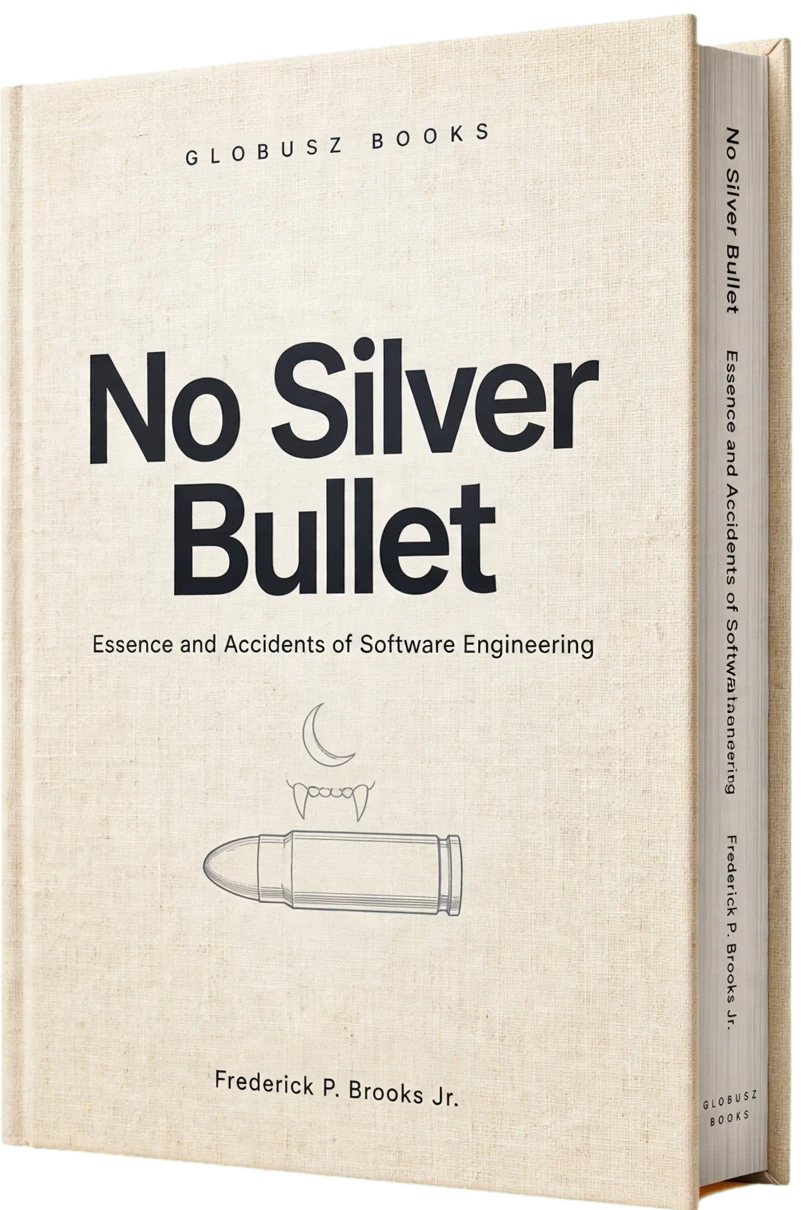
No Silver Bullet: Essence and Accidents of Software Engineering by Frederick P. Brooks Jr. — Summary & Review
Frederick P. Brooks Jr. · English
Software development is famously complicated, and Frederick P. Brooks Jr. isn’t buying the hype that some magic bullet will suddenly fix it all. In a world obsessed with quick fixes and shiny new tools, Brooks stands firm: the real beast to tame isn’t the tech—it’s the problem itself. If you’re chasing a tenfold leap in productivity from a single breakthrough, you’re setting yourself up for disappointment.
Worth reading
The short version: Software development is hard because the problems we’re solving are messy and complicated, not just because our tools aren’t perfect. No shiny new gadget or methodology will suddenly make it all easy. That’s a tough pill, but it’s also liberating. Accepting the real nature of the beast lets you focus on what actually matters: steady, smart progress.
Stefan's verdict: Worth considering for Software engineers and developers seeking a realistic perspective on the challenges of their craft.; less useful if Readers looking for step-by-step coding tutorials or modern software development practices..
3 min review543 wordsOriginal book: Introductory
Software EngineeringProject ManagementTechnology SkepticismComplexity UnderstandingIncremental Improvement
Globusz Books summary
What the book is about
Frederick P. Brooks Jr.’s 1986 essay "No Silver Bullet" is a reality check disguised as a manifesto. It cuts through the noise of technological optimism to deliver a sobering truth: there’s no single technology, methodology, or management trick that will suddenly make software development ten times easier, faster, or more reliable. Brooks draws a clear line between two kinds of complexity that plague software projects: accidental and essential.
Accidental complexity is the mess we get from the tools we use—clunky programming languages, inefficient development environments, hardware limitations, or outdated processes. Over the decades, we’ve made genuine progress here. High-level languages, better debugging tools, and time-sharing systems have all chipped away at these accidental hurdles. Yet, Brooks argues, this is the low-hanging fruit.
The real challenge is essential complexity. This is baked into the very nature of the problems software tries to solve. It’s about understanding and modeling the chaotic, messy real world in code. Whether it’s a banking system juggling transactions or an app managing a hospital’s patient records, the conceptual load is inherently complicated. You can’t just wave a wand and make that simpler—it’s like expecting a complex novel to become a children’s picture book without losing its story.
Brooks warns against the seductive belief in a "silver bullet"—a single innovation that will revolutionize software engineering overnight. History has shown us that such breakthroughs don’t exist. Instead, improvements come from many small, incremental steps. He also critiques the tendency to overpromise on new technologies, which often leads to disillusionment when reality fails to meet expectations.
The essay also touches on why some areas of software development might look easier than others. For instance, writing a compiler or building an operating system is tough, but the inherent complexity of the problem domain varies. Projects that require deep understanding of human behavior, legal constraints, or unpredictable environments will never be simple. No matter how much better your tools get, you still have to wrestle with these fundamental challenges.
Brooks’ insights remain shockingly relevant today, even though he wrote this before the rise of Agile, DevOps, and cloud computing. Those methods and technologies have improved how we manage accidental complexity—speeding up testing cycles, automating deployments, and improving collaboration. But they don’t magically erase the essential complexity lurking beneath every line of code.
One of the more refreshing aspects of Brooks’ paper is its refusal to sugarcoat. It’s not a pep talk. It’s a reality check. Software development is hard, and it’s going to stay hard because the problems we’re solving are complex by nature. So instead of chasing unicorns, the best bet is to accept this and focus on steady, thoughtful progress.
That’s not to say innovation is useless. Far from it. But Brooks encourages us to be skeptical of claims promising overnight miracles. Instead, we should invest in better design, clearer requirements, and smarter ways to manage complexity. These are the areas where real progress happens, even if it’s not headline-grabbing.
In short, "No Silver Bullet" is a masterclass in managing expectations and understanding the true nature of software engineering. It’s a reminder that complexity isn’t just a nuisance—it’s the core of the challenge. And if you want to build better software, you need to wrestle with that, not pretend it’s going to vanish.
Beyond the summary
What might this book awaken in you?
Software development is hard because the problems we’re solving are messy and complicated, not just because our tools aren’t perfect. No shiny new gadget or methodology will suddenly make it all easy. That’s a tough pill, but it’s also liberating. Accepting the real nature of the beast lets you focus on what actually matters: steady, smart progress.
Before you commit
Why you might read this
Software development is famously complicated, and Frederick P. Brooks Jr. isn’t buying the hype that some magic bullet will suddenly fix it all. In a world obsessed with quick fixes and shiny new tools, Brooks stands firm: the real beast to tame isn’t the tech—it’s the problem itself. If you’re chasing a tenfold leap in productivity from a single breakthrough, you’re setting yourself up for disappointment.
Spoiler sensitivity: lowThis is a nonfiction summary.
Themes worth noticing
Complexity in Software
Explores the different kinds of complexity that make software development inherently difficult and why some challenges can’t be removed by better tools alone.
Skepticism Toward Hype
Calls out unrealistic expectations and the allure of quick fixes in software engineering, promoting a more measured, critical approach.
Incremental Progress
Advocates for steady, small improvements over chasing revolutionary breakthroughs that rarely materialize.
Key ideas, explained
No Single Breakthrough Will Revolutionize Software Development
Brooks argues that expecting a tenfold improvement in software productivity or reliability from one technology or management idea is unrealistic. Software engineering’s complexity is too deep and multifaceted for a magic bullet to fix.
Distinction Between Essential and Accidental Complexity
Accidental complexity comes from the tools and processes we use, like programming languages or hardware limitations. Essential complexity is inherent in the problem itself—the messy, complicated reality software tries to model.
Past Progress Has Mostly Tackled Accidental Complexity
Improvements like high-level languages, debugging tools, and time-sharing systems have eased accidental complexity. Yet, essential complexity remains stubborn and unsolved, demanding more than just better tools.
Skepticism Toward Hype and Overpromising
Brooks warns against believing in quick fixes or revolutionary tools that claim to solve software problems overnight. Such hype often leads to disappointment and misplaced priorities.
Focus on Incremental Progress and Managing Complexity
Real improvements come from steady, thoughtful work on design, clearer requirements, and better ways to handle complexity—not from chasing miracles. Accepting the hard truth about software’s nature is key.
How to Use This Book in Real Life
Don’t Chase Magic Bullets
When a new tool or methodology promises to solve all your software problems, take a step back. Be skeptical and evaluate if it addresses accidental complexity or the essential, harder stuff.
Invest in Understanding the Problem
Spend time clarifying and modeling the real-world problem you’re solving. This reduces essential complexity by making it more manageable rather than hoping tools will do it for you.
Focus on Incremental Improvements
Aim for steady gains—better code quality, clearer documentation, improved testing—not overnight revolutions. Small wins add up and build a stronger foundation.
Manage Expectations Realistically
Communicate clearly with stakeholders about the inherent challenges of software projects. Avoid promising unrealistic leaps in productivity or delivery speed.
Use Better Tools to Cut Accidental Complexity
While essential complexity won’t budge, reduce accidental complexity by adopting modern languages, automation, and collaboration tools that make development smoother.
What the book does especially well
- Clear, timeless distinction between essential and accidental complexity that still frames software engineering challenges today.
- No-nonsense, skeptical tone that cuts through hype and unrealistic expectations.
- Encourages practical, incremental progress rather than chasing impossible breakthroughs.
- Provides a foundational mindset that informs modern methodologies like Agile and DevOps.
Where the book gets shaky
- Written in 1986, so some technological references feel dated and don’t reflect modern toolchains or cloud computing.
- May underestimate the cumulative impact of emerging technologies and methodologies on reducing both accidental and some essential complexities.
- Focuses more on conceptual framing than on specific actionable techniques or solutions.
Questions to carry with you
- What part of my software project’s complexity is essential and what is accidental?
- Am I expecting too much from a single tool or methodology to solve all my problems?
- How can I better manage stakeholder expectations around software development challenges?
- What incremental steps can I take to reduce accidental complexity in my workflow?
- How does understanding essential complexity change my approach to designing software?
The bottom line
Software development is hard because the problems we’re solving are messy and complicated, not just because our tools aren’t perfect. No shiny new gadget or methodology will suddenly make it all easy. That’s a tough pill, but it’s also liberating. Accepting the real nature of the beast lets you focus on what actually matters: steady, smart progress.
If this idea interested you
Related books, with a reason to choose each one.
A different perspective on the same shelfEthical Machines: The Role of Ethics in AI and Machine LearningWendell Wallach
Machines are getting smarter, but do they know right from wrong? Wendell Wallach isn’t just asking if AI can make ethical decisions—he’s digging into how and whether we should even let them try. This isn’t sci-fi daydreaming; it’s a messy, urgent conversation about the moral code behind the algorithms shaping our lives.
Read the summary & review →A useful follow-up for exploring the subject furtherProgramming PearlsJon BentleyProgramming isn’t just banging out lines of code until something works. Jon Bentley’s "Programming Pearls" throws you right into the gritty reality that good programming is about crafting clever, efficient solutions—pearls, if you will—out of messy problems. This book doesn’t hand you magic spells or trendy frameworks; it forces you to think like a problem solver, not a code monkey.
Read the summary & review →Another entry point into this categoryAlgorithms UnlockedThomas H. CormenAlgorithms are the unseen engines running everything from your GPS to your online bank. But if the word makes you glaze over, Thomas Cormen’s 'Algorithms Unlocked' is your chance to get the basics without drowning in jargon. It’s like having a patient friend explain what’s under the hood of your smartphone — minus the tech-speak and with just enough grit to keep it real.
Read the summary & review →Explore the theme
More books about perspective
Technology relevance
Still relevant in 2026: Yes — foundational
Offers enduring insights into the complexities of software development.
Topics: Software Engineering · Computer Science · Project Management · Philosophy
Continue the journey
Read the original when you are ready.
The full essay dives deeper into the reasoning behind Brooks’ distinctions and provides rich examples that bring his points to life. It’s a short but dense read that rewards those who want to understand why software engineering remains a tough nut to crack. Beyond the summary, you’ll find a nuanced discussion that challenges common assumptions and invites you to think critically about the promises of new technologies. If you want to grasp the mindset that shaped modern software development thinking, this is a must-read.
Read the original if: you want the evidence, stories, examples, nuance, and full argument in the author's own voice.
The summary may be enough if: you only need the central framework or want to decide whether this book suits you.
Is this worth your time if you…?
Software engineers and developers seeking a realistic perspective on the challenges of their craft.
Found an error or outdated detail? Contact Stefan with a correction.