Human-reviewed summary and review
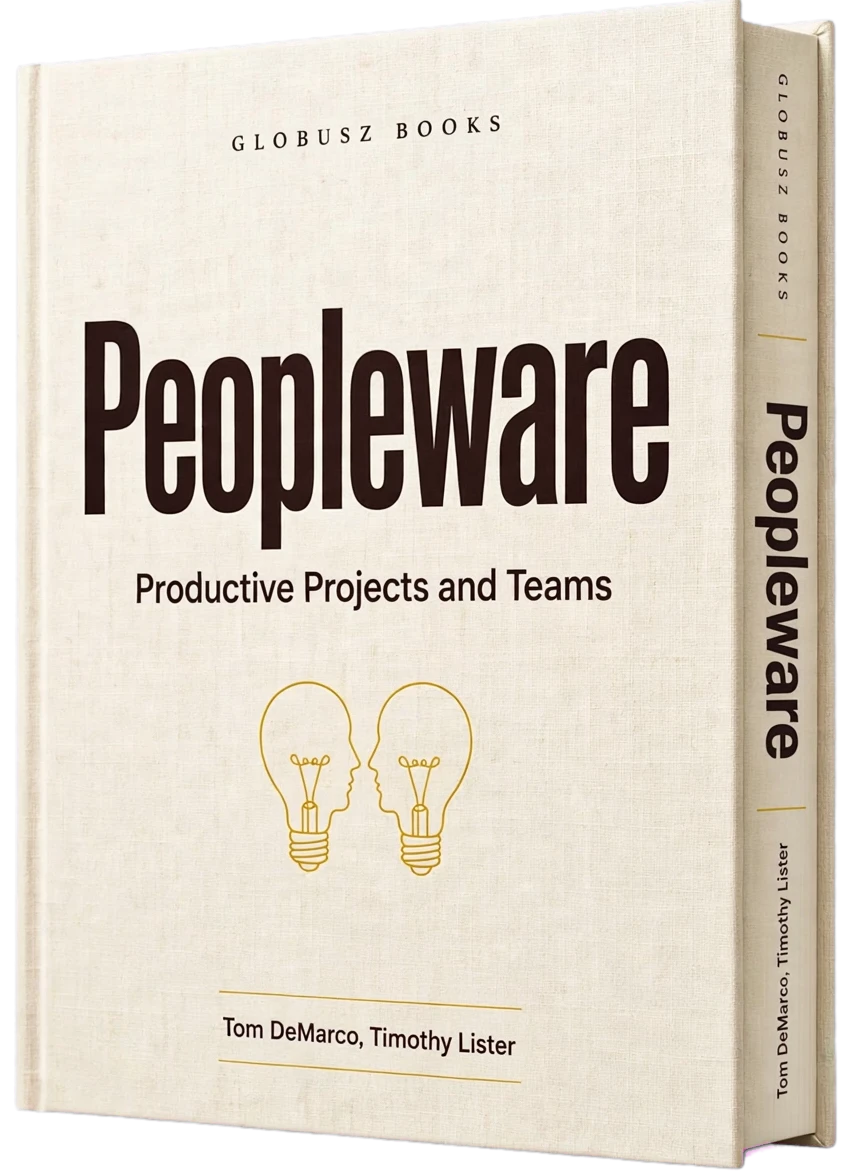
Peopleware: Productive Projects and Teams by Tom DeMarco — Summary & Review
Tom DeMarco · English
The biggest headaches in software projects aren’t bugs or tech glitches—they’re people. Tom DeMarco’s Peopleware throws a cold splash of reality on the usual tech-centric management spiel, insisting that the real challenge is managing human beings, not machines. If you think productivity is about tools and processes, this book might just make you rethink everything.
Read the summary first
The short version: Peopleware reminds us that software isn’t just code—it’s people. And people are messy, complicated, and prone to distraction. If you want better projects, start by fixing the human stuff: protect focus, build trust, hire carefully, and don’t glorify burnout. It’s not glamorous, but it works.
Stefan's verdict: Worth considering for Software development managers and team leads looking for realistic ways to improve team productivity.; less useful if Readers seeking detailed technical or process-oriented software management methods..
3 min review562 wordsOriginal book: Introductory
Team ManagementWorkplace ProductivityOrganizational BehaviorSoftware DevelopmentWork-Life Balance
Globusz Books summary
What the book is about
Peopleware: Productive Projects and Teams is a brutally honest look at what really makes software projects succeed or fail—and spoiler alert, it’s mostly about people, not code. Tom DeMarco and Timothy Lister lay out the uncomfortable truth that technical challenges are often dwarfed by the messiness of human dynamics, office politics, and management blunders.
Right off the bat, the authors challenge the common notion that software development is a purely technical endeavor. Instead, they argue that the core issues are sociological. The best programmers can be rendered ineffective by a toxic work environment, constant interruptions, or poor leadership. Conversely, a well-managed team with solid chemistry can outperform expectations even if the tech isn’t cutting-edge.
One of the book’s most talked-about points is the environment in which people work. Forget those trendy open-plan offices that make everyone feel like a lab rat under fluorescent lights. DeMarco and Lister make a strong case for giving people privacy and quiet—yes, actual private offices or at least spaces where interruptions are minimized. They back this with data showing that constant disruptions kill productivity and morale. It’s a reminder that ‘collaboration’ doesn’t mean everyone yelling over each other in a bullpen.
Speaking of teams, Peopleware introduces the idea of “jelled teams.” These are groups that have built trust, shared goals, and a rhythm that lets them operate smoothly. Jelled teams aren’t just a feel-good concept; they’re the productivity engines of software development. The authors emphasize that jelling takes time and careful nurturing, not just throwing a bunch of smart people together and hoping for the best.
Another thorny topic is the glorification of overtime and heroic last-minute saves. DeMarco and Lister call this out as a management failure, not a badge of honor. Consistently relying on overtime is a sign that the project is mismanaged or poorly planned. It’s also a fast track to burnout and turnover. The book argues for sustainable work practices that respect people’s lives outside the office.
Hiring also gets a no-nonsense treatment. The authors stress that successful teams don’t just need talented individuals; they need people who fit the team’s culture and dynamics. They recommend involving existing team members in hiring decisions to avoid personality clashes that can derail progress. Hiring for diversity in skills and perspectives is encouraged, but compatibility matters just as much.
Underlying all these points is data from their “Coding War Games,” a large-scale study comparing programmer productivity. The findings are eye-opening: the best programmers can be 10 times more productive than the worst, and the environment explains more of this variation than raw talent alone. This makes a strong case for investing in people and team dynamics rather than chasing the latest technology or management fad.
Peopleware’s age shows in some places—some recommendations, like providing private offices for everyone, might feel out of step with today’s open, flexible workspaces or remote work trends. But the core message about protecting focus and minimizing interruptions still rings true. The book’s tone is practical and grounded, with plenty of dry humor and skepticism toward management hype.
Ultimately, Peopleware is less a manual for software development and more a manifesto for humane, realistic management. It pushes back against the myth of the lone genius coder and the cult of crunch time, reminding us that software is made by people, and people need respect, space, and trust to do their best work.
Beyond the summary
What might this book awaken in you?
Peopleware reminds us that software isn’t just code—it’s people. And people are messy, complicated, and prone to distraction. If you want better projects, start by fixing the human stuff: protect focus, build trust, hire carefully, and don’t glorify burnout. It’s not glamorous, but it works.
Before you commit
Why you might read this
The biggest headaches in software projects aren’t bugs or tech glitches—they’re people. Tom DeMarco’s Peopleware throws a cold splash of reality on the usual tech-centric management spiel, insisting that the real challenge is managing human beings, not machines. If you think productivity is about tools and processes, this book might just make you rethink everything.
Spoiler sensitivity: lowThis is a nonfiction summary.
Themes worth noticing
Human-Centered Management
Prioritizing people’s needs, emotions, and work habits over technology or rigid processes to improve productivity.
Work Environment and Productivity
How physical space, noise, and interruptions directly impact focus and output in knowledge work.
Team Dynamics and Trust
The critical role of interpersonal chemistry and shared understanding in high-performing teams.
Sustainable Work Practices
Rejecting burnout culture and overtime as signs of failure, promoting balance and respect for personal time.
Hiring and Cultural Fit
The importance of selecting team members who complement existing dynamics and bring diverse perspectives.
Key ideas, explained
People Problems Trump Technology Problems
The authors argue that the biggest obstacles in software projects aren’t technical glitches or tools but human factors like communication, trust, and management. Fixing the tech won’t save a project if the people side is neglected.
Quiet, Private Spaces Boost Productivity
Contrary to popular trends, open offices often kill focus and morale. Peopleware makes a strong case for giving developers private or at least interruption-free spaces to work, which dramatically improves output and satisfaction.
Jelled Teams Are the Real Secret Sauce
Teams that have built trust and chemistry—‘jelled teams’—are far more productive than groups of talented individuals who don’t gel. This camaraderie is something you nurture over time, not something you can mandate.
Overtime Is a Management Failure, Not a Virtue
The book debunks the ‘heroic overtime’ myth, showing that relying on extra hours is a sign of poor planning and leads to burnout. Sustainable work rhythms are better for both people and projects.
Hiring for Fit and Diversity Matters
Great teams aren’t just about raw talent; they need people who fit the culture and work well together. Including team members in hiring decisions and valuing diverse skills and perspectives improves team cohesion and performance.
How to Use This Book in Real Life
Protect Focus by Minimizing Interruptions
Create policies or physical spaces that reduce distractions—whether that means private offices, quiet zones, or clear ‘do not disturb’ signals during deep work.
Build Team Trust Before Pushing Deadlines
Invest time in team-building and open communication. Don’t expect magic from a team that hasn’t gelled; strong relationships pay off in smoother collaboration.
Say No to Chronic Overtime
If your team is regularly working late, it’s a red flag. Address root causes like unrealistic deadlines or poor planning instead of praising ‘heroic’ efforts.
Involve Your Team in Hiring Decisions
Get your existing team’s input when recruiting new members to ensure compatibility and shared values, not just technical skills.
Treat Work Environment as a Productivity Lever
Don’t underestimate how much office layout, noise levels, and workspace privacy affect output. Small changes here can yield big returns.
What the book does especially well
- Timeless focus on human factors that remain crucial despite tech changes.
- Backed by data and consulting experience, not just theory or hype.
- Clear, practical advice with a healthy dose of skepticism toward management fads.
- Introduces memorable concepts like ‘jelled teams’ that resonate beyond software.
- Recognized and respected by industry leaders, adding credibility.
Where the book gets shaky
- Some recommendations, like private offices for everyone, clash with modern open or remote work trends.
- First published in 1987, so some examples and cultural references feel dated despite updates.
- May oversimplify complex organizational challenges by focusing heavily on team-level factors.
- Not a step-by-step guide, so readers may need to adapt ideas to their specific context.
- Some readers might find the tone blunt or the critique of ‘heroic’ work culture confrontational.
Questions to carry with you
- Are you solving your team’s people problems or just chasing technical fixes?
- How does your workspace support or sabotage your focus and creativity?
- Is your team truly gelled, or just thrown together by chance?
- Are you rewarding sustainable work habits or glorifying burnout?
- Do your hiring practices build team cohesion or just add skills?
The bottom line
Peopleware reminds us that software isn’t just code—it’s people. And people are messy, complicated, and prone to distraction. If you want better projects, start by fixing the human stuff: protect focus, build trust, hire carefully, and don’t glorify burnout. It’s not glamorous, but it works.
If this idea interested you
Related books, with a reason to choose each one.
A different perspective on the same shelfEthical Machines: The Role of Ethics in AI and Machine LearningWendell Wallach
Machines are getting smarter, but do they know right from wrong? Wendell Wallach isn’t just asking if AI can make ethical decisions—he’s digging into how and whether we should even let them try. This isn’t sci-fi daydreaming; it’s a messy, urgent conversation about the moral code behind the algorithms shaping our lives.
Read the summary & review →A useful follow-up for exploring the subject furtherProgramming PearlsJon BentleyProgramming isn’t just banging out lines of code until something works. Jon Bentley’s "Programming Pearls" throws you right into the gritty reality that good programming is about crafting clever, efficient solutions—pearls, if you will—out of messy problems. This book doesn’t hand you magic spells or trendy frameworks; it forces you to think like a problem solver, not a code monkey.
Read the summary & review →Another entry point into this categoryAlgorithms UnlockedThomas H. CormenAlgorithms are the unseen engines running everything from your GPS to your online bank. But if the word makes you glaze over, Thomas Cormen’s 'Algorithms Unlocked' is your chance to get the basics without drowning in jargon. It’s like having a patient friend explain what’s under the hood of your smartphone — minus the tech-speak and with just enough grit to keep it real.
Read the summary & review →Explore the theme
More books about perspective
Technology relevance
Still relevant in 2026: Yes — foundational
Offers insights into team dynamics and productivity, still relevant for managing tech teams.
Topics: Software Development · Project Management · Team Dynamics
Continue the journey
Read the original when you are ready.
The full Peopleware experience offers a deep dive into the human side of software development with stories, data, and examples you won’t get from a summary. It challenges many cherished myths about productivity and heroic effort in ways that stick with you. Plus, the authors’ dry humor and blunt tone make it a surprisingly engaging read for what could be a dry management book.
Reading the whole book gives you a richer understanding of team dynamics and organizational pitfalls, along with nuanced advice that you can tailor to your own environment. It’s a rare blend of research-backed insights and practical wisdom that’s still relevant decades later.
If you’re serious about managing software teams—or just want to avoid the usual disasters—Peopleware is a must-have reference that keeps you honest about what really matters.
Read the original if: you want the evidence, stories, examples, nuance, and full argument in the author's own voice.
The summary may be enough if: you only need the central framework or want to decide whether this book suits you.
Is this worth your time if you…?
Software development managers and team leads looking for realistic ways to improve team productivity.
Found an error or outdated detail? Contact Stefan with a correction.