Human-reviewed summary and review
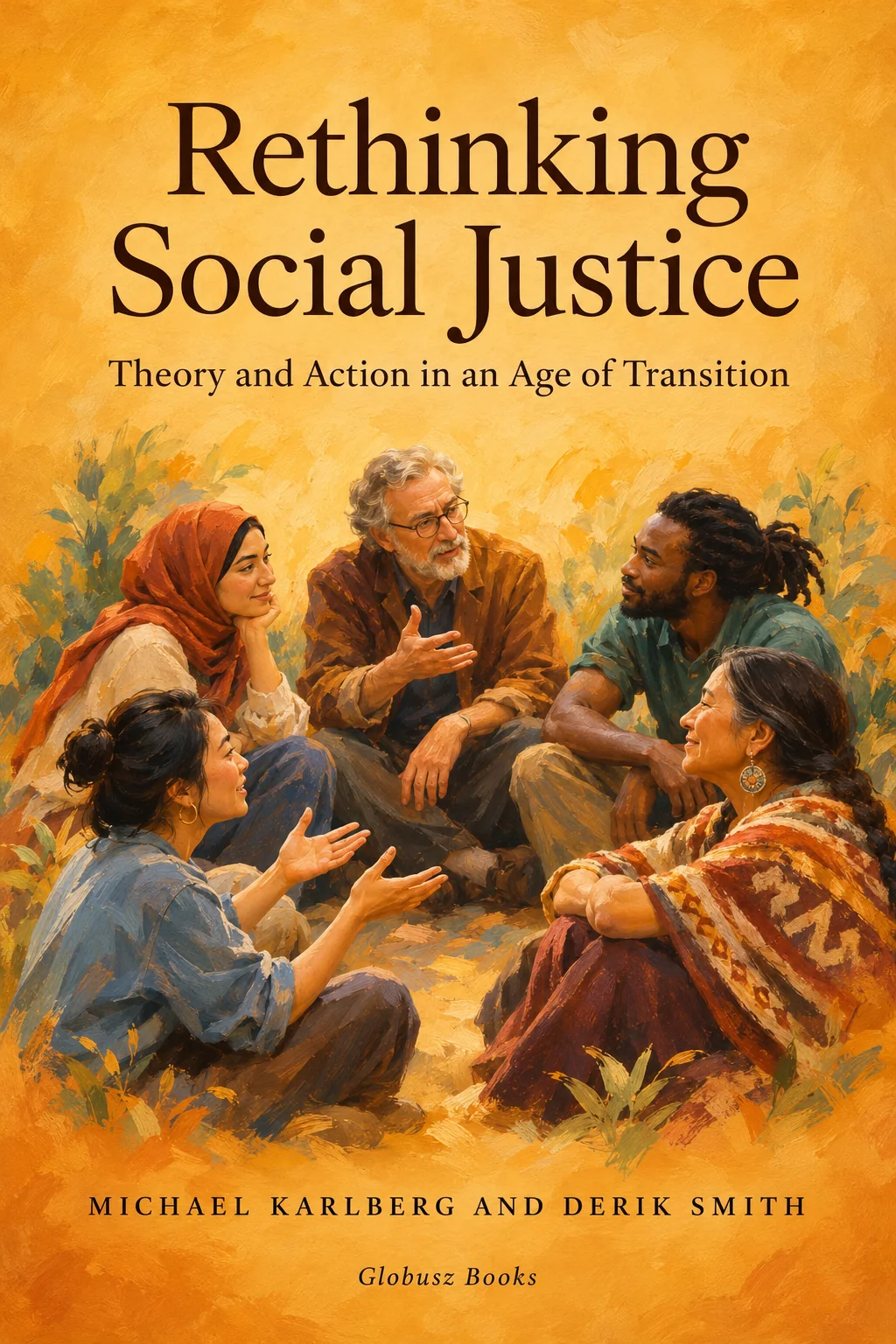
Rethinking Social Justice by Michael Karlberg and Derik Smith — Summary & Review
Michael Karlberg and Derik Smith · English
What if a just society were defined not only by what people receive, but also by what everyone is enabled to contribute?
Worth reading
The short version: Karlberg and Smith ask readers to reconsider justice as an ongoing collective achievement rather than simply a settlement of competing claims. Their central invitation is to develop social conditions that enable everyone to contribute, and to build institutions whose methods already embody the relationships they seek to establish. The book does not eliminate the need for difficult decisions, accountability or immediate protection from injustice. It offers a reason to devote more sustained attention to creating alternatives that can outlast the conflicts of the present.
Stefan's verdict: Worth considering for Political philosophy readers; less useful if Readers seeking light entertainment.
14 min review3,100 wordsOriginal book: Intermediate
Social justiceCooperationCritical thinkingCommunity buildingNonviolence
Globusz Books summary
What the book is about
Rethinking Social Justice
Theory and Action in an Age of Transition — Michael Karlberg and Derik Smith
The Central Idea
What if a just society were defined not only by what its members receive, but also by what everyone is enabled to contribute? Michael Karlberg and Derik Smith use this question to reconsider both the destination of social justice movements and the methods by which they pursue it. Their argument responds to a world in which scientific and technological achievements coexist with entrenched inequality, ecological instability, political polarization and persistent discrimination.
The authors understand modernity as a transitional period rather than the culmination of human social development. Humanity has acquired unprecedented material capabilities without developing corresponding capacities for cooperation and collective responsibility. The challenge is therefore not simply to extend existing institutions to everyone, but to discover better forms of coexistence through contributions from diverse peoples.
Their first major thesis is an expansive conception of contributive justice: society should establish the conditions under which every person and community can develop their capacities and participate meaningfully in collective flourishing. Their second thesis is that radical constructive agency, the deliberate creation of alternative social relationships and institutions, should become central to the pursuit of that goal. They do not dismiss the achievements of protest movements or declare every confrontational strategy illegitimate. Rather, they question whether contention can remain the dominant mechanism for building a society organized around cooperation.
The book is simultaneously a study of political philosophy, a reconsideration of social movement strategy and an invitation to collective experimentation. Its authors explicitly acknowledge that their scholarship is informed by their participation in the Bahá’í Faith. Their religious perspective is relevant to understanding the argument, although their proposed conception of justice is intended to accommodate secular and religious worldviews alike.
Five Key Ideas
1. Justice must encompass the capacity to contribute
The authors’ argument — Chapters 1–3, especially pp. 99–102.
Karlberg and Smith begin by distinguishing a positive vision of justice from the identification of particular injustices. Movements can readily describe discrimination, exploitation or exclusion, yet agreement about what should replace those conditions is harder to achieve. The authors seek a common destination without demanding that every movement adopt an identical political philosophy.
Distributive justice concerns how resources, opportunities, rights, recognition and burdens are allocated. The authors regard these matters as indispensable, but argue that a narrowly distributive framework can encourage people to understand progress as a contest over a fixed supply of benefits. When one population gains opportunities, another may interpret those gains as a threat. Such perceptions can be exploited by political actors and can contribute to backlash against reform.
Contributive justice changes the emphasis. Education, health, economic security, recognition and political participation become important not merely as things people deserve to possess, but also as conditions that enable them to exercise their abilities and participate in shared social advancement. Contribution is not limited to paid employment or measurable economic output. The authors connect it with dignity, purpose, human relationships, cultural diversity and the capabilities needed for meaningful lives.
Chapter 2 examines multiple intellectual traditions, including premodern, modern, subaltern and global conceptions of justice. Chapter 3 draws these perspectives together rather than treating one tradition as the exclusive source of legitimate social knowledge. The resulting framework includes human rights, cultural self-determination, environmental justice, recognition and the moral and institutional arrangements necessary to sustain these commitments.
The authors resist offering a definitive institutional blueprint. Conditions conducive to contribution may differ across societies and historical circumstances. Principles provide orientation, but a just social order must emerge through sustained learning rather than deduction from an abstract formula.
Editorial interpretation: This framework offers a useful distinction between access and agency. Providing a service can reduce immediate hardship; enabling the people who use that service to shape it may also expand their independence and influence. Neither objective should displace the other. Basic dignity must never become conditional on a person's ability to demonstrate productivity.
2. The methods of change help determine its results
The authors’ argument — Chapter 4, pp. 105–158.
The book approaches the debate between violence and nonviolence through a longstanding philosophical question: can desirable ends justify morally troubling means? The authors examine both ethical and pragmatic arguments rather than assuming that moral conviction alone settles questions about political effectiveness.
Their discussion emphasizes prefiguration, the proposition that the practices of a movement help shape the society it eventually produces. A movement's internal relationships, decision-making processes and treatment of outsiders are consequently not secondary matters. They may establish habits and institutions that persist long after an immediate political objective has been achieved.
Violence and nonviolence are examined alongside different underlying understandings of power. If power is understood primarily as the ability to compel another party, even nonviolent action can be conceptualized mainly as an alternative way to apply coercive pressure. Nonviolence can, however, also encompass activities that develop cooperation and expand collective capacities.
The authors consider empirical research comparing violent and nonviolent movements. They acknowledge evidence favorable to nonviolent approaches, while emphasizing that the findings are contested and that the research field is still developing. What researchers count as a movement, success or effective change depends partly on their theoretical assumptions. A successful transfer of political authority, for instance, need not establish the enduring relationships associated with justice.
The book invites inquiry into whether ethical principles and practical effectiveness might ultimately converge. If certain moral commitments are conducive to human flourishing, the sustained application of those commitments could produce observable benefits. The authors present this as a proposition for collective investigation, not a conclusion conclusively established by comparative research.
Editorial interpretation: Organizations pursuing equality should assess their own culture as carefully as their external achievements. A campaign may win a policy change while developing internal patterns of intimidation or exclusion. Conversely, respectful internal procedures alone cannot establish that its external strategy is effective. Both dimensions require evaluation.
3. Building alternatives is a form of transformative political action
The authors’ argument — Chapter 5, pp. 159–188.
Karlberg and Smith introduce a second distinction that cuts across violence and nonviolence: contention versus construction. Contentious politics involves unconventional collective action directed against existing structures, authorities or policies. Constructive programs seek to establish alternative arrangements within the prevailing order, with the possibility of eventually replacing its dysfunctional institutions.
The authors trace constructive programs through early socialist organizing and Gandhi's conception of constructive work. Gandhi's vision for India extended beyond ending colonial administration. It included communal unity, education, the elimination of untouchability, village industries, women's equality and other changes needed to make self-government meaningful. Independence without the development of social capacities would not, on this account, exhaust the task of liberation.
The book also examines contemporary movements including the Zapatistas in Mexico and Brazil's Landless Workers' Movement. These examples demonstrate that ambitious constructive projects can coexist with contentious strategies. Their significance lies partly in their attempts to establish different forms of community life, education, economic activity and collective organization rather than seeking only concessions from established authorities.
The authors nevertheless reject the assumption that every constructive movement must also engage in confrontation to become politically relevant. A wider ecology of movements may benefit from different approaches. Some actors challenge laws and entrenched privileges directly; others develop social arrangements capable of reducing dependence on the institutions that reproduce injustice.
The distinction is particularly important because not every constructive activity is transformative. A project may provide valuable assistance while leaving the underlying causes of hardship untouched. Radical constructive agency requires sufficient ambition to address those causes and to develop arrangements capable of enduring and expanding.
Editorial interpretation: A community food initiative becomes more structurally significant when it moves beyond emergency distribution to questions of ownership, supply, participation and long-term food security. Immediate relief remains essential, but the initiative can also become an opportunity to develop durable institutions. This example is an application of the framework, not a case study reported in the book.
4. Power is more than domination, and competition is not inevitable
The authors’ argument — Chapters 6–7, pp. 189–234.
Conventional political analysis often emphasizes power exercised over other people. Such power is real and important, especially where coercion, structural inequality or concentrated wealth restricts human freedom. Karlberg and Smith argue, however, that it is insufficient as a general account of human agency.
Drawing on thinkers including Hannah Arendt, Jean Baker Miller, Anthony Giddens and Kenneth Boulding, the authors discuss power as the capacity to accomplish things, including through cooperative relationships. Teaching someone a skill, organizing a community or creating an effective institution can increase collective capacity without necessarily reducing another person's capacity. Power may be generated through trust, attraction and reciprocity rather than transferred from a loser to a winner.
This broader conception changes the meaning of resistance. A movement constructing alternatives is not necessarily defined by opposition to an established authority. Those seeking to preserve the existing order may instead be resisting the movement's constructive achievements. The authors regard resistance as a relationship that can operate in either direction.
They then identify a paradox within what they call the culture of contest. Many modern institutions organize human relationships through competition, including partisan politics, adversarial legal processes and competitive economic arrangements. Such structures tend to favor participants already possessing greater resources and influence. Movements reacting to the resulting inequalities may themselves adopt competition and confrontation as their primary organizing principles, thereby reinforcing the broader cultural logic they seek to overcome.
The authors distinguish striving for excellence from striving to defeat others. They invoke cooperation and mutualism in nature to challenge the presumption that competition is the sole or necessary engine of advancement. They also call attention to egoism and othering as recurring sources of oppression, while emphasizing human capacities for altruism and inclusion.
Editorial interpretation: Cooperation should not mean suppressing disagreement. An institution can benefit from robust criticism without turning every difference into a struggle for dominance. The practical challenge is designing procedures that preserve accountability, encourage independent judgment and enable participants to investigate problems together.
5. Constructive resilience requires organization, learning and patience
The authors’ argument — Chapter 8 and Summary, pp. 235–276.
The final chapter examines the Bahá’í community as an example of a movement pursuing ambitious social transformation without making contentious politics central to its strategy. Its relevance to the book is not merely theological. The authors investigate how a global movement develops organizational capacities and continues constructive work despite sustained opposition.
The Bahá’í approach described in the manuscript links individual ethical development with institutional and community transformation. Educational activities, training institutes, consultation and collective service are intended to expand the number of people capable of contributing to social advancement. Learning proceeds through action, reflection, the refinement of practice and the sharing of experience across communities.
The chapter also describes the community's noncompetitive electoral arrangements. Members select representatives without nominations, campaigning or solicitation of votes. Elected service is conceived as a responsibility rather than a personal route to privilege. Decision-making emphasizes consultation, diversity of perspectives and collective implementation, with majority decisions available when consensus cannot be reached.
The authors discuss the persecution of Bahá’ís, particularly in Iran, to illustrate constructive resilience: maintaining an independent program of social development despite repression, without making retaliation or confrontation its defining purpose. They argue that ambitious constructive movements can threaten established interests even when they do not seek confrontation.
The example is offered as evidence that alternative institutional principles can be practiced over time, not as a demand that others adopt Bahá’í religious commitments or governance. The authors recognize that humanity's transformation cannot be accomplished by one community alone. Their conclusion calls for diverse movements to give greater attention to constructive approaches while responding urgently to present suffering.
Editorial interpretation: The most transferable insight is the importance of developing people as active participants rather than perpetual beneficiaries. A durable initiative needs ways to teach newcomers, distribute responsibility, preserve knowledge and revise practices when they prove ineffective.
Practical Applications
The following applications are Globusz Books editorial suggestions derived from the manuscript's conceptual framework.
Community development: Design neighborhood projects with residents rather than exclusively for them. Identify existing local skills, remove barriers to participation and create opportunities for residents to acquire new capabilities. Assess whether leadership becomes more broadly distributed over time.
Education: Combine access to learning with opportunities to teach, mentor and collaborate. Schools and adult education programs can recognize individual progress without making comparative ranking the primary source of motivation. Ensure that cooperative activities do not conceal unequal workloads or overlook students requiring individual support.
Workplaces: Examine whether promotion, compensation and performance systems discourage employees from sharing knowledge. Introduce peer mentoring, transparent decision processes and recognition of collective achievements. Preserve fair pay and independent grievance mechanisms alongside these cooperative practices.
Civic organizations: Complement advocacy with institution-building. A group concerned about unequal access to housing might support immediate protections while exploring cooperative housing arrangements. Evaluate the feasibility of such alternatives rather than assuming goodwill alone will overcome financial or legal constraints.
Public dialogue: Separate criticism of harmful behavior from blanket judgments about entire populations. Identify common interests without denying genuine conflicts of interest or the need for accountability. Invite affected people to participate in determining solutions.
Critical Assessment
Globusz Books editorial assessment.
The book's principal strength is its integration of political objectives with the practices through which they are pursued. Contributive justice provides an expansive vocabulary for understanding dignity, opportunity and participation. The distinction between contention and construction also illuminates forms of political agency that are easily overlooked when social change is measured primarily through elections, protests or changes of government.
Its argument is particularly valuable for exposing the limitations of zero-sum thinking. Expanded capacities can generate shared benefits, and cooperative institutions can sometimes resolve conflicts that appear insoluble within a fixed distributional framework. The authors' acknowledgment of contested evidence and the need for learning prevents their proposal from becoming a completely predetermined institutional model.
Nevertheless, some problems remain. Material resources are not always expandable, and disputes involving land, wages, environmental limits or political rights may entail genuine conflicts over distribution. A constructive approach needs credible mechanisms for handling those conflicts, including enforceable protections against exploitation.
The claim that contentious strategies have entered a period of diminishing returns is a broad historical judgment. Different societies offer different opportunities for protest, negotiation and institution-building. The manuscript's examples make a persuasive case for taking construction seriously, but they do not establish a universally superior balance between strategies. Where urgent harm requires enforceable intervention, direct political or legal action may remain indispensable.
The Bahá’í case is instructive, especially because of its longevity and organizational continuity. Yet its shared religious commitments may facilitate cooperation in ways that are difficult to reproduce in institutions serving populations with widely differing values. Independent comparative studies, including examination of unsuccessful constructive initiatives, would help establish which mechanisms can be generalized.
Finally, contributive justice must be interpreted carefully so that dignity is not measured by output. Children, people with profound disabilities and individuals experiencing illness or dependency possess unconditional moral worth. The authors' emphasis on universal dignity and enabling conditions supports an inclusive interpretation, but institutions applying their ideas should explicitly guard against productivity-based exclusion.
These qualifications do not negate the central contribution. They identify important questions for testing and extending a framework that the authors themselves present as an evolving field of inquiry.
Five Practical Lessons
Editorial lessons for readers.
- Expand opportunity into agency. Ask whether people can influence decisions and use their abilities, not merely whether they have received assistance.
- Make methods consistent with objectives. Examine whether the daily practices of an organization reflect the dignity and fairness it publicly advocates.
- Build while responding to injustice. Pair immediate assistance or necessary advocacy with efforts to develop lasting alternatives.
- Generate shared capacity. Teach, mentor, cooperate and share knowledge rather than treating influence as a permanently fixed resource.
- Treat social improvement as a learning process. Test assumptions, document outcomes, welcome criticism and revise unsuccessful practices without abandoning the underlying commitment to justice.
Seven-Day Reflection Plan
An original Globusz Books reader exercise.
| Day | Theme | Reflection and action |
|---|---|---|
| 1 | Justice | Identify a local injustice. Describe both the harm and the positive conditions that would replace it. |
| 2 | Contribution | Consider whose talents or perspectives are overlooked in your community. Identify one barrier that could be removed. |
| 3 | Means and ends | Examine a group you belong to. Compare its internal practices with its stated values. |
| 4 | Power | Recall an occasion when collaboration increased everyone's capacity. Identify the conditions that made it possible. |
| 5 | Construction | Choose one recurring problem and sketch an alternative arrangement that could address its underlying causes. |
| 6 | Inclusion | Discuss the proposed arrangement with someone whose experience differs from yours. Revise one assumption in response. |
| 7 | Learning | Select one realistic action for the next month. Define an observable outcome and a date to review what you learned. |
Final Takeaway
Karlberg and Smith ask readers to reconsider justice as an ongoing collective achievement rather than simply a settlement of competing claims. Their central invitation is to develop social conditions that enable everyone to contribute, and to build institutions whose methods already embody the relationships they seek to establish. The book does not eliminate the need for difficult decisions, accountability or immediate protection from injustice. It offers a reason to devote more sustained attention to creating alternatives that can outlast the conflicts of the present.
Editorial Metadata and Source
- Recommended audience: Readers interested in political philosophy, social movements, peace studies, civic institutions and community development.
- Reading character: Academic, interdisciplinary, reflective and conceptually demanding.
- Original work: Michael Karlberg and Derik Smith, Rethinking Social Justice: Theory and Action in an Age of Transition. Cambridge: Open Book Publishers, 2026. DOI and complete open-access book.
- Source basis: Supplied manuscript, including its preface, introduction, eight chapters and concluding summary. Page references use the printed pagination of the book.
- Editorial distinction: The five key ideas summarize the authors' positions; editorial interpretations, applications, assessment, lessons and reflection exercises are independently formulated and do not imply author endorsement.
- Rights note: The original manuscript is licensed under CC BY-NC 4.0. This independently worded summary contains no extended quotations. The source license does not itself authorize commercial adaptations; obtain any necessary permission if the intended publication constitutes such an adaptation.
Beyond the summary
What might this book awaken in you?
Justice involves enabling everyone to contribute meaningfully to collective flourishing.
Before you commit
Why you might read this
What if a just society were defined not only by what people receive, but also by what everyone is enabled to contribute?
Spoiler sensitivity: lowNonfiction political philosophy.
Themes worth noticing
Contributive Justice
Justice as the capacity to participate in collective flourishing.
Constructive Agency
Building alternative social relationships and institutions.
Cooperative Power
Understanding power through collective capabilities.
Social Transformation
Learning to build inclusive and just societies.
Key ideas, explained
Justice must encompass the capacity to contribute
The authors’ argument — Chapters 1–3, especially pp. 99–102.
Karlberg and Smith begin by distinguishing a positive vision of justice from the identification of particular injustices. Movements can readily describe discrimination, exploitation or exclusion, yet agreement about what should replace those conditions is harder to achieve. The authors seek a common destination without demanding that every movement adopt an identical political philosophy.
Distributive justice concerns how resources, opportunities, rights, recognition and burdens are allocated. The authors regard these matters as indispensable, but argue that a narrowly distributive framework can encourage people to understand progress as a contest over a fixed supply of benefits. When one population gains opportunities, another may interpret those gains as a threat. Such perceptions can be exploited by political actors and can contribute to backlash against reform.
Contributive justice changes the emphasis. Education, health, economic security, recognition and political participation become important not merely as things people deserve to possess, but also as conditions that enable them to exercise their abilities and participate in shared social advancement. Contribution is not limited to paid employment or measurable economic output. The authors connect it with dignity, purpose, human relationships, cultural diversity and the capabilities needed for meaningful lives.
Chapter 2 examines multiple intellectual traditions, including premodern, modern, subaltern and global conceptions of justice. Chapter 3 draws these perspectives together rather than treating one tradition as the exclusive source of legitimate social knowledge. The resulting framework includes human rights, cultural self-determination, environmental justice, recognition and the moral and institutional arrangements necessary to sustain these commitments.
The authors resist offering a definitive institutional blueprint. Conditions conducive to contribution may differ across societies and historical circumstances. Principles provide orientation, but a just social order must emerge through sustained learning rather than deduction from an abstract formula.
Editorial interpretation: This framework offers a useful distinction between access and agency. Providing a service can reduce immediate hardship; enabling the people who use that service to shape it may also expand their independence and influence. Neither objective should displace the other. Basic dignity must never become conditional on a person's ability to demonstrate productivity.
The methods of change help determine its results
The authors’ argument — Chapter 4, pp. 105–158.
The book approaches the debate between violence and nonviolence through a longstanding philosophical question: can desirable ends justify morally troubling means? The authors examine both ethical and pragmatic arguments rather than assuming that moral conviction alone settles questions about political effectiveness.
Their discussion emphasizes prefiguration, the proposition that the practices of a movement help shape the society it eventually produces. A movement's internal relationships, decision-making processes and treatment of outsiders are consequently not secondary matters. They may establish habits and institutions that persist long after an immediate political objective has been achieved.
Violence and nonviolence are examined alongside different underlying understandings of power. If power is understood primarily as the ability to compel another party, even nonviolent action can be conceptualized mainly as an alternative way to apply coercive pressure. Nonviolence can, however, also encompass activities that develop cooperation and expand collective capacities.
The authors consider empirical research comparing violent and nonviolent movements. They acknowledge evidence favorable to nonviolent approaches, while emphasizing that the findings are contested and that the research field is still developing. What researchers count as a movement, success or effective change depends partly on their theoretical assumptions. A successful transfer of political authority, for instance, need not establish the enduring relationships associated with justice.
The book invites inquiry into whether ethical principles and practical effectiveness might ultimately converge. If certain moral commitments are conducive to human flourishing, the sustained application of those commitments could produce observable benefits. The authors present this as a proposition for collective investigation, not a conclusion conclusively established by comparative research.
Editorial interpretation: Organizations pursuing equality should assess their own culture as carefully as their external achievements. A campaign may win a policy change while developing internal patterns of intimidation or exclusion. Conversely, respectful internal procedures alone cannot establish that its external strategy is effective. Both dimensions require evaluation.
Building alternatives is a form of transformative political action
The authors’ argument — Chapter 5, pp. 159–188.
Karlberg and Smith introduce a second distinction that cuts across violence and nonviolence: contention versus construction. Contentious politics involves unconventional collective action directed against existing structures, authorities or policies. Constructive programs seek to establish alternative arrangements within the prevailing order, with the possibility of eventually replacing its dysfunctional institutions.
The authors trace constructive programs through early socialist organizing and Gandhi's conception of constructive work. Gandhi's vision for India extended beyond ending colonial administration. It included communal unity, education, the elimination of untouchability, village industries, women's equality and other changes needed to make self-government meaningful. Independence without the development of social capacities would not, on this account, exhaust the task of liberation.
The book also examines contemporary movements including the Zapatistas in Mexico and Brazil's Landless Workers' Movement. These examples demonstrate that ambitious constructive projects can coexist with contentious strategies. Their significance lies partly in their attempts to establish different forms of community life, education, economic activity and collective organization rather than seeking only concessions from established authorities.
The authors nevertheless reject the assumption that every constructive movement must also engage in confrontation to become politically relevant. A wider ecology of movements may benefit from different approaches. Some actors challenge laws and entrenched privileges directly; others develop social arrangements capable of reducing dependence on the institutions that reproduce injustice.
The distinction is particularly important because not every constructive activity is transformative. A project may provide valuable assistance while leaving the underlying causes of hardship untouched. Radical constructive agency requires sufficient ambition to address those causes and to develop arrangements capable of enduring and expanding.
Editorial interpretation: A community food initiative becomes more structurally significant when it moves beyond emergency distribution to questions of ownership, supply, participation and long-term food security. Immediate relief remains essential, but the initiative can also become an opportunity to develop durable institutions. This example is an application of the framework, not a case study reported in the book.
Power is more than domination, and competition is not inevitable
The authors’ argument — Chapters 6–7, pp. 189–234.
Conventional political analysis often emphasizes power exercised over other people. Such power is real and important, especially where coercion, structural inequality or concentrated wealth restricts human freedom. Karlberg and Smith argue, however, that it is insufficient as a general account of human agency.
Drawing on thinkers including Hannah Arendt, Jean Baker Miller, Anthony Giddens and Kenneth Boulding, the authors discuss power as the capacity to accomplish things, including through cooperative relationships. Teaching someone a skill, organizing a community or creating an effective institution can increase collective capacity without necessarily reducing another person's capacity. Power may be generated through trust, attraction and reciprocity rather than transferred from a loser to a winner.
This broader conception changes the meaning of resistance. A movement constructing alternatives is not necessarily defined by opposition to an established authority. Those seeking to preserve the existing order may instead be resisting the movement's constructive achievements. The authors regard resistance as a relationship that can operate in either direction.
They then identify a paradox within what they call the culture of contest. Many modern institutions organize human relationships through competition, including partisan politics, adversarial legal processes and competitive economic arrangements. Such structures tend to favor participants already possessing greater resources and influence. Movements reacting to the resulting inequalities may themselves adopt competition and confrontation as their primary organizing principles, thereby reinforcing the broader cultural logic they seek to overcome.
The authors distinguish striving for excellence from striving to defeat others. They invoke cooperation and mutualism in nature to challenge the presumption that competition is the sole or necessary engine of advancement. They also call attention to egoism and othering as recurring sources of oppression, while emphasizing human capacities for altruism and inclusion.
Editorial interpretation: Cooperation should not mean suppressing disagreement. An institution can benefit from robust criticism without turning every difference into a struggle for dominance. The practical challenge is designing procedures that preserve accountability, encourage independent judgment and enable participants to investigate problems together.
Constructive resilience requires organization, learning and patience
The authors’ argument — Chapter 8 and Summary, pp. 235–276.
The final chapter examines the Bahá’í community as an example of a movement pursuing ambitious social transformation without making contentious politics central to its strategy. Its relevance to the book is not merely theological. The authors investigate how a global movement develops organizational capacities and continues constructive work despite sustained opposition.
The Bahá’í approach described in the manuscript links individual ethical development with institutional and community transformation. Educational activities, training institutes, consultation and collective service are intended to expand the number of people capable of contributing to social advancement. Learning proceeds through action, reflection, the refinement of practice and the sharing of experience across communities.
The chapter also describes the community's noncompetitive electoral arrangements. Members select representatives without nominations, campaigning or solicitation of votes. Elected service is conceived as a responsibility rather than a personal route to privilege. Decision-making emphasizes consultation, diversity of perspectives and collective implementation, with majority decisions available when consensus cannot be reached.
The authors discuss the persecution of Bahá’ís, particularly in Iran, to illustrate constructive resilience: maintaining an independent program of social development despite repression, without making retaliation or confrontation its defining purpose. They argue that ambitious constructive movements can threaten established interests even when they do not seek confrontation.
The example is offered as evidence that alternative institutional principles can be practiced over time, not as a demand that others adopt Bahá’í religious commitments or governance. The authors recognize that humanity's transformation cannot be accomplished by one community alone. Their conclusion calls for diverse movements to give greater attention to constructive approaches while responding urgently to present suffering.
Editorial interpretation: The most transferable insight is the importance of developing people as active participants rather than perpetual beneficiaries. A durable initiative needs ways to teach newcomers, distribute responsibility, preserve knowledge and revise practices when they prove ineffective.
How to Use This Book in Real Life
Look beyond distribution
Consider whether people have meaningful opportunities to develop and contribute their abilities.
Align means with ends
Choose methods of social change that reflect the relationships and institutions you hope to establish.
Build constructive alternatives
Complement criticism of injustice with practical efforts to develop more inclusive institutions.
Recognize cooperative power
Develop the capacity to work with others rather than measuring power solely through domination.
Learn through sustained action
Evaluate collective efforts, welcome different perspectives and improve through experience.
What the book does especially well
- Integrates theories of justice with strategies for social change.
- Offers a constructive approach beyond adversarial politics.
- Engages diverse intellectual traditions.
Where the book gets shaky
- Constructive approaches may face substantial obstacles under oppressive institutions.
- The authors' religious perspective requires careful consideration alongside secular alternatives.
Questions to carry with you
- What conditions enable meaningful contribution?
- When does political contention become counterproductive?
- How can cooperation coexist with accountability?
- What constructive alternatives can communities develop?
The bottom line
Karlberg and Smith ask readers to reconsider justice as an ongoing collective achievement rather than simply a settlement of competing claims. Their central invitation is to develop social conditions that enable everyone to contribute, and to build institutions whose methods already embody the relationships they seek to establish. The book does not eliminate the need for difficult decisions, accountability or immediate protection from injustice. It offers a reason to devote more sustained attention to creating alternatives that can outlast the conflicts of the present.
If this idea interested you
Related books, with a reason to choose each one.
A different perspective on the same shelf1984George Orwell
In Orwell’s 1984, the Party doesn’t just watch you—it controls what you believe, remember, and even think. Winston Smith’s quiet rebellion reveals how totalitarianism can rewrite reality itself. How far would you go to keep your mind your own?
Read the summary & review →A useful follow-up for exploring the subject further1Q84Haruki MurakamiIn 1Q84, Tokyo in 1984 is just familiar enough to feel real—until you notice the second moon hanging in the sky. A fitness instructor moonlights as an assassin, and a math teacher rewrites a mysterious novel, both drawn into a parallel world where reality bends and cults pull the strings. It’s Murakami’s sprawling, strange meditation on loneliness, power, and the stories that shape us.
Read the summary & review →Another entry point into this category2666Roberto BolañoIn '2666,' four academics’ obsession with a mysterious author pulls them into the violent underbelly of a border city where unsolved murders cast a long shadow. This sprawling novel refuses neat answers, weaving fragmented lives and histories into a haunting meditation on evil and the limits of art. It’s a challenging read that stays with you long after the last page.
Read the summary & review →Explore the theme
More books about perspective
Continue the journey
Read the original when you are ready.
The complete book provides extensive philosophical reasoning, historical examples and analysis of constructive approaches to social change.
Read the original if: you want the evidence, stories, examples, nuance, and full argument in the author's own voice.
The summary may be enough if: you only need the central framework or want to decide whether this book suits you.
Is this worth your time if you…?
Political philosophy readers
Found an error or outdated detail? Contact Stefan with a correction.