Human-reviewed summary and review
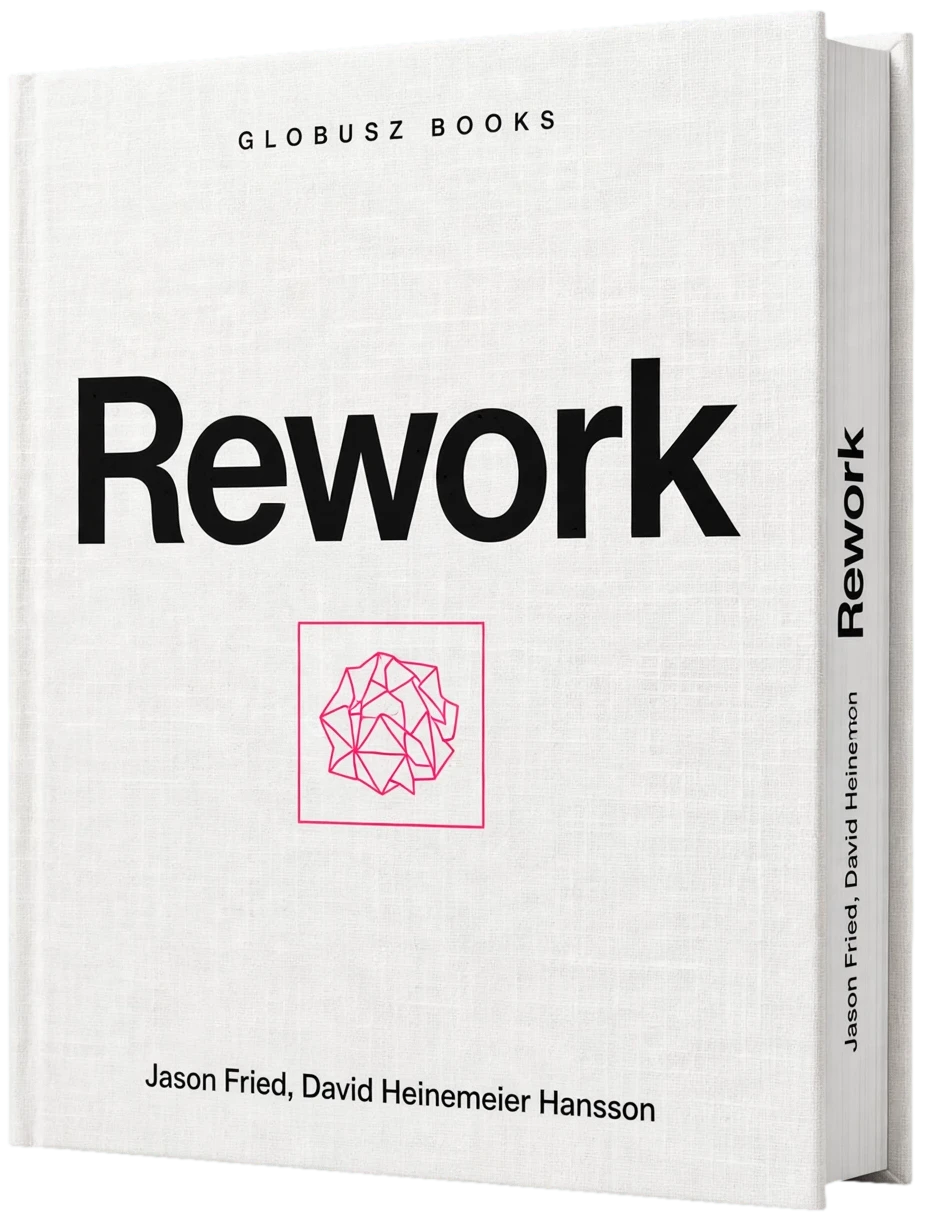
Rework by Jason Fried, David Heinemeier Hansson — Summary & Review
Jason Fried, David Heinemeier Hansson · English
Forget everything you think you know about starting and running a business. Jason Fried and David Heinemeier Hansson aren’t interested in your five-year plans or endless meetings. Instead, they want you to strip down, focus hard, and get stuff done — without the usual corporate nonsense slowing you down.
Read the summary first
The short version: “Rework” doesn’t pretend to have all the answers, but it’s a sharp kick in the pants for anyone stuck in the usual business grind. It reminds us that less is often more, that plans should be flexible, and that the best way forward is usually just to start doing the work. Not everything will fit your situation, but the book’s core message—cut the crap and focus on what matters—is hard to argue with.
Stefan's verdict: Worth considering for Entrepreneurs and startup founders looking for no-nonsense, actionable business advice.; less useful if Executives in large corporations with complex regulatory environments seeking detailed strategic frameworks..
3 min review465 wordsOriginal book: Introductory
EntrepreneurshipProductivityBusiness StrategyStartup CultureWorkplace Efficiency
Globusz Books summary
What the book is about
“Rework” is the kind of business book that sneaks up on you with its bluntness and refuses to play by the usual rules. Written by the founders of Basecamp, Jason Fried and David Heinemeier Hansson, it’s a collection of short, punchy essays that challenge just about every traditional piece of advice you’ve heard about entrepreneurship and management. The core idea? Most of what’s considered “business wisdom” is actually just noise that slows you down.
The authors start by flipping the script on planning. Long-term business plans? Forget it. They argue these are mostly guesswork that tie you down, making you less able to pivot when real opportunities or problems pop up. Instead, they push for acting quickly on what you can do right now and adjusting as you go. It’s a philosophy that values agility over crystal-ball predictions.
Constraints get a surprising spotlight here. Instead of whining about what you don’t have—money, staff, fancy offices—the book shows how limitations can actually spark creativity. When you’re forced to work within tight bounds, you focus on what really matters. That’s how you build something simple, functional, and effective, rather than bloated and overcomplicated.
Speaking of simplicity, the authors are ruthless about cutting the crap. They hate meetings that drag on with no clear purpose, endless email chains, and the kind of multitasking that leaves everyone exhausted but nothing done. Instead, they promote clear, direct communication and a work environment where people can focus without constant interruptions.
The idea of launching a minimum viable product (MVP) is another cornerstone. Don’t wait to perfect your product before showing it to customers. Get the core version out there, learn from real feedback, and iterate. It’s a far cry from the traditional “wait until it’s perfect” mindset that can stall projects indefinitely.
What’s refreshing about “Rework” is that it’s not full of abstract theories. The advice is drawn from the authors’ real-life experience running Basecamp, a profitable software company that never took venture capital and has stayed relatively small and efficient. It’s proof that you don’t need to follow the startup hype machine to build something that lasts.
But let’s not pretend this book is a one-size-fits-all manual. It’s clearly tailored to startups and small businesses, especially those in tech or creative fields. Larger companies with complex hierarchies and regulatory hurdles might find some advice too simplistic or naive. Also, the book’s breezy style means it sometimes trades depth for punchy takeaways, which could leave readers craving more nuance.
Still, “Rework” is a breath of fresh air for anyone tired of the usual business clichés. It’s practical, readable, and doesn’t demand you overhaul your whole life overnight. Instead, it invites you to question why you do things the way you do and consider a leaner, meaner approach to getting things done.
Beyond the summary
What might this book awaken in you?
“Rework” doesn’t pretend to have all the answers, but it’s a sharp kick in the pants for anyone stuck in the usual business grind. It reminds us that less is often more, that plans should be flexible, and that the best way forward is usually just to start doing the work. Not everything will fit your situation, but the book’s core message—cut the crap and focus on what matters—is hard to argue with.
Before you commit
Why you might read this
Forget everything you think you know about starting and running a business. Jason Fried and David Heinemeier Hansson aren’t interested in your five-year plans or endless meetings. Instead, they want you to strip down, focus hard, and get stuff done — without the usual corporate nonsense slowing you down.
Spoiler sensitivity: lowThis is a nonfiction summary.
Themes worth noticing
Simplicity over Complexity
The book champions stripping away unnecessary layers and focusing on what truly matters, whether in product design, communication, or business strategy.
Agility and Adaptability
Rather than sticking rigidly to plans, success comes from being ready to pivot and respond to real-world feedback and changing circumstances.
Skepticism of Traditional Business Norms
It questions standard practices like long meetings, elaborate planning, and chasing growth for growth’s sake.
Creativity Through Constraints
Limitations aren’t obstacles but tools that force focus and innovation.
Key ideas, explained
Ditch the Long-Term Plan and Stay Nimble
Long-term business plans are often just educated guesses that can bog you down. Fried and Hansson argue for focusing on what you can do now, then adapting quickly as the market or your situation changes. Flexibility beats rigid predictions.
Constraints Breed Creativity
Rather than seeing limitations as a problem, use them as a tool. When you have less money, fewer people, or limited time, you’re forced to prioritize and innovate. This keeps your product and business focused on essentials.
Kill Unnecessary Meetings and Embrace Focused Communication
Meetings are often time sinks with little payoff. The authors recommend cutting down on meetings, emails, and distractions to allow people to concentrate on meaningful work. Clear, direct communication is the antidote to corporate noise.
Launch Early with a Minimum Viable Product
Waiting for perfection kills momentum. Instead, launch a simple version of your product that solves the core problem, then improve it based on actual user feedback. This iterative approach saves time and money.
Ignore the Hype and Build What Matters
You don’t need fancy offices, huge teams, or venture capital to succeed. Basecamp’s story shows that a small, focused company can be profitable and sustainable by ignoring startup hype and focusing on delivering real value.
How to Use This Book in Real Life
Cut the Fluff in Your Workday
Evaluate your meetings and communications. If they don’t have a clear purpose or outcome, cancel or streamline them. Protect your focus like it’s your most valuable resource—because it is.
Start Small, Then Iterate
Launch your product or project with just the essentials. Use real-world feedback to guide improvements instead of guessing what people want in advance.
Embrace Your Limits
Instead of waiting for perfect conditions, use your current constraints as a creative challenge. Prioritize ruthlessly and make decisions that focus on what truly moves the needle.
Be Ready to Change Course
Don’t get married to your original plan. Keep your eyes open for new opportunities or problems and be willing to pivot quickly. Flexibility is a strength, not a sign of weakness.
Question Traditions That Don’t Work for You
Just because something is ‘standard practice’—like elaborate planning or constant meetings—doesn’t mean it’s the best way. Test what actually helps your business instead of following the herd.
What the book does especially well
- Offers refreshingly blunt, practical advice grounded in real-world experience.
- Short, focused chapters make it easy to digest and revisit specific topics.
- Challenges conventional business wisdom, encouraging readers to rethink standard practices.
- Emphasizes simplicity and focus, which are often overlooked in startup culture.
Where the book gets shaky
- Advice can feel overly simplistic or idealistic for larger, more complex organizations.
- Some topics are treated superficially, lacking in-depth exploration or nuance.
- Heavily based on the authors’ experience in software, which may not translate to all industries.
- May underplay the value of some traditional practices that do work in certain contexts.
Questions to carry with you
- What traditions or ‘best practices’ in my work are actually slowing me down?
- How can I use my current limitations to sharpen focus rather than complain?
- Am I flexible enough to change course when the situation demands it?
- What would happen if I launched my project with just the bare essentials?
- How much of my workday is eaten up by distractions and pointless meetings?
The bottom line
“Rework” doesn’t pretend to have all the answers, but it’s a sharp kick in the pants for anyone stuck in the usual business grind. It reminds us that less is often more, that plans should be flexible, and that the best way forward is usually just to start doing the work. Not everything will fit your situation, but the book’s core message—cut the crap and focus on what matters—is hard to argue with.
If this idea interested you
Related books, with a reason to choose each one.
A different perspective on the same shelfEthical Machines: The Role of Ethics in AI and Machine LearningWendell Wallach
Machines are getting smarter, but do they know right from wrong? Wendell Wallach isn’t just asking if AI can make ethical decisions—he’s digging into how and whether we should even let them try. This isn’t sci-fi daydreaming; it’s a messy, urgent conversation about the moral code behind the algorithms shaping our lives.
Read the summary & review →A useful follow-up for exploring the subject furtherProgramming PearlsJon BentleyProgramming isn’t just banging out lines of code until something works. Jon Bentley’s "Programming Pearls" throws you right into the gritty reality that good programming is about crafting clever, efficient solutions—pearls, if you will—out of messy problems. This book doesn’t hand you magic spells or trendy frameworks; it forces you to think like a problem solver, not a code monkey.
Read the summary & review →Another entry point into this categoryAlgorithms UnlockedThomas H. CormenAlgorithms are the unseen engines running everything from your GPS to your online bank. But if the word makes you glaze over, Thomas Cormen’s 'Algorithms Unlocked' is your chance to get the basics without drowning in jargon. It’s like having a patient friend explain what’s under the hood of your smartphone — minus the tech-speak and with just enough grit to keep it real.
Read the summary & review →Explore the theme
More books about discipline
Technology relevance
Still relevant in 2026: Yes
Still relevant for entrepreneurs and software development practices.
Topics: software development · entrepreneurship · business strategy
Continue the journey
Read the original when you are ready.
This summary covers the gist, but the full book is worth your time for its tone and style alone. The authors’ conversational, no-fluff voice makes the ideas stick without preaching. Plus, the full text offers a trove of quick, memorable essays that can be dipped into whenever you need a dose of practical sanity. It’s not a deep dive, but it’s a steady companion for anyone building something new who’s tired of the usual hype and jargon.
Read the original if: you want the evidence, stories, examples, nuance, and full argument in the author's own voice.
The summary may be enough if: you only need the central framework or want to decide whether this book suits you.
Is this worth your time if you…?
Entrepreneurs and startup founders looking for no-nonsense, actionable business advice.
Found an error or outdated detail? Contact Stefan with a correction.