Human-reviewed summary and review
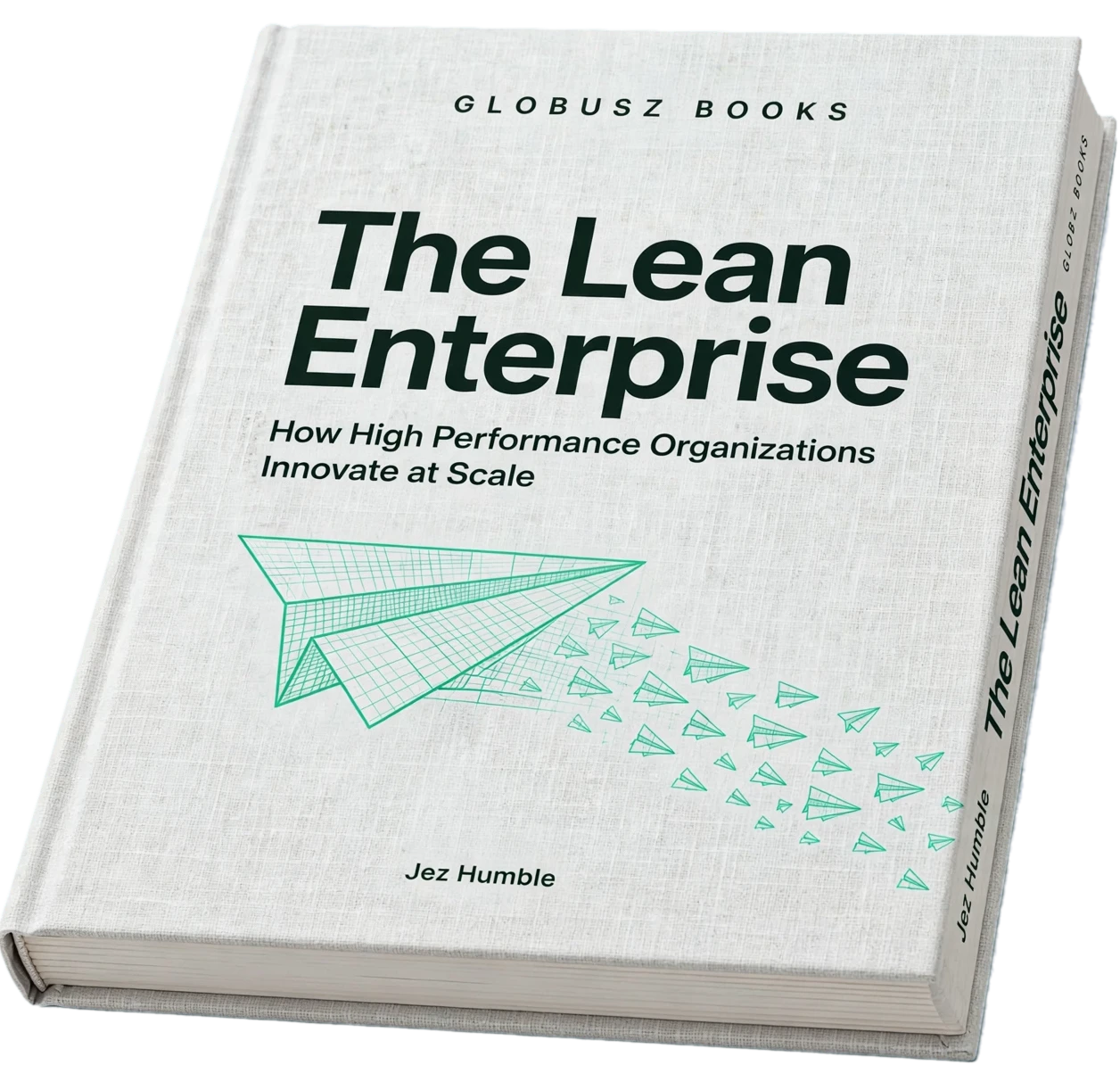
The Lean Enterprise: How High Performance Organizations Innovate at Scale by Jez Humble — Summary & Review
Jez Humble · English
Big companies don’t just stumble into innovation. They often trip over their own bureaucracy, slow decisions, and outdated management styles. "The Lean Enterprise" throws down a challenge: if you want to innovate at scale, you need to rethink how your whole organization works—culture, structure, and all. Spoiler: it’s not about slapping Agile stickers on your org chart.
Read the summary first
The short version: If your company feels like a slow-moving beast that can’t keep up with the startup kids, "The Lean Enterprise" will tell you why—and what to do about it. It’s not a magic pill or a quick fix. It’s a call to rethink how decisions get made, how value flows, and how leadership works. Change is hard, messy, and slow, but this book lays out a path that’s worth the slog if you want to stop spinning your wheels.
Stefan's verdict: Worth considering for Leaders and managers in large organizations struggling to innovate or move faster.; less useful if Readers looking for a quick, light introduction to Agile or Lean concepts..
3 min review529 wordsOriginal book: Introductory
Organizational ChangeLeadershipInnovationAgile TransformationLean Thinking
Globusz Books summary
What the book is about
If you think Lean and Agile are just startup buzzwords or quick fixes for sluggish companies, Jez Humble and his co-authors have news for you. "The Lean Enterprise" is a no-nonsense manual for large organizations that want to stop pretending innovation happens by magic and start building it into their DNA. The basic problem? Traditional management in big companies is often the enemy of speed and creativity. Layers of decision-making, rigid hierarchies, and a fixation on avoiding risks smother innovation before it even gets a chance.
The authors argue that to innovate at scale, enterprises need a wholesale transformation—not just tools or processes but a cultural reboot. This means empowering teams to make decisions without waiting for endless approvals, a shift known as decentralized decision-making. It’s about trusting people who are closest to the work and customers rather than bottlenecking every call at the top.
Alongside this is the idea of mission command, borrowed from the military but with a modern twist. Instead of command-and-control micromanagement, leaders set clear objectives and then get out of the way. This aligns teams around goals but gives them autonomy on how to get there. It’s a delicate balance, but when it works, it speeds up innovation and responsiveness.
Another cornerstone is value stream mapping. This isn’t just corporate jargon; it’s a practical way to trace how value flows from an idea to the customer’s hands. By identifying and cutting out waste—whether it’s redundant approvals, unnecessary handoffs, or outdated processes—organizations can move faster and deliver better products. Continuous improvement rides shotgun here, with iterative feedback loops that keep refining products and services rather than waiting for a big, risky launch.
The book doesn’t just preach theory. It digs into real-world examples—though not the usual Silicon Valley darlings. Think government agencies, chip manufacturers, and giant online retailers. These case studies show how organizations have tackled everything from governance to finance to architecture with Lean thinking. The takeaway? Lean isn’t a quick patch; it’s a long haul that demands commitment and patience.
But let’s be clear: this book isn’t for the faint-hearted or those looking for a silver bullet. The language can get dense, and the concepts sometimes feel like a blueprint for a massive organizational overhaul. Some readers might find the authors paint an idealistic picture that’s hard to match in the messy, politics-filled reality of big companies. Still, the practical advice and honest acknowledgment of challenges make it a valuable read for anyone serious about making large-scale innovation work.
Published in 2014, "The Lean Enterprise" arrived when the tech world was obsessed with startup agility and big companies were scrambling to catch up. It builds on Lean manufacturing’s legacy but adds an Agile twist tailored for complex organizations. If you’re stuck wondering why your company can’t move faster or innovate better, this book offers a roadmap—warts and all.
In short, "The Lean Enterprise" is a deep dive into how big organizations can stop shooting themselves in the foot and start delivering real value continuously. It demands a mindset shift, structural changes, and a willingness to embrace uncertainty. Not glamorous, not easy, but probably necessary if you want to survive in today’s fast-moving markets.
Beyond the summary
What might this book awaken in you?
If your company feels like a slow-moving beast that can’t keep up with the startup kids, "The Lean Enterprise" will tell you why—and what to do about it. It’s not a magic pill or a quick fix. It’s a call to rethink how decisions get made, how value flows, and how leadership works. Change is hard, messy, and slow, but this book lays out a path that’s worth the slog if you want to stop spinning your wheels.
Before you commit
Why you might read this
Big companies don’t just stumble into innovation. They often trip over their own bureaucracy, slow decisions, and outdated management styles. "The Lean Enterprise" throws down a challenge: if you want to innovate at scale, you need to rethink how your whole organization works—culture, structure, and all. Spoiler: it’s not about slapping Agile stickers on your org chart.
Spoiler sensitivity: lowThis is a nonfiction summary.
Themes worth noticing
Organizational Agility
The book explores how large enterprises can become nimble and responsive despite their size and complexity.
Leadership and Autonomy
It challenges traditional command-and-control leadership in favor of mission-oriented, trust-based leadership.
Continuous Innovation
Focuses on embedding ongoing improvement and customer feedback into the core of product development.
Cultural Transformation
Highlights the necessity of changing mindsets and behaviors across the entire organization to support Lean principles.
Key ideas, explained
Decentralized Decision-Making
Instead of hoarding decisions at the top, empower teams closest to the work and customers to make choices. This speeds up responses and encourages innovation because people don’t have to wait for permission to act.
Mission Command Leadership
Leaders set clear goals but then step back, trusting teams to figure out the best way to achieve them. This balances alignment with autonomy, avoiding micromanagement and fostering ownership.
Value Stream Mapping to Cut Waste
By tracing the entire process from idea to delivery, organizations can spot bottlenecks and unnecessary steps. Removing these inefficiencies leads to faster, smoother delivery of value.
Continuous Improvement Through Feedback Loops
Instead of big, risky launches, products and services evolve through iterative cycles informed by real customer feedback. This keeps offerings relevant and reduces costly mistakes.
Cultural and Structural Transformation Over Quick Fixes
Lean isn’t just about new tools or processes; it requires reshaping company culture and structures to support agility and innovation at scale. This is hard, slow, and often political.
How to Use This Book in Real Life
Start by Mapping Your Value Stream
Identify every step from idea to customer delivery and look for delays, redundancies, or approvals that don’t add value. Even in messy organizations, this exercise shines a light on where you’re bleeding time and energy.
Push Decision-Making Downward
Give teams clear objectives and the authority to make decisions within their scope. Don’t cling to control just because you can—it’s a recipe for slow failure.
Focus on Outcomes, Not Outputs
Shift from measuring activity (how many features released, meetings held) to real customer value delivered. This changes how people prioritize and innovate.
Build Feedback Loops Into Every Process
Set up ways to get continuous input from customers and internal teams. Use this feedback to iterate quickly rather than waiting for perfect plans.
Be Ready for a Long Haul
Don’t expect Lean transformation to be a quick fix. It takes time to change culture and structures, so stay committed and patient.
What the book does especially well
- Offers a holistic approach combining culture, structure, and technical practices, not just surface-level Agile adoption.
- Grounded in real-world examples from diverse industries, making it relatable beyond tech startups.
- Practical and actionable advice for leaders serious about driving meaningful change.
- Acknowledges the complexity and political realities of large organizations rather than sugarcoating challenges.
Where the book gets shaky
- Dense and sometimes jargon-heavy, which can make it a tough read for newcomers.
- Presents an idealized version of Lean transformation that may underestimate entrenched resistance and organizational inertia.
- Focuses heavily on large enterprises, so some advice may not translate well to smaller or less complex organizations.
- Published in 2014, some examples and contexts may feel dated given how fast tech and management trends evolve.
Questions to carry with you
- How much control do leaders really need to keep to enable innovation?
- Where in my organization does value get stuck or wasted?
- Are we measuring the right things—outcomes over outputs?
- How can we build feedback loops that actually influence decisions?
- What cultural shifts are necessary to support Lean thinking here?
The bottom line
If your company feels like a slow-moving beast that can’t keep up with the startup kids, "The Lean Enterprise" will tell you why—and what to do about it. It’s not a magic pill or a quick fix. It’s a call to rethink how decisions get made, how value flows, and how leadership works. Change is hard, messy, and slow, but this book lays out a path that’s worth the slog if you want to stop spinning your wheels.
If this idea interested you
Related books, with a reason to choose each one.
A different perspective on the same shelfEthical Machines: The Role of Ethics in AI and Machine LearningWendell Wallach
Machines are getting smarter, but do they know right from wrong? Wendell Wallach isn’t just asking if AI can make ethical decisions—he’s digging into how and whether we should even let them try. This isn’t sci-fi daydreaming; it’s a messy, urgent conversation about the moral code behind the algorithms shaping our lives.
Read the summary & review →A useful follow-up for exploring the subject furtherProgramming PearlsJon BentleyProgramming isn’t just banging out lines of code until something works. Jon Bentley’s "Programming Pearls" throws you right into the gritty reality that good programming is about crafting clever, efficient solutions—pearls, if you will—out of messy problems. This book doesn’t hand you magic spells or trendy frameworks; it forces you to think like a problem solver, not a code monkey.
Read the summary & review →Another entry point into this categoryAlgorithms UnlockedThomas H. CormenAlgorithms are the unseen engines running everything from your GPS to your online bank. But if the word makes you glaze over, Thomas Cormen’s 'Algorithms Unlocked' is your chance to get the basics without drowning in jargon. It’s like having a patient friend explain what’s under the hood of your smartphone — minus the tech-speak and with just enough grit to keep it real.
Read the summary & review →Explore the theme
More books about starting over
Technology relevance
Still relevant in 2026: Yes — foundational
Provides foundational knowledge for organizational development.
Topics: Management · Leadership · Organizational Development · Innovation
Continue the journey
Read the original when you are ready.
This summary scratches the surface, but the full book dives deep into the nitty-gritty of Lean transformation in big organizations. You get detailed case studies showing how different companies wrestled with bureaucracy, culture clashes, and technical debt. The authors also offer nuanced guidance on governance, metrics, and financial management—stuff that’s easy to overlook but critical to success. If you’re serious about leading change that sticks, the full book gives you the context, tools, and mindset shifts you’ll need.
Read the original if: you want the evidence, stories, examples, nuance, and full argument in the author's own voice.
The summary may be enough if: you only need the central framework or want to decide whether this book suits you.
Is this worth your time if you…?
Leaders and managers in large organizations struggling to innovate or move faster.
Found an error or outdated detail? Contact Stefan with a correction.