Human-reviewed summary and review
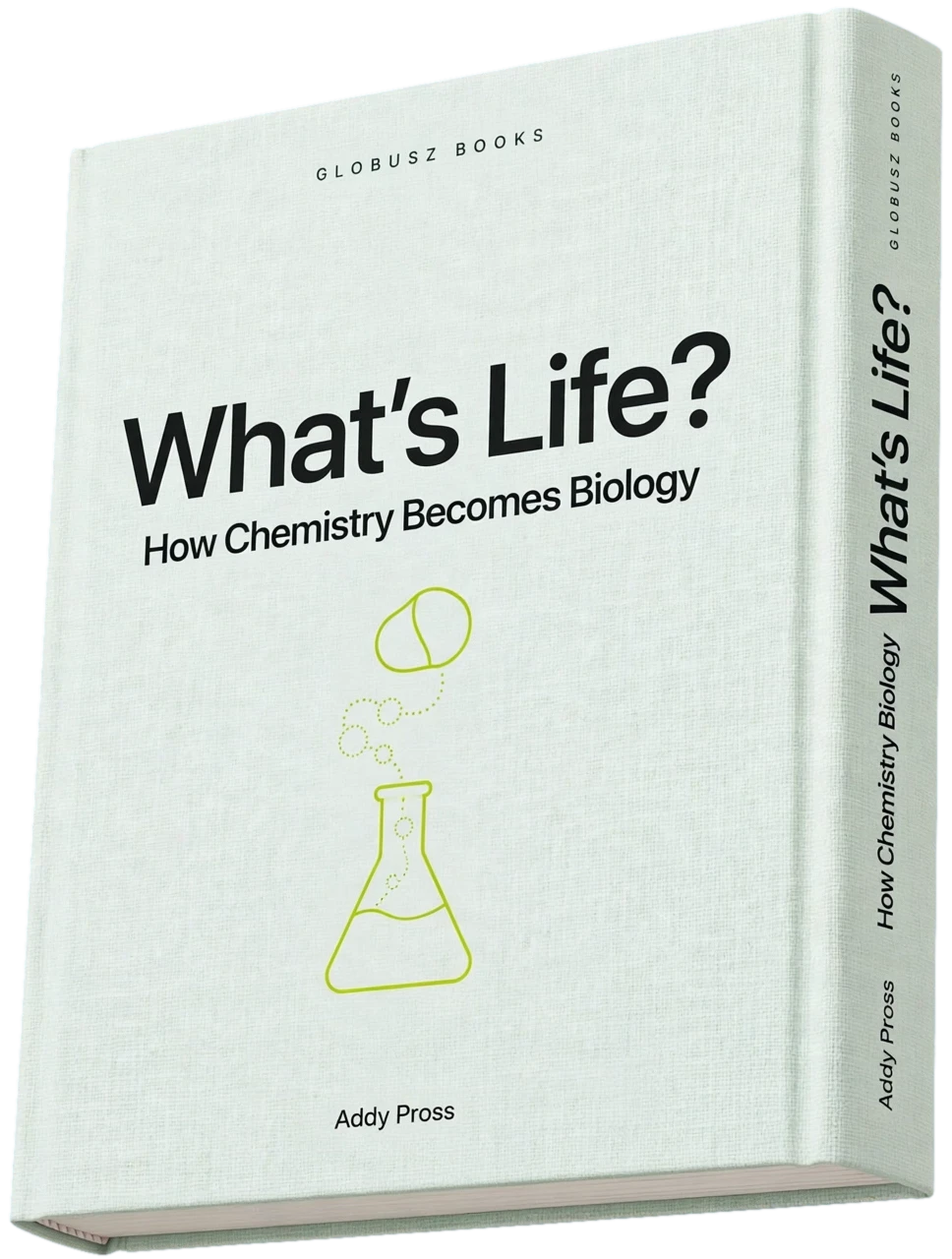
What's Life? How Chemistry Becomes Biology by Addy Pross — Summary & Review
Addy Pross · English
Addy Pross breaks down the leap from inert chemicals to living organisms with a clear-eyed focus on chemistry’s role. Life isn’t magic; it’s chemistry stubbornly organizing itself into something that replicates and evolves. This book cuts through the fog surrounding 'life' by showing how chemical principles give rise to biology’s complexity.
Read the summary first
The short version: Life isn’t some miraculous magic trick but chemistry stubbornly persisting and evolving through replication. Pross’s book cuts through the fluff to show that the messy, complicated dance of life starts with molecules that just keep copying themselves, chasing a kind of stability you wouldn’t expect. It’s a solid, no-nonsense look at life’s tricky beginnings, even if it doesn’t have all the answers.
Stefan's verdict: Worth considering for Science enthusiasts interested in the origin of life from a chemical perspective.; less useful if Readers seeking a poetic or philosophical meditation on life..
3 min review563 wordsOriginal book: Introductory
origin of lifesystems chemistrydynamic stabilityreplicationevolution
Globusz Books summary
What the book is about
Life’s origin is the ultimate party trick nobody’s fully figured out yet. Addy Pross steps into this messy debate with a chemist’s toolbox, trying to explain how lifeless chemicals turned into something that not only exists but also keeps itself running, adapts, and even ‘wants’ to survive. His premise is refreshingly straightforward: life is a special kind of organized instability. That means living things aren’t just stable blobs; they’re dynamic systems constantly pushing and pulling, maintaining themselves in a delicate balance that non-living things just don’t bother with.
Pross zooms in on the idea of replication — molecules copying themselves — as the spark that ignites life. But he’s not talking about some mystical leap here. Instead, he introduces the concept of dynamic kinetic stability (DKS), which basically says that replicating molecules achieve a kind of stability not by sitting still but by staying active and multiplying. This kind of stability isn’t about being permanent or unchanging; it’s about persisting through ongoing activity and reproduction. Think of it like a rumor that’s always evolving but never dying out.
From there, Pross argues that this drive for dynamic kinetic stability creates a natural pressure toward complexity and evolution. Replicators that do their job better outcompete others, leading to mutation and selection — the raw ingredients of Darwinian evolution. But here’s the kicker: Pross sees Darwinian evolution not as a biological miracle but as a chemical principle writ large. In other words, life’s famous evolutionary dance is just chemistry doing what chemistry does best, but on a grander, more complex scale.
This means the jump from chemistry to biology isn’t a chasm but a continuum. The same underlying chemical principles that govern simple replicators also guide the emergence of complex life forms. Pross leans into systems chemistry, a field that studies how chemical components interact in networks, to back this up. He suggests that replication probably came before metabolism, flipping some traditional views that metabolism kickstarted life.
The book doesn’t shy away from the big headaches in origin-of-life research. Defining life itself turns out to be a slippery problem, and Pross is refreshingly honest about the uncertainties and debates. Some scientists argue that metabolism, not replication, came first, and that life’s emergent properties can’t be fully explained by chemistry alone. Pross acknowledges these critiques but sticks to his guns about the primacy of chemical principles.
What makes this book stand out is its clear, accessible writing that doesn’t dumb down the science. Pross patiently walks readers through complex ideas without resorting to jargon or hype. The trade-off? If you’re expecting a sweeping, poetic exploration of life’s mysteries or a philosophical treatise, you might find it a bit dry. But if you want a grounded, scientifically solid perspective on how life could arise from chemistry, this book delivers.
On the downside, the book’s reductionist approach may feel a little too neat for such a messy topic. Life’s origins likely involved a chaotic tangle of factors, and boiling it down to replicators chasing stability might oversimplify that complexity. Also, the debate over whether replication or metabolism came first is far from settled, so Pross’s take isn’t the last word.
In short, "What Is Life? How Chemistry Becomes Biology" offers a pragmatic, chemically rooted explanation of life’s beginnings. It’s a solid read for science enthusiasts curious about the nitty-gritty behind biology’s biggest question, minus the fluff and mysticism.
Beyond the summary
What might this book awaken in you?
Life isn’t some miraculous magic trick but chemistry stubbornly persisting and evolving through replication. Pross’s book cuts through the fluff to show that the messy, complicated dance of life starts with molecules that just keep copying themselves, chasing a kind of stability you wouldn’t expect. It’s a solid, no-nonsense look at life’s tricky beginnings, even if it doesn’t have all the answers.
Before you commit
Why you might read this
Addy Pross breaks down the leap from inert chemicals to living organisms with a clear-eyed focus on chemistry’s role. Life isn’t magic; it’s chemistry stubbornly organizing itself into something that replicates and evolves. This book cuts through the fog surrounding 'life' by showing how chemical principles give rise to biology’s complexity.
Spoiler sensitivity: lowThis is a nonfiction summary.
Themes worth noticing
Origin of Life
Explores how non-living chemicals transitioned into living systems through replication and chemical principles.
Stability and Change
Examines life as a balance of ongoing activity and organized instability rather than static permanence.
Evolution as Chemistry
Reframes Darwinian evolution as a chemical phenomenon rooted in replicator competition and selection.
Reductionism vs. Emergence
Navigates the tension between explaining life through chemistry and recognizing complex emergent properties.
Key ideas, explained
Life as Organized Instability
Pross flips the usual idea of stability on its head. Instead of life being about static balance, it’s about dynamic systems that maintain themselves through constant change and activity. This kind of organized instability is what sets living things apart from inert matter.
Dynamic Kinetic Stability (DKS)
A new kind of stability emerges when molecules replicate. Unlike thermodynamic stability (think: a rock that just sits there), DKS is about persistence through ongoing replication and activity. Replicating molecules achieve stability by being active and multiplying.
Replication Before Metabolism
Pross argues that the ability to copy oneself came before metabolic processes in life’s origin. This challenges other theories that put metabolism first and suggests that life’s spark was in replication’s drive to persist and evolve.
Darwinian Evolution as a Chemical Principle
Rather than being a biological quirk, evolution by natural selection is rooted in chemistry. The competition and selection among replicating molecules create a chemical foundation for the complex evolution we see in biology.
The Chemical-Biological Continuum
Life didn’t pop into existence fully formed. Instead, there’s a continuous transition from simple chemical replicators to complex living organisms, governed by universal chemical principles that scale up in complexity.
How to Use This Book in Real Life
Think of Life as a Process, Not a Thing
Instead of trying to pin down life as a fixed category, consider it an ongoing dynamic system. This mindset can help in fields like synthetic biology or even understanding ecosystems as constantly evolving networks.
Look for Stability in Activity
Dynamic kinetic stability teaches that persistence often comes from continuous action, not sitting still. This idea might apply beyond chemistry—in business or personal habits, staying active and adaptable can be more stable than trying to freeze things.
Question ‘First Things’ in Complex Systems
Pross’s take on replication preceding metabolism invites skepticism of simple origin stories. When tackling complex problems, be open to multiple pathways and avoid assuming a single starting point.
Embrace Reduction Without Losing Sight of Complexity
While breaking things down chemically clarifies some aspects of life, remember that emergent properties might need new explanations. This balance is crucial in interdisciplinary research and real-world problem solving.
What the book does especially well
- Clear, accessible writing that demystifies complex chemical and biological concepts without oversimplifying.
- Offers a fresh chemical framework connecting replication, stability, and evolution in a continuous process.
- Engages honestly with scientific debates and uncertainties rather than glossing over them.
- Bridges chemistry and biology in a way that’s useful for scientists and curious readers alike.
Where the book gets shaky
- Reductionist approach may oversimplify the messy, multifactorial nature of life’s origins.
- The assumption that replication came before metabolism is still contested and might date the book’s stance.
- Focus on chemical principles may underplay emergent properties that resist chemical explanation alone.
- Lacks narrative flair or philosophical depth that some readers might expect from a book on life’s big questions.
Questions to carry with you
- What does it really mean for something to be alive?
- Can life be fully explained by chemistry, or is there more to it?
- Is replication truly the spark of life, or did metabolism come first?
- How do stability and change coexist in living systems?
- What can chemical principles teach us about evolution beyond biology?
The bottom line
Life isn’t some miraculous magic trick but chemistry stubbornly persisting and evolving through replication. Pross’s book cuts through the fluff to show that the messy, complicated dance of life starts with molecules that just keep copying themselves, chasing a kind of stability you wouldn’t expect. It’s a solid, no-nonsense look at life’s tricky beginnings, even if it doesn’t have all the answers.
Reader feedback
Was this summary useful?
Rate the Globusz summary of What's Life? How Chemistry Becomes Biology, not the book itself.
Loading reader ratings…
Explore the theme
More books about starting over
Continue the journey
Read the original when you are ready.
The full book dives deeper into the chemical logic behind life’s emergence, unpacking complex concepts like dynamic kinetic stability with clarity and detail you won’t get from summaries. Pross doesn’t just throw around big words; he builds a step-by-step case for why life is a natural extension of chemistry, complete with scientific debates and evidence. If you want to understand not just that life sprang from chemicals but exactly how scientists think that happened, this book is a solid guide. It’s especially valuable for readers who want to see beyond vague ‘life is special’ rhetoric and get into the nuts and bolts of the chemistry behind biology.
Read the original if: you want the evidence, stories, examples, nuance, and full argument in the author's own voice.
The summary may be enough if: you only need the central framework or want to decide whether this book suits you.
Is this worth your time if you…?
Science enthusiasts interested in the origin of life from a chemical perspective.
Found an error or outdated detail? Contact Stefan with a correction.