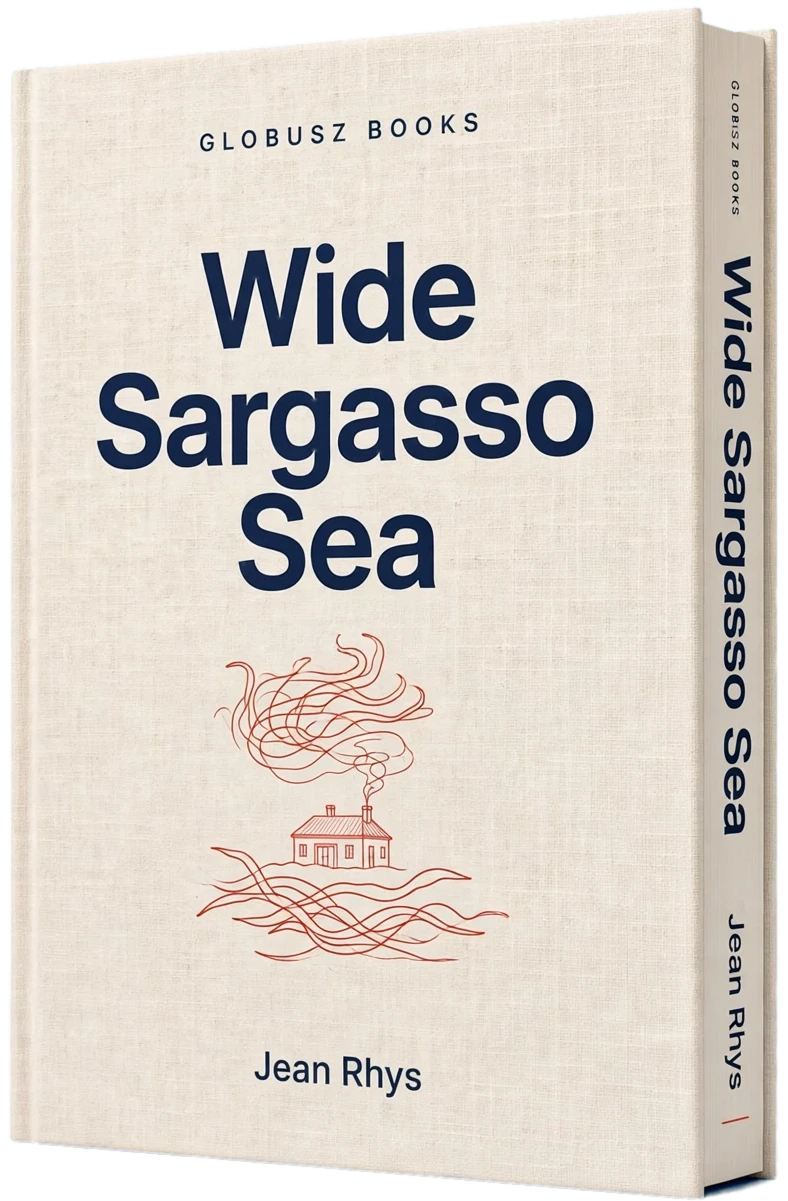
Human-reviewed summary and review
Wide Sargasso Sea by Jean Rhys — Summary & Review
Jean Rhys · English
Antoinette Cosway is the woman behind the infamous ‘madwoman in the attic’ from Jane Eyre, but her story is far more complicated and tragic. Set against the lush, decaying backdrop of post-emancipation Jamaica, this novel exposes the harsh realities of colonial identity, cultural clash, and personal erasure. How does a woman survive when caught between worlds that refuse to accept her?
Read the summary first
The short version: If you’re tired of stories that neatly package identity and history, "Wide Sargasso Sea" is a sharp reminder that real lives are tangled in contradictions and pain. It’s not an easy read, but it’s a necessary one if you want to understand how the shadows of empire and patriarchy haunt individuals. Antoinette’s story sticks with you—not because it’s pretty, but because it’s painfully human.
Stefan's verdict: Worth considering for Fans of literary fiction interested in postcolonial and feminist perspectives.; less useful if Readers looking for light or fast-paced stories..
3 min review461 wordsOriginal book: Introductory
Postcolonial IdentityGender and PowerHistorical TraumaPsychological RealismLiterary Revisionism
Globusz Books summary
What the book is about
Jean Rhys’s "Wide Sargasso Sea" is the kind of book that sneaks up on you. It’s a prequel to Charlotte Brontë’s "Jane Eyre," but don’t expect a neat origin story. Instead, Rhys throws you into the thick, humid air of 19th-century Jamaica, where Antoinette Cosway grows up tangled in a world that doesn’t want her. She’s a Creole heiress, caught between the fading colonial aristocracy and the new realities after slavery’s end. Her mother, Annette, is a woman unraveling in isolation, haunted by the community’s scorn and her own mental fragility. This isn’t a story of privilege; it’s about the cost of holding onto a crumbling identity.
The narrative unfolds mostly through Antoinette’s eyes, but also through her English husband’s—never named, always distant, always other. His perspective is cold and skeptical, a stark contrast to Antoinette’s lyrical, often desperate voice. This dual viewpoint isn’t just a stylistic choice; it’s a battleground where colonial tensions and personal misunderstandings collide. He renames her “Bertha,” stripping away her identity and humanity, and the novel silently tracks how this erasure feeds her psychological decline.
What makes "Wide Sargasso Sea" compelling isn’t just the plot, but how it unpacks the layers of alienation—racial, cultural, and gendered—that Antoinette endures. She’s neither fully accepted by the white English world nor by the black Jamaican community. The novel paints this limbo with a vivid, almost suffocating atmosphere: the lush but decaying landscapes of Jamaica mirror the characters’ emotional rot and isolation. Rhys’s prose is haunting, sometimes dreamlike, often raw, pulling you into a world where beauty and violence coexist in uneasy truce.
The book is a sharp critique of colonialism’s aftershocks. It shows how the legacy of slavery and empire fractures identities and relationships. Antoinette’s personal tragedy is inseparable from the larger social and political chaos around her. Patriarchal control also looms large—the unnamed husband’s dominance is both a personal betrayal and a symbol of systemic oppression. Women’s autonomy is crushed under weighty expectations and power imbalances.
Reading "Wide Sargasso Sea" is an invitation to rethink a familiar story from a new angle. It forces us to confront uncomfortable truths about history, race, and the stories we choose to tell—or silence. You don’t get a tidy resolution or a comforting hero. Instead, you get a raw, unsettling glimpse into a woman’s unraveling and the world that refuses to hold her.
If you’re expecting a breezy beach read, move along. This is dense, atmospheric, and at times bleak. But if you want a novel that digs into the messy intersections of identity, power, and madness, and challenges the romantic myths of empire and love, this one’s worth your time. It’s a reminder that behind every classic tale, there’s another story waiting to be told—often the one we’re least comfortable hearing.
Beyond the summary
What might this book awaken in you?
If you’re tired of stories that neatly package identity and history, "Wide Sargasso Sea" is a sharp reminder that real lives are tangled in contradictions and pain. It’s not an easy read, but it’s a necessary one if you want to understand how the shadows of empire and patriarchy haunt individuals. Antoinette’s story sticks with you—not because it’s pretty, but because it’s painfully human.
Before you commit
Why you might read this
Antoinette Cosway is the woman behind the infamous ‘madwoman in the attic’ from Jane Eyre, but her story is far more complicated and tragic. Set against the lush, decaying backdrop of post-emancipation Jamaica, this novel exposes the harsh realities of colonial identity, cultural clash, and personal erasure. How does a woman survive when caught between worlds that refuse to accept her?
Spoiler sensitivity: mediumPlot coverage is intentionally selective and avoids major late twists where possible.
Themes worth noticing
Colonialism and Its Aftermath
The novel explores how colonial history disrupts identities and relationships, showing the social and psychological scars left behind.
Identity and Alienation
Antoinette’s struggle to belong reflects broader questions about race, culture, and selfhood in a divided society.
Patriarchy and Control
The story highlights how gendered power structures limit women’s freedom and contribute to their suffering.
Power of Naming and Erasure
Renaming Antoinette as “Bertha” symbolizes how dominant groups impose identities and erase others’ truths.
Madness and Psychological Decline
Mental health is portrayed not just as personal breakdown but as a response to social and emotional trauma.
Key ideas, explained
The Cost of Colonial Identity
Antoinette’s struggle is a direct product of colonialism’s messy aftermath. She’s neither fully white English nor fully accepted Jamaican, which leaves her in a painful in-between. The novel shows how colonial history fractures personal identity and creates lasting social alienation.
Dual Perspectives Expose Misunderstanding
By alternating between Antoinette’s and her husband’s viewpoints, Rhys reveals how cultural and personal disconnects fuel tragedy. His renaming of her as 'Bertha' symbolizes the erasure of her true self and highlights the power dynamics at play.
Patriarchy as a Cage
The novel doesn’t just explore colonial oppression but also the stifling effects of patriarchy. Antoinette’s lack of autonomy and her husband’s control underscore how gendered power structures compound her isolation and despair.
Atmosphere as Emotional Landscape
The lush yet decaying Jamaican setting mirrors the characters’ inner turmoil. Rhys’s prose uses the environment to heighten the sense of entrapment, loss, and fading beauty, making the setting almost a character in its own right.
Reclaiming Silenced Voices
This novel gives depth and humanity to a character who was a one-dimensional villain in "Jane Eyre." It challenges readers to question whose stories get told and how history remembers—or erases—people.
How to Use This Book in Real Life
Look for the Untold Stories
When you encounter a familiar narrative, ask who’s missing or silenced. This book reminds us that history and literature often leave out complex perspectives, especially from marginalized voices.
Notice How Setting Shapes Emotion
Pay attention to how Rhys uses the environment not just as background but as a reflection of characters’ inner states. It’s a good reminder that mood and place can deepen storytelling in subtle ways.
Think Twice About Labels and Names
The husband’s renaming of Antoinette as 'Bertha' isn’t just a plot point—it’s a powerful metaphor for erasure and control. Reflect on how naming can be an act of power or violence in real life and fiction.
Read with an Eye for Power Dynamics
Whether between races, genders, or cultures, power imbalances shape relationships and identities. This novel encourages readers to spot those dynamics and consider their real-world implications.
Be Comfortable with Ambiguity
Rhys doesn’t hand you neat answers or a clear-cut villain. Embrace the ambiguity and complexity—real life is messy, and so is this story.
What the book does especially well
- Rich, evocative prose that immerses you in the Jamaican setting and mood.
- Nuanced portrayal of colonial and patriarchal oppression without oversimplifying.
- Complex dual narrative that deepens understanding of characters and conflict.
- Gives voice to a previously marginalized character, challenging canonical narratives.
- Themes remain relevant to discussions about identity, race, and power.
Where the book gets shaky
- Some readers may find the shifting perspectives and fragmented narrative challenging to follow.
- The novel’s heavy atmosphere and bleak themes can feel oppressive.
- Pacing is uneven; moments of introspection slow down the plot significantly.
- Certain cultural and historical references may require background knowledge for full appreciation.
- Antoinette’s characterization may feel distant or underdeveloped to some readers.
Questions to carry with you
- Who gets to tell a story, and whose voices are erased in the process?
- How does history shape personal identity in ways we might not immediately see?
- What happens when you’re trapped between cultures, accepted by none?
- How does power manifest in relationships beyond the obvious?
- Can empathy bridge the gaps created by race, class, and gender?
The bottom line
If you’re tired of stories that neatly package identity and history, "Wide Sargasso Sea" is a sharp reminder that real lives are tangled in contradictions and pain. It’s not an easy read, but it’s a necessary one if you want to understand how the shadows of empire and patriarchy haunt individuals. Antoinette’s story sticks with you—not because it’s pretty, but because it’s painfully human.
Reader feedback
Was this summary useful?
Rate the Globusz summary of Wide Sargasso Sea, not the book itself.
Loading reader ratings…
Explore the theme
More books about relationships
Continue the journey
Read the original when you are ready.
This summary can’t capture the full emotional weight and lyrical beauty of Rhys’s prose, which is essential to the novel’s impact. The dual narrative structure invites you to live inside two conflicting worlds, deepening your understanding of each character’s fractured identity. Reading the full book also lets you experience the rich symbolism and haunting atmosphere that make the story linger long after the last page. Beyond the plot, it’s a meditation on how history, culture, and personal trauma intertwine—something you can’t shortcut if you want the full effect.
Read the original if: you want the evidence, stories, examples, nuance, and full argument in the author's own voice.
The summary may be enough if: you only need the central framework or want to decide whether this book suits you.
Is this worth your time if you…?
Fans of literary fiction interested in postcolonial and feminist perspectives.
Found an error or outdated detail? Contact Stefan with a correction.