Human-reviewed summary and review
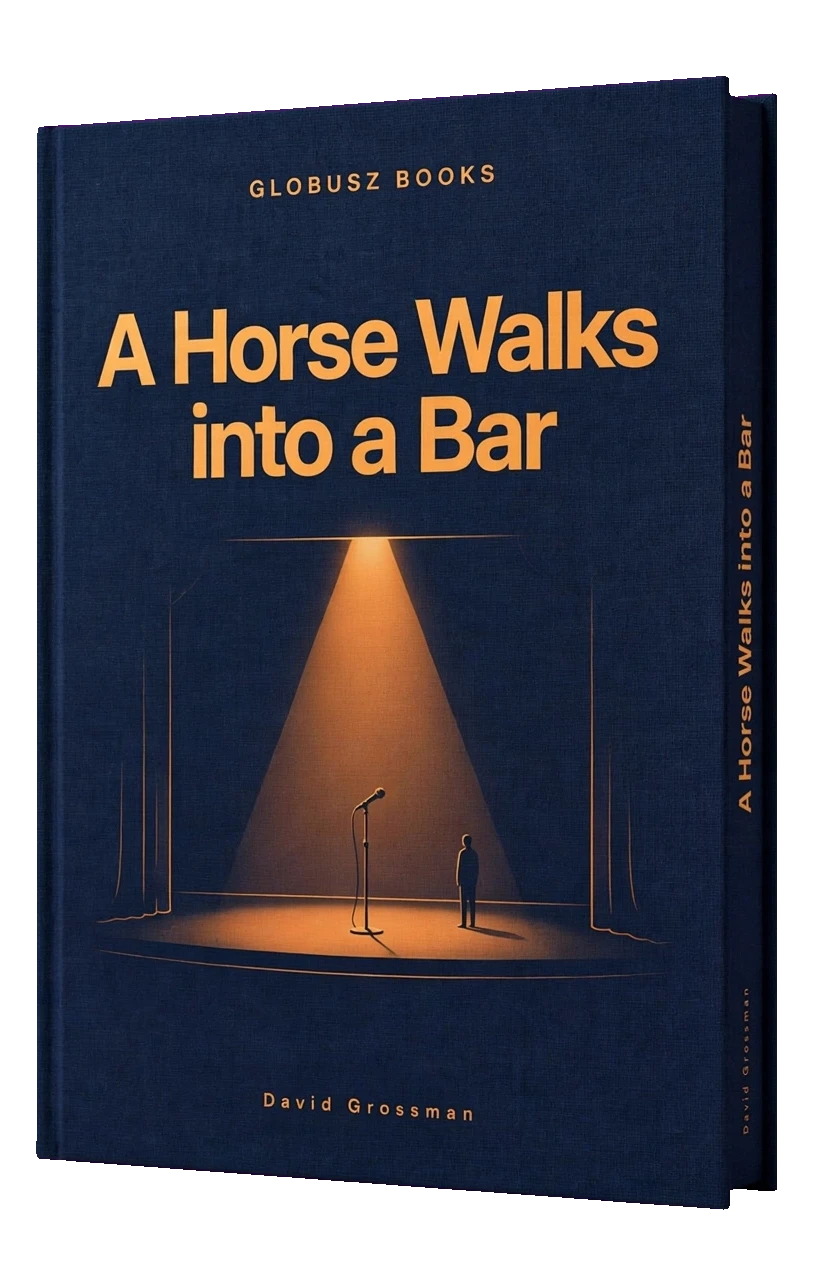
A Horse Walks into a Bar by David Grossman — Summary & Review
David Grossman · English
Dovaleh Greenstein’s stand-up routine starts like any other comedy show but quickly turns into a raw, unfiltered confession. This isn’t just about jokes—it’s a painful unraveling of memory and identity on stage. Can laughter really hide the darkest truths beneath?
Read the summary first
The short version: This isn’t a feel-good comedy disguised as a novel. It’s more like a raw, jagged glimpse into what happens when a man uses laughter to wrestle with his worst memories and deepest wounds. It’s messy, it’s uncomfortable, and it’s very human. If you’re open to that kind of ride, it’s worth the trip.
Stefan's verdict: Worth considering for Readers who appreciate literary fiction that experiments with form and voice.; less useful if Readers looking for lighthearted or traditional comedic novels..
3 min review490 wordsOriginal book: Introductory
Trauma and HealingArtistic ExpressionHuman ConnectionMemoryEmotional Resilience
Globusz Books summary
What the book is about
David Grossman’s "A Horse Walks into a Bar" is not your typical stand-up comedy night. Instead of lighthearted quips and punchlines designed to get you chuckling, you get a front-row seat to a man unraveling on stage. Dovaleh Greenstein, a middle-aged Israeli comedian, uses his performance in a small Netanya club as a confessional booth, blending humor with heartache in a way that’s both captivating and unsettling.
The novel unfolds almost in real time, trapping you in the claustrophobic, smoke-filled room where Dovaleh’s act quickly morphs from routine jokes into something far more personal and intense. The audience isn’t just faceless; among them is Avishai Lazar, a retired judge and Dovaleh’s childhood acquaintance, whose presence adds an extra layer of tension. As the show progresses, Dovaleh’s stories reveal scars from his past—family tragedies, personal failures, and the heavy burden of memory. It’s a performance that feels less like entertainment and more like a desperate plea for connection and understanding.
Grossman doesn’t just tell a story; he throws you into the emotional chaos of a man wrestling with his demons in public. The comedy club setting is a brilliant choice—it’s supposed to be a place of escape, but here, it becomes a confessional and a battleground. The laughter is uneven, sometimes forced, sometimes breaking into uncomfortable silence, mirroring the fractured psyche of the performer. You can almost feel the sweat and hear the nervous shifting of the audience as Dovaleh’s act digs deeper into pain.
The narrative style is bold and immersive. Grossman takes risks with pacing and voice, making you work to piece together Dovaleh’s life from fragmented memories and raw outbursts. It’s not a neat, linear story. Instead, it’s more like listening to a man’s mind unravel in real time, where jokes and trauma collide. This creates an intimacy that’s hard to shake, but it can also be emotionally exhausting.
At its core, "A Horse Walks into a Bar" is about the messy intersection of art and suffering. Dovaleh’s comedy is his coping mechanism, but it’s also his way of exposing wounds he can’t heal. The novel asks uncomfortable questions: How much should an artist bear for their audience? What role does the audience play in witnessing pain? And can laughter truly mask the darkest parts of human experience?
This is a novel that demands your attention and emotional stamina. It’s not about easy answers or feel-good resolutions. Instead, it confronts the brutal reality that sometimes, the stories worth telling are the ones that hurt the most. And it’s a reminder that beneath the surface of performance lies a human being grappling with identity, memory, and the desperate need to be seen.
If you’re looking for a neat narrative or a light read, this isn’t it. But if you want a story that pushes boundaries, challenges your expectations of genre, and offers a raw exploration of personal trauma through the lens of stand-up comedy, Grossman’s novel delivers in spades.
Beyond the summary
What might this book awaken in you?
This isn’t a feel-good comedy disguised as a novel. It’s more like a raw, jagged glimpse into what happens when a man uses laughter to wrestle with his worst memories and deepest wounds. It’s messy, it’s uncomfortable, and it’s very human. If you’re open to that kind of ride, it’s worth the trip.
Before you commit
Why you might read this
Dovaleh Greenstein’s stand-up routine starts like any other comedy show but quickly turns into a raw, unfiltered confession. This isn’t just about jokes—it’s a painful unraveling of memory and identity on stage. Can laughter really hide the darkest truths beneath?
Spoiler sensitivity: mediumPlot coverage is intentionally selective and avoids major late twists where possible.
Themes worth noticing
Art and Trauma
Explores how creative expression can both expose and process personal suffering, questioning whether art heals or merely reveals pain.
Memory and Identity
Investigates how fragmented, painful memories shape who we are and complicate our understanding of self.
Comedy as a Coping Mechanism
Shows how humor can be a tool for survival but also a mask that hides deeper emotional struggles.
Audience and Witnessing
Examines the dynamic between performer and audience, focusing on the ethical and emotional implications of bearing witness.
Isolation and Connection
Highlights the human need to be seen and understood, even when that process is painful and fraught.
Key ideas, explained
Comedy as a Mask for Trauma
Dovaleh’s stand-up routine isn’t just about jokes; it’s a way to process deep personal pain. The novel explores how humor can both hide and reveal trauma, making us question what’s laughter and what’s a cry for help.
The Audience’s Role in Bearing Witness
The audience isn’t passive here. Their reactions, or lack thereof, shape the performance and highlight the complex relationship between performer and spectators, especially when personal pain is on display.
Memory and Identity Are Messy
Grossman refuses to give us a tidy backstory. Instead, the fragmented, sometimes contradictory memories Dovaleh shares illustrate how identity is shaped by trauma and how difficult it is to reconcile past and present.
The Limits and Power of Art
The novel probes whether art can truly heal or if it sometimes just exposes wounds without offering closure. It’s a sobering look at the artist’s burden and the audience’s expectations.
Real Time Storytelling Creates Intimacy and Tension
By unfolding almost in real time within the confined space of a comedy club, the narrative forces readers into an intense, immersive experience that mirrors the claustrophobia and rawness of Dovaleh’s performance.
How to Use This Book in Real Life
Notice the Thin Line Between Humor and Pain
When reading or watching comedy, pay attention to what’s being masked beneath the jokes. Sometimes humor is a shield, and recognizing that can deepen your understanding of both the performer and the material.
Reflect on the Role of the Audience
Think about how your presence and reaction influence storytellers, whether in comedy, conversations, or other forms of art. Active listening and empathy can change the dynamic profoundly.
Embrace Narrative Complexity
Not all stories come neat and linear. Allow yourself to sit with fragmented or uncomfortable narratives—they often mirror real life more honestly than tidy plots.
Consider the Emotional Cost of Artistic Expression
Recognize that artists sometimes put themselves through emotional wringers for their craft. This awareness can foster greater respect and critical engagement with their work.
Use Fiction to Explore Difficult Human Experiences
Fiction like this can be a safe way to confront uncomfortable truths about trauma, identity, and connection. Let it challenge your assumptions and expand your empathy.
What the book does especially well
- Bold narrative structure that immerses readers in the immediacy of the performance.
- Complex, deeply human protagonist whose flaws and pain feel authentic.
- Powerful exploration of the interplay between comedy and tragedy.
- Emotional depth that pushes readers beyond surface-level entertainment.
- Skillful use of setting to amplify claustrophobia and tension.
Where the book gets shaky
- The intense focus on a single setting and character may feel claustrophobic or monotonous to some readers.
- The fragmented storytelling style demands patience and active engagement, which might alienate casual readers.
- Heavy emotional content without much relief can be draining.
- Limited secondary character development reduces broader narrative scope.
- Some readers might find the blend of comedy and trauma unsettling or off-putting.
Questions to carry with you
- What do we expect from art and artists when they reveal their pain?
- How does humor function as both a shield and a spotlight on suffering?
- What responsibility does an audience have when witnessing someone’s trauma?
- Can fragmented memories ever form a coherent identity?
- How do we balance empathy with the discomfort of confronting harsh truths?
The bottom line
This isn’t a feel-good comedy disguised as a novel. It’s more like a raw, jagged glimpse into what happens when a man uses laughter to wrestle with his worst memories and deepest wounds. It’s messy, it’s uncomfortable, and it’s very human. If you’re open to that kind of ride, it’s worth the trip.
Reader feedback
Was this summary useful?
Rate the Globusz summary of A Horse Walks into a Bar, not the book itself.
Loading reader ratings…
Explore the theme
More books about perspective
Continue the journey
Read the original when you are ready.
The full novel offers a level of emotional nuance and narrative risk that summaries can’t capture. Grossman’s prose and the real-time unfolding of Dovaleh’s performance create a unique intimacy that pulls you into the character’s psyche. Beyond just the story, it’s a meditation on art’s power and limits, and the uneasy relationship between performer and audience. Reading it fully means wrestling with those questions firsthand, not just hearing about them secondhand. Plus, the novel’s cultural context and subtle interactions add layers that enrich the experience beyond the basic plot.
Read the original if: you want the evidence, stories, examples, nuance, and full argument in the author's own voice.
The summary may be enough if: you only need the central framework or want to decide whether this book suits you.
Is this worth your time if you…?
Readers who appreciate literary fiction that experiments with form and voice.
Found an error or outdated detail? Contact Stefan with a correction.